
Adrak ki Chutney
A punchy South Indian ginger chutney balancing fiery heat and sharp tamarind with sweet jaggery and aromatic fried spices.
Tempering spices
9 gBloomed in the hot oil (step 3)Everything else

Method
- Warm 1 tablespoon oil in a heavy pan over low heat. Fry 24 g ginger for 3 minutes, then lift it out with a slotted spoon, leaving the oil in the pan.
- Place the cooked ginger into a blender along with 132 g tamarind extract and 3.6 g jaggery. Purée until smooth and transfer the paste to a bowl.
- Set the pan with the remaining oil back over medium heat. Add the tempering spices, 0.5 teaspoon garlic, and 1 g curry leaf, then fry for roughly 1 minute until the mustard seeds pop. Season with salt to taste and pull the pan off the heat.
- Pound the fried spices coarsely using a pestle and mortar (or pulse briefly in a mini food processor). Stir the crushed spices evenly into the ginger mixture; eat fresh on the day it is prepared.
Don't have something?


 Mustard oil
Use the same weight. Heat until smoking, then cool for 2 minutes before cooking; it is pungent and changes the flavour strongly.
 Groundnut oil
Use the same weight. It is neutral, so add 1 tsp toasted sesame seeds for aroma.
 Vegetable oil
Use the same weight. It is neutral and lacks sesame flavour; finish with a few drops of toasted sesame oil if you have it.


 Fresh ginger
Use equal weight; scrape off the skin and grate or finely julienne according to the recipe.
 Ginger paste
Use equal weight; stir straight into the sizzling aromatics, taking care as the extra moisture may spit.
 Ground ginger
Use 15 to 20% of the weight; add alongside ground spices, noting it imparts warm, dry heat rather than zesty freshness.



 Tamarind
Use 180% of the weight of compressed tamarind; soak in three times its weight of boiling water for 15 minutes, knead, and strain out the thick pulp.
 Dried mango powder
Use 35% of the weight dissolved in two tablespoons of warm water. Provides sharp tang, though the resulting sauce will be lighter in colour.
 Lemon juice
Use equal weight, added right at the end of cooking. Adds sharp acidity without the deep brown hue or pulpy thickness.


 Granulated sugar
Use 80% of the weight. Granulated sugar is sweeter by weight, but gives a cleaner, one-dimensional sweetness that lacks jaggery's caramel, molasses depth.
 Raisin
Soak and blend into a paste; use 100% to 120% of the weight. Adds rich, natural, fruity sweetness with complex, dark molasses notes that thicken the gravy.


 Ground cumin
Use 70% of the weight; add with ground spices or sauce bases rather than hot oil tempering, where it scorches quickly and turns bitter.
 Black cumin seeds
Use equal weight for oil tempering. Delivers an earthy profile with an additional musky, smoky, and slightly bitter edge.
 Fennel seed
Use 60% of the weight for tempering; offers comparable warm aroma, but leans sweet and liquorice-like rather than savoury and earthy.



 Garlic paste
Use equal weight. Fry gently in oil or ghee with the ginger; incorporates smoothly into curries without visible minced bits.
 Garlic powder
Use 15% to 20% of the weight (about 1 g for every 5 to 6 g fresh cloves). Whisk into sauces; gives a savoury, toasted garlic flavour without raw pungency.
 Shallot
Use 1.5 times the weight, very finely minced. Sauté until golden; provides savoury allium sweetness, though it lacks garlic's pungent sulphur bite.


 Black mustard seed
Use the same weight. The seeds are smaller and hotter; fry in hot oil until they pop, about 20–30 seconds, and reduce the heat if they darken too fast. The dish will be a little sharper.
 Yellow mustard seeds
Use the same weight. They are milder and larger; fry a few seconds longer until they pop. The finished dish will have less pungency.
 Ground mustard seed
Use 70% of the weight of whole seed, added with the other ground spices rather than fried whole. You lose the popping texture and the heat comes through more evenly.


 Bay leaf
Fry 1 bay leaf for every 5 curry leaves in hot oil; imparts a warm, woodsy background note, but misses the citrus-sulphury punch entirely.
 Lime juice
Add a small squeeze (about 5 ml per sprig of curry leaves) right before serving; provides sharp citrus top notes without the toasty, herbal aroma.


 Dried kashmiri chilli
Use equal weight whole. Fry in hot oil or ghee as tempered spice; gives a richer red colour with slightly milder heat.
 Red chilli powder
Use 50% to 70% of the weight. Stir into the oil with ground spices; distributes heat evenly throughout the dish without whole chilli skins.


- Garlic powder
Use double the weight. Stir into hot oil just before adding wet ingredients; mimics the allium savoury background without the sulphurous edge.
- Garlic paste
Use 2 g for every 0.5 g of asafoetida. Sauté in oil until the raw smell clears; adds moisture and sweet allium depth.
Similar dishes

- Same: Both condiments build their base from fresh ginger soured with tamarind extract and seasoned with mustard seeds, curry leaves, and dried red chillies.
- Different: Injipuli adds fresh coconut, green chillies, turmeric, and vegetable oil, but omits the garlic, cumin, asafoetida, and jaggery used in this dish.

- Same: Inji Thokku shares fresh ginger, tamarind as the souring agent, and mustard seeds with this dish.
- Different: Inji Thokku uses far more ginger and swaps dried red chillies for green chillies, while omitting the jaggery, garlic, cumin seeds, curry leaves, and asafoetida found in this dish.
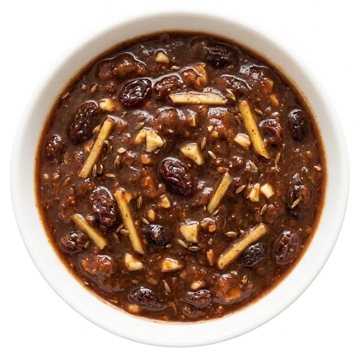
- Same: Both chutneys combine ginger, tamarind extract, cumin seeds, garlic, and chilli for a sweet and sour condiment.
- Different: Imli Aur Adrak ki Saunth uses ground ginger, chilli powder, and raisins in a much larger volume of tamarind, omitting the jaggery, mustard seeds, curry leaves, and asafoetida found in this dish.

- Same: Both chutneys use identical amounts of tamarind extract and jaggery balanced with mustard seeds, cumin, dried red chillies, curry leaves, and asafoetida.
- Different: Chintapandu Koythamira Chutney omits the ginger and garlic, using fresh green chillies, coriander seeds, ground turmeric, and a substantial amount of vegetable oil instead.