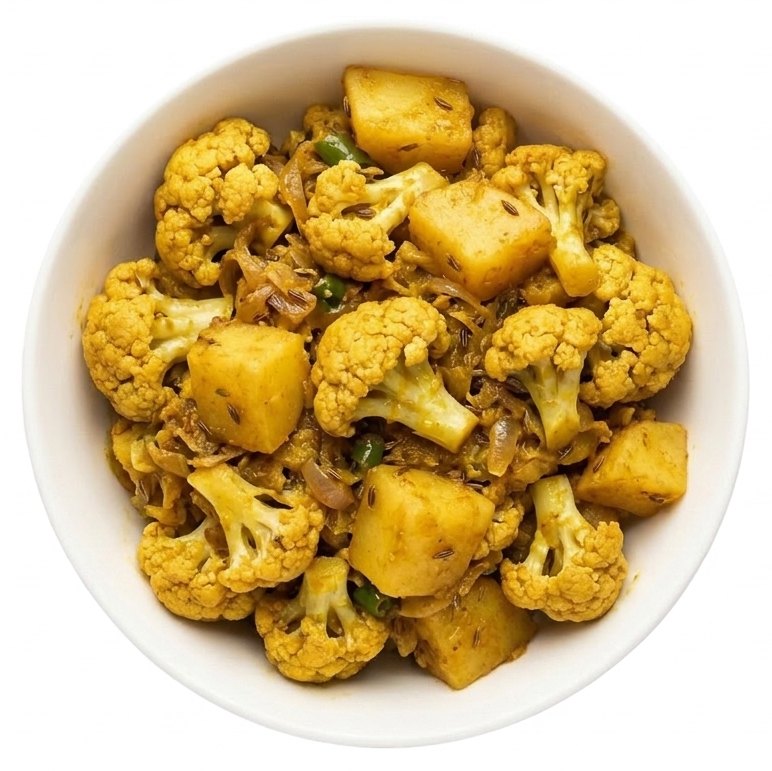
Flower Batata Bhaji
A classic homestyle sabzi of tender potatoes and cauliflower florets coated in a fragrant, golden sauce spiced with turmeric and garam masala.
Tempering seeds
2.1 gBloomed in hot oil (step 1)Base spices and aromatics
18 gFried before the onions (step 2)Finishing spice
2.6 gStirred in towards the end of cooking (step 5)Everything else

Method
- Warm 20.2 g vegetable oil in a broad, heavy pan set over high heat, then lower the flame to medium. Tip in the tempering seeds and allow them to sizzle for roughly 1 minute until fragrant and crackling.
- Add the base spices and aromatics and cook for about 1 to 2 minutes. Scatter in 36 g green chilli and 150 g onion, frying for 5 minutes until the onion takes on a rich golden color.
- Tumble in 1200 g potato and 2 cauliflower heads cut into florets. Turn the heat up to high and stir constantly for 2 minutes to coat the vegetables in the spiced oil.
- Pour in 750 ml water and stir well. Fit the lid onto the pan and cook for 8 to 10 minutes, lifting the lid occasionally to give everything a quick stir.
- Stir in the finishing spice along with salt to taste. Turn the heat down to low and leave the pan uncovered to simmer gently for roughly 5 minutes until the liquid reduces and clings to the vegetables.
Don't have something?


 Peanut oil
Use 1:1 by weight. Handles high-heat frying identically and introduces a very subtle, pleasant nuttiness.
 Ghee
Use 1:1 by weight. Yields a much richer, authentic aroma and a glossy, heavier mouthfeel.
 Mustard oil
Use 1:1 by weight. Heat until smoking, then cool slightly before cooking to temper its intensely pungent, sharp mustard kick.


 Ground cumin
Use 70% of the weight; add with ground spices or sauce bases rather than hot oil tempering, where it scorches quickly and turns bitter.
 Black cumin seeds
Use equal weight for oil tempering. Delivers an earthy profile with an additional musky, smoky, and slightly bitter edge.
 Fennel seed
Use 60% of the weight for tempering; offers comparable warm aroma, but leans sweet and liquorice-like rather than savoury and earthy.


 Garlic powder
Use double the weight. Stir into hot oil just before adding wet ingredients; mimics the allium savoury background without the sulphurous edge.
 Garlic paste
Use 2 g for every 0.5 g of asafoetida. Sauté in oil until the raw smell clears; adds moisture and sweet allium depth.


 Ground ginger
Use 50% of the weight. Mimics turmeric's warm, earthy, rhizome background, but provides none of the golden-yellow colour.
 Saffron
Steep a tiny pinch (0.1 g per 2 g turmeric) in 2 tbsp warm water; use to match the rich golden hue. Contributes an aristocratic, honeyed floral flavour rather than earthy bitterness.


 Fresh ginger
Use equal weight; peel and grate very finely on a microplane or pound to a fine paste in a mortar.
 Ginger
Use equal weight; mince finely and crush with the flat of a knife before frying.
- Ground ginger
Use 20% of the weight; add directly with the dry spice powders, though it yields an earthier, less pungent profile.


 Garlic
Use equal weight; crush or finely grate to a smooth pulp to replicate the same fresh, pungent moisture in your base gravy.
- Garlic powder
Use 20 to 25% of the weight; mix with a teaspoon of water before adding to oil so it does not burn, noting it lacks the fresh bite.


 Chilli powder
Use 10 to 15% of the weight (about 1/4 teaspoon per chilli); imparts dry pungent heat and reddens the dish without the grassy crunch.
 Dried red chilli
Use 1 dried pod per fresh green chilli; snap in half and temper in hot oil for a deeper, toastier heat.






 Eggplant
Use equal weight. Cut into large chunks; cooks down much faster (10-12 minutes) and softens into the sauce rather than staying starchy and firm.
 Paneer
Use 80% of the weight. Cube and add in the last 5-10 minutes of cooking; adds rich dairy protein instead of starchy bulk.
 Dried chickpea
Use 45% dry weight. Soak overnight and boil until fully soft before stirring into the sauce to simmer for 10 minutes.


 Broccoli
Use the same weight; cut into similar florets and cook 2–3 minutes less. It is greener and slightly stronger in flavour.
 Cauliflower floret
Use the same weight and break into even florets. This is essentially the same vegetable, so cooking and flavour change little.
 Cabbage
Use the same weight; cut into wedges and cook 3–5 minutes less. It becomes much softer and sweeter, so the dish loses cauliflower's bite.


- Ground cumin
Use 50% of the weight mixed with equal parts ground coriander and a pinch of ground cinnamon, ground cloves, and ground green cardamom. Sprinkle near the end for a warming finish.
 Lentil stew spice mix
Use 75% of the weight. Simmer briefly in the gravy; imparts roasted warmth and complexity, though it adds a slight tang and earthy lentil undertone.

Similar dishes
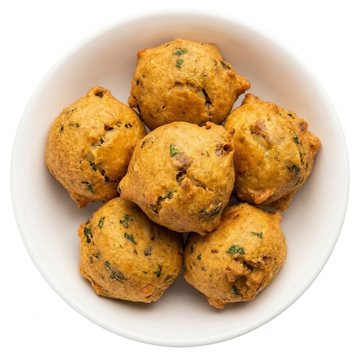
- Same: Both dishes rely on potatoes seasoned with turmeric, asafoetida, ginger, garlic, and cumin cooked in vegetable oil.
- Different: Batata Vada mashes the potatoes with lemon juice and fresh coriander before deep-frying them in a batter, rather than sautéing potato chunks with onions, green chillies, and garam masala.

- Same: Chatpati Gobi shares potatoes, cauliflower, vegetable oil, cumin seed, green chilli and salt with this dish, and both are dry-style cauliflower-potato curries.
- Different: Chatpati Gobi adds tomato, ground coriander, chilli powder, amchoor, chickpea flour, black pepper, fenugreek seed and pomegranate seed, and uses more oil and less cauliflower, while it lacks this dish's onion, garlic paste, asafoetida, turmeric and garam masala.

- Same: Both dishes feature potatoes seasoned with cumin seeds, green chillies, ginger, garlic, and garam masala.
- Different: Aloo Chutneywale hollows and stuffs the potatoes with paneer and cashews to simmer them in ghee, yogurt, cashew paste, and a fresh mint-coriander chutney, omitting the turmeric and asafoetida used in this dish.

- Same: Both dishes feature potatoes and cauliflower cooked in vegetable oil with ginger and garlic pastes.
- Different: Aloo Gobi Methi ka Tuk uses much more oil and adds curry leaves, amchoor, yellow chilli powder, and black pepper, but it omits the onions, cumin seeds, turmeric, green chillies, and garam masala found in this dish.