
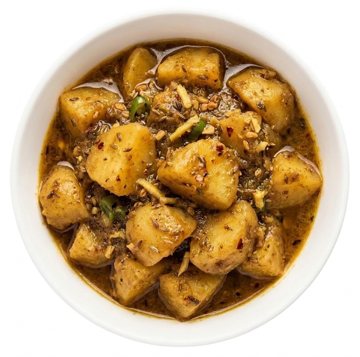
Chharra Aloo
Gently crushed new potatoes simmered in a tangy, fragrant gravy spiced with dried mango powder, whole cardamom, and chillies.
Whole spices
4.4 gFried in ghee in step 3Ground spices
15 gMixed with water in step 2 and added to the pan in step 4Everything else

Method
- Vigorously rub the skins off 500 g potatoes, then lightly crush them with the side of a heavy knife.
- Whisk the ground spices with 4 tablespoons of water in a small bowl to form a smooth paste.
- Heat 26.4 g ghee in a deep pan or kadhai over medium heat, add the whole spices and 12 g chopped green chilli, and stir-fry for 1–2 minutes until fragrant and slightly darkened.
- Tip the ground spice paste into the pan and fry for 30 seconds, then toss in the crushed potatoes to coat them evenly.
- Pour in 750 ml water, bring the liquid to a boil, then season with salt to taste. Reduce the heat, cover with a lid, and simmer for 10 minutes.
- Remove the lid, press down lightly on some of the potatoes with the back of a spoon to thicken the gravy, and simmer for a final 2 minutes.
Don't have something?

 Eggplant
Use equal weight. Cut into large chunks; cooks down much faster (10-12 minutes) and softens into the sauce rather than staying starchy and firm.
 Paneer
Use 80% of the weight. Cube and add in the last 5-10 minutes of cooking; adds rich dairy protein instead of starchy bulk.
 Dried chickpea
Use 45% dry weight. Soak overnight and boil until fully soft before stirring into the sauce to simmer for 10 minutes.


 Cumin seed
Dry-roast briefly and grind finely; use equal weight (1:1). Imparts an even punchier, nuttier, toasty aroma than pre-ground cumin.
 Ground coriander
Use equal weight (1:1). Adds mild, lemony sweetness rather than cumin's smoky, earthy bite; curries will taste lighter and less savoury.
 Black cumin seeds
Grind finely; use 60% to 75% of the weight. Produces a darker, more complex, smoky-herbal flavour suited to rich gravies.


 Red chilli powder
Use 100% of the weight. Provides direct, sharp heat and red colour in equal measure.
 Kashmiri chilli powder
Use 150% to 200% of the weight if matching colour, but add a pinch of black pepper or hot chilli if you need equivalent fiery heat.
 Cayenne pepper
Use 75% to 100% of the weight. Offers a sharp, clean heat with slightly less earthy depth and less crimson colour.


 Ground ginger
Use 50% of the weight. Mimics turmeric's warm, earthy, rhizome background, but provides none of the golden-yellow colour.
 Saffron
Steep a tiny pinch (0.1 g per 2 g turmeric) in 2 tbsp warm water; use to match the rich golden hue. Contributes an aristocratic, honeyed floral flavour rather than earthy bitterness.


 Black peppercorn
Use 1:1 by weight; pulverise in a spice mill or mortar to a fine powder for immediate, punchy heat.
 Coarsely ground black pepper
Use equal weight; offers the same bite, though it gives a visibly speckled finish and firmer crunch.


 Lemon juice
Use 15 g (1 tbsp) for every 5 g of amchoor. Stir in at the very end off the heat; adds liquid and fresh citrus aroma rather than dry fruity tang.
 Tamarind extract
Use 75% of the weight, dissolved in a splash of warm water. Simmer briefly; darkens the gravy and provides a deeper, caramelised sourness.


- Ground cumin
Use 50% of the weight mixed with equal parts ground coriander and a pinch of ground cinnamon, ground cloves, and ground green cardamom. Sprinkle near the end for a warming finish.
 Lentil stew spice mix
Use 75% of the weight. Simmer briefly in the gravy; imparts roasted warmth and complexity, though it adds a slight tang and earthy lentil undertone.


 Ground fennel seed
Use the same weight; fennel is the closest everyday match, slightly sweeter and milder.
 Aniseed
Grind the same weight freshly; the aroma is stronger, so add it near the end.
 Ground star anise
Use about 50% of the weight; it is much more powerful and slightly liquorice-heavy.


 Unsalted butter
Use 120% of the weight; melt gently over low heat to avoid burning the milk solids, which will yield a softer, creamier richness rather than a nutty aroma.
 Vegetable oil
Use 85% of the weight; holds high cooking temperatures without smoking, but the final dish will lack traditional dairy depth.
 Mustard oil
Use equal weight; heat to smoking point and cool slightly before cooking, bearing in mind it introduces an assertive, pungent edge.


 Cinnamon stick
Use a 2 cm piece (about 1 g) for every 1 to 2 bay leaves. Fry in whole-spice temperings; provides the cassia-like warmth typical of Indian tejpatta.
 Ground cinnamon (cassia)
Use 0.5 g per leaf. Stir into the sauce during simmering; gives the same warm woodiness but darkens the colour slightly.


- Chilli powder
Use 10 to 15% of the weight (about 1/4 teaspoon per chilli); imparts dry pungent heat and reddens the dish without the grassy crunch.
 Dried red chilli
Use 1 dried pod per fresh green chilli; snap in half and temper in hot oil for a deeper, toastier heat.


 Ground cloves
Use 1 g ground for 4 g whole (or 1 small pinch per 2 to 3 whole cloves). Add with spice powders; disperses intense warmth quickly, so use with restraint.
 Allspice berries
Use 100% of the weight whole in tempering. Imparts a warm, clove-like aromatic profile combined with hints of nutmeg and cinnamon.
 Black cardamom pod
Use 1 pod for 3 to 4 cloves in whole tempering. Shares a camphor-like warmth and medicinal depth, though it introduces a distinct smoky undertone.


 Ground black cardamom
Use 0.5 g of ground seeds for each whole pod. Stir directly into the curry base; delivers identical smoky flavour without woody husks.
 Green cardamom pod
Use equal pod count or weight. Crack slightly and fry whole; tastes sweet, menthol-fresh, and floral rather than dark and smoky.


 Coriander seeds
Dry-roast lightly in a pan and grind to a fine powder; use equal weight (1:1). Offers a noticeably fresher, brighter citrus note.
- Ground cumin
Use 50% to 75% of the weight. Lacks the floral, citrusy profile of coriander and turns the gravy heavier, earthier, and darker.
- Garam masala
Use 50% of the weight and stir in near the end of cooking. Adds warmth and depth since it contains ground coriander, but introduces stronger spices like clove and cinnamon.

Similar dishes
- Same: Both dishes use potatoes as the main ingredient, relying on amchoor for sourness alongside green chillies, chilli powder, turmeric, coriander, and cloves.
- Different: Khatte Aloo is cooked dry in pungent mustard oil with fenugreek seeds, asafoetida, and ginger, omitting this dish's ghee, gravy, black cardamom, bay leaf, and garam masala.

- Same: Aloo ki Tarkari shares with this dish 500 g potatoes, roughly crushed and simmered in a tangy gravy soured with amchoor and spiced with turmeric, cumin, clove, bay leaf, and salt.
- Different: Aloo ki Tarkari uses 114 g vegetable oil instead of ghee, adds kasuri methi, asafoetida, ginger, and kashmiri chilli powder, and lacks this dish's green chilli, black cardamom, ground aniseed, black pepper, garam masala, and ground coriander.

- Same: Dahiwale Aloo also features potatoes cooked in a tangy sauce seasoned with ground cumin, coriander, turmeric, chilli powder, and garam masala.
- Different: Dahiwale Aloo uses cubed potatoes in a yogurt base tempered with vegetable oil, mustard seeds, curry leaves, and asafoetida, whereas this dish cooks crushed potatoes in ghee with amchoor, black cardamom, cloves, and bay leaf.

- Same: Dahi ke Aloo also features potatoes simmered in a tangy gravy seasoned with cumin, coriander, turmeric, chilli powder, and garam masala.
- Different: It builds its sauce on yogurt and chickpea flour tempered with mustard seeds, curry leaves, and asafoetida, omitting the amchoor, green chillies, cloves, and black cardamom used in this dish.