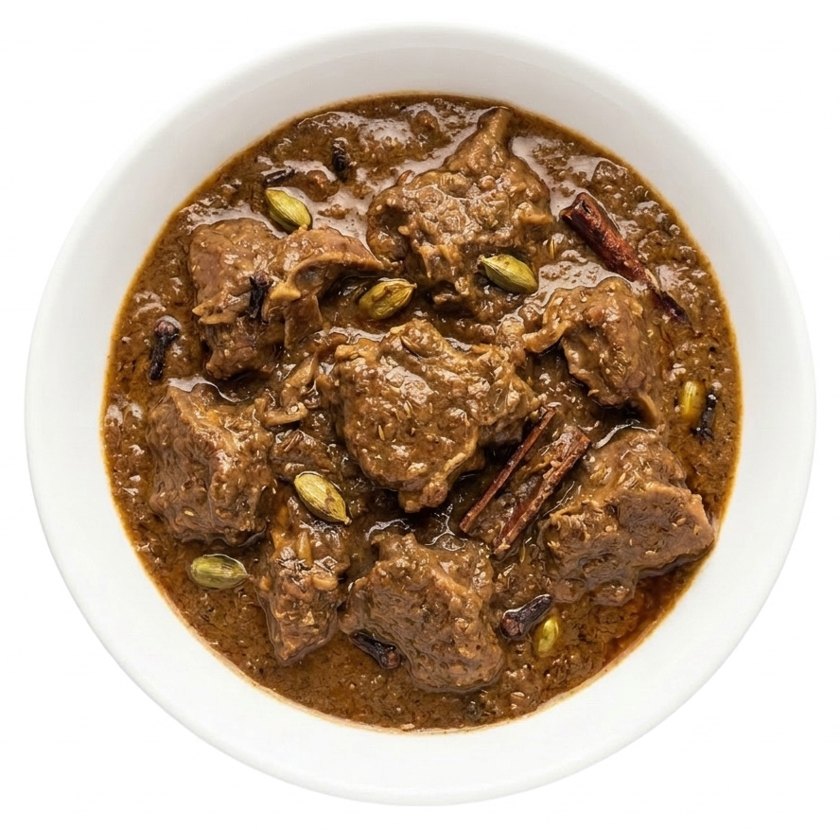
Bund Gosht
Tender lamb chops slow-cooked in a sealed vessel with yoghurt and aromatic whole spices, finished with a fragrant note of ground fennel.
Whole spices
3.4 gFried in the hot oil (step 1)Ginger and garlic pastes
62 gFried with the onion paste (step 2)Chilli powder
2.6 gStirred into the yoghurt and meat (step 3)Ground fennel
7 gAdded just before sealing the pot (step 4)Everything else

Method
- Warm 114 g vegetable oil in a large, heavy-bottomed pot over medium heat. Tip in the whole spices and fry for about 1 minute until they begin to crackle.
- Add 3 tablespoons fried onion paste and cook for 1 minute. Add the ginger and garlic pastes and fry for another minute until lightly browned, then stir in 1 teaspoon turmeric paste and cook for 1 to 2 minutes until the moisture evaporates.
- Add 1000 g lamb chop to the pot, season with salt to taste, and remove the pot from the heat. Gently stir in 254 g plain yogurt and 1 tablespoon of water. Set the pot back over the heat, add the chilli powder, and cook over increasing heat for 2 to 3 minutes, mixing thoroughly.
- Stir in the ground fennel and drop the heat to low. Cover the pot and seal the edges with 150 g dough (or aluminium foil). Cook gently for 1 to 1½ hours, until the meat is completely tender.
Don't have something?


 Peanut oil
Use 1:1 by weight. Handles high-heat frying identically and introduces a very subtle, pleasant nuttiness.
 Ghee
Use 1:1 by weight. Yields a much richer, authentic aroma and a glossy, heavier mouthfeel.
 Mustard oil
Use 1:1 by weight. Heat until smoking, then cool slightly before cooking to temper its intensely pungent, sharp mustard kick.


 Green cardamom seed
Use 35 to 40% of the total pod weight; lightly bruise the seeds before frying in oil to release their essential oils.
 Ground green cardamom
Use 20 to 25% of the pod weight (about 1 generous pinch per pod); stir in toward the end of cooking so the delicate floral notes do not dissipate.
 White cardamom pod
Use 1:1 by pod count or weight; crack gently before using, though it is slightly less intensely floral.


 Ceylon cinnamon
True cinnamon: thinner, papery quills, milder and sweeter. Use about 1.5 times the weight, and taste.
 Ground cinnamon (cassia)
Use about a third of the weight (0.5 g ground for a 2.5 cm piece), stirred in with the ground spices rather than fried whole, since the powder burns quickly.
 Cassia buds
Use 60-70% of the weight; stronger and more peppery, so taste before adding more.


 Ground cloves
Use 1 g ground for 4 g whole (or 1 small pinch per 2 to 3 whole cloves). Add with spice powders; disperses intense warmth quickly, so use with restraint.
 Allspice berries
Use 100% of the weight whole in tempering. Imparts a warm, clove-like aromatic profile combined with hints of nutmeg and cinnamon.
 Black cardamom pod
Use 1 pod for 3 to 4 cloves in whole tempering. Shares a camphor-like warmth and medicinal depth, though it introduces a distinct smoky undertone.


 Fried onions
Blend the same weight with 1–2 tablespoons water to a smooth paste; add only enough water to grind.
 Onion paste
Fry the same weight in oil until deep golden, then mash or blend; cook a little longer to remove the raw taste.
 Boiled onion paste
Fry the same weight in oil until golden before use; it will be wetter, so cook until the oil separates.


 Fresh ginger
Use equal weight; peel and grate very finely on a microplane or pound to a fine paste in a mortar.
 Ginger
Use equal weight; mince finely and crush with the flat of a knife before frying.
 Ground ginger
Use 20% of the weight; add directly with the dry spice powders, though it yields an earthier, less pungent profile.


 Garlic
Use equal weight; crush or finely grate to a smooth pulp to replicate the same fresh, pungent moisture in your base gravy.
 Garlic powder
Use 20 to 25% of the weight; mix with a teaspoon of water before adding to oil so it does not burn, noting it lacks the fresh bite.


 Turmeric powder
Use 25–30% of the weight; mix with a little water to a paste. More concentrated and less fresh, so add early.
 Ground turmeric
Use 25–30% of the weight; same as powder. Stir into oil to avoid lumps.


 Pork
Use equal weight of bone-in pork chops; cook over medium heat, taking care not to dry them out, done in 10-12 minutes.
 Lamb shoulder
Use equal weight cut into thick steaks; requires lower, slower braising for 45 minutes longer to become tender.


 Yogurt
Use equal weight, whisked thoroughly until smooth before adding to hot dishes to prevent curdling.
 Coconut milk
Use equal weight with 1 teaspoon lemon juice mixed in. Provides rich creaminess in curries, but adds a noticeable coconut flavour.
 Single cream
Use 80% of the weight plus a squeeze of lemon juice for acidity. Enriches sauces nicely, though it is richer and less tangy.


 Red chilli powder
Use 100% of the weight. Provides direct, sharp heat and red colour in equal measure.
 Kashmiri chilli powder
Use 150% to 200% of the weight if matching colour, but add a pinch of black pepper or hot chilli if you need equivalent fiery heat.
 Cayenne pepper
Use 75% to 100% of the weight. Offers a sharp, clean heat with slightly less earthy depth and less crimson colour.


 Fennel seed
Grind whole seeds finely; use equal weight (1:1). Provides a fresh, sweet, aniseed aroma that is slightly stronger than pre-ground powder.
 Aniseed
Grind finely; use 75% to 80% of the weight. Has a sharper, sweeter liquorice taste with less of fennel's herbal earthiness.
 Star anise
Grind whole star anise finely; use 30% to 40% of the weight. Very potent aniseed flavour that easily overpowers a dish if not used sparingly.


 Plain boiled rice
If dough was intended to accompany a curry (such as flatbreads), serve equal cooked weight of rice instead.

Similar dishes

- Same: Gol Maas Kaachar also cooks lamb with yogurt, ginger, garlic, chilli powder, green cardamom, cloves, and cinnamon.
- Different: Instead of using vegetable oil and sealing the vessel with dough, it braises the meat openly in mustard oil with fresh tomatoes, sliced onions, and bay leaves, omitting the ground fennel.

- Same: Chaamp Baadami also cooks lamb chops with yogurt, fried onion paste, ginger, garlic, chilli, and whole spices like cinnamon, cloves, and cardamom.
- Different: Chaamp Baadami uses butter instead of vegetable oil, adds white malt vinegar, bay leaves, mace, and nutmeg, and skips this dish's dough-sealed pot and ground fennel.

- Same: Dahiwala Meat shares lamb, yogurt, onion, ginger, garlic, cinnamon, clove, green cardamom and chilli powder with this dish.
- Different: Dahiwala Meat uses ghee, boneless lamb, fresh onion, more yogurt, black cardamom, green chilli, garam masala, ground coriander and coriander leaf, while this dish uses vegetable oil, lamb chops, fried onion paste, less yogurt, turmeric and ground fennel and is sealed with dough.

- Same: Dahi ka Keema also simmers lamb in a spiced yoghurt gravy built on ginger, garlic, cinnamon, cloves, and green cardamom.
- Different: Instead of whole bone-in lamb chops sealed under dough with vegetable oil and ground fennel, Dahi ka Keema uses minced lamb cooked in ghee and peanut oil with black cardamom, mace, garam masala, and flash-fried green chillies.