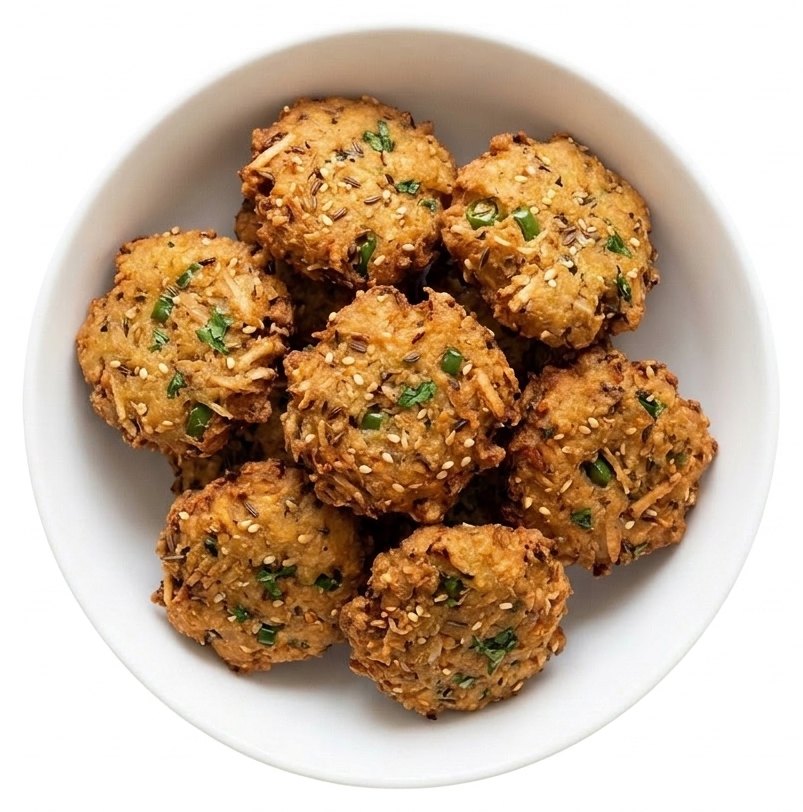
Avasara Vada
Crisp, golden South Indian patties made with grated coconut and chickpea flour, seasoned with fragrant cumin, sesame seeds, and fresh green chillies.
Batter spices
6 gMixed into the dry ingredients (step 1)Everything else

Method
- Combine 150 g coconut, 60 g rice flour, 75 g chickpea flour, the batter spices, 6 tablespoon chopped onion, 18 g green chilli, 4.8 g ginger, 2 g coriander leaf, and salt to taste in a mixing bowl. Stir well, then gradually add 125 ml water while mixing to form a thick, firm batter.
- Warm 19.8 g ghee in a small pan until fully melted, then pour it into the batter and stir until evenly incorporated.
- Pour enough vegetable oil for deep-frying into a kadhai or heavy-based deep pan and bring to 180°C (350°F), so that a cube of bread browns within 30 seconds, then dial down the heat slightly.
- Moisten your hands with water, take a small portion of batter, and press it into a flat round patty roughly 5 cm (2 inches) across. Slide into the hot oil and fry in batches for 2 to 3 minutes, flipping occasionally, until crisp and golden brown on all sides.
- Transfer the fried patties onto paper towels using a slotted spoon to drain, then repeat the process with the remaining batter.
Don't have something?


 Cornflour
Use about 60–70% of the weight for thickening; for coatings use the same weight but the crust is denser.
 Plain flour
Use the same weight for coatings; contains gluten, browns faster and is less crisp.
 Fine semolina
Use the same weight for crisp coatings; coarser texture and needs a short rest.


 Whole wheat flour
Use the same weight, add 10–15% more water and rest the dough for 20 minutes; the result is heavier and nuttier.
- Rice flour
Use the same weight for crisp coatings; for doughs use no more than half rice flour with wheat flour, or it will be crumbly.
- Cornflour
For thickening use half the weight, mixed with cold water; it is not suitable for bread or chapati dough.


 Yellow split pea flour
Use 100% of the weight. Many commercial gram flours are milled from split peas; performs identically in pakora batters and kadhi.
 Cornstarch
For crisping batters or binding cutlets: use 50% to 60% of the weight. Produces a very crisp shell but lacks the earthy, roasted nutty flavour of besan.


 Sesame seeds
Use 100% of the weight. Toast lightly in a dry pan until fragrant; works identically in gravies, spice blends, and tadkas.
 Poppy seed
Use 80% of the weight, soaked in hot water and ground to a paste. Perfect for thickening kormas and royal gravies without altering the pale colour.
 Black sesame seeds
Use 100% of the weight. It has an earthier, slightly more bitter flavour and will dramatically darken the dish.


 Ground cumin
Use 70% of the weight; add with ground spices or sauce bases rather than hot oil tempering, where it scorches quickly and turns bitter.
 Black cumin seeds
Use equal weight for oil tempering. Delivers an earthy profile with an additional musky, smoky, and slightly bitter edge.
 Fennel seed
Use 60% of the weight for tempering; offers comparable warm aroma, but leans sweet and liquorice-like rather than savoury and earthy.


 Garlic powder
Use double the weight. Stir into hot oil just before adding wet ingredients; mimics the allium savoury background without the sulphurous edge.
 Garlic paste
Use 2 g for every 0.5 g of asafoetida. Sauté in oil until the raw smell clears; adds moisture and sweet allium depth.


 Fresh coconut
Grate the same weight just before use; keep the texture coarse for garnishes.
 Grated desiccated coconut
Use 70% of the weight, soak in warm water for 10 minutes and squeeze dry before use.
 Desiccated coconut
Use 70% of the weight, soak in warm water for 10 minutes and drain; it will be drier and less milky.


 Chilli powder
Use 10 to 15% of the weight (about 1/4 teaspoon per chilli); imparts dry pungent heat and reddens the dish without the grassy crunch.
 Dried red chilli
Use 1 dried pod per fresh green chilli; snap in half and temper in hot oil for a deeper, toastier heat.


 Fresh ginger
Use equal weight; scrape off the skin and grate or finely julienne according to the recipe.
 Ginger paste
Use equal weight; stir straight into the sizzling aromatics, taking care as the extra moisture may spit.
 Ground ginger
Use 15 to 20% of the weight; add alongside ground spices, noting it imparts warm, dry heat rather than zesty freshness.


 Unsalted butter
Use 120% of the weight; melt gently over low heat to avoid burning the milk solids, which will yield a softer, creamier richness rather than a nutty aroma.
 Vegetable oil
Use 85% of the weight; holds high cooking temperatures without smoking, but the final dish will lack traditional dairy depth.
 Mustard oil
Use equal weight; heat to smoking point and cool slightly before cooking, bearing in mind it introduces an assertive, pungent edge.


 Peanut oil
Use 1:1 by weight. Handles high-heat frying identically and introduces a very subtle, pleasant nuttiness.
- Ghee
Use 1:1 by weight. Yields a much richer, authentic aroma and a glossy, heavier mouthfeel.
- Mustard oil
Use 1:1 by weight. Heat until smoking, then cool slightly before cooking to temper its intensely pungent, sharp mustard kick.

Similar dishes

- Same: Cheela also relies on a chickpea flour batter seasoned with cumin seeds, green chillies, and fresh coriander.
- Different: Cheela is cooked as flat pancakes rather than patties and omits the sesame seeds, ginger, asafoetida, and ghee found in this dish.

- Same: Nariyal ki Chutney shares cumin seeds, asafoetida, fresh coriander, and green chillies with this dish.
- Different: Instead of being a chickpea flour patty fried in oil and ghee, it is a raw blended sauce built on fresh coconut and heavy coriander leaves, without ginger, sesame seeds, or cooking fat.

- Same: Rajasthani Karhi also uses chickpea flour as a core ingredient, seasoned with cumin seeds, green chillies, and asafoetida.
- Different: Instead of being shaped into fried patties, Rajasthani Karhi is a simmered, pourable curry made with plain yogurt, turmeric, garlic paste, and chilli powder, omitting this dish's ginger and sesame seeds.

- Same: Chickpea Sundal shares with this dish South Indian seasoning notes of asafoetida, grated coconut, green chilli and coriander, and both are savoury dishes with chickpea and coconut elements.
- Different: Chickpea Sundal uses whole canned chickpeas stir-fried with a mustard-seed tempering, curry leaves, dried Kashmiri chilli and lemon juice, while this dish uses rice flour, plain flour and chickpea flour formed into patties and fried in ghee and vegetable oil with cumin, sesame seeds and ginger.