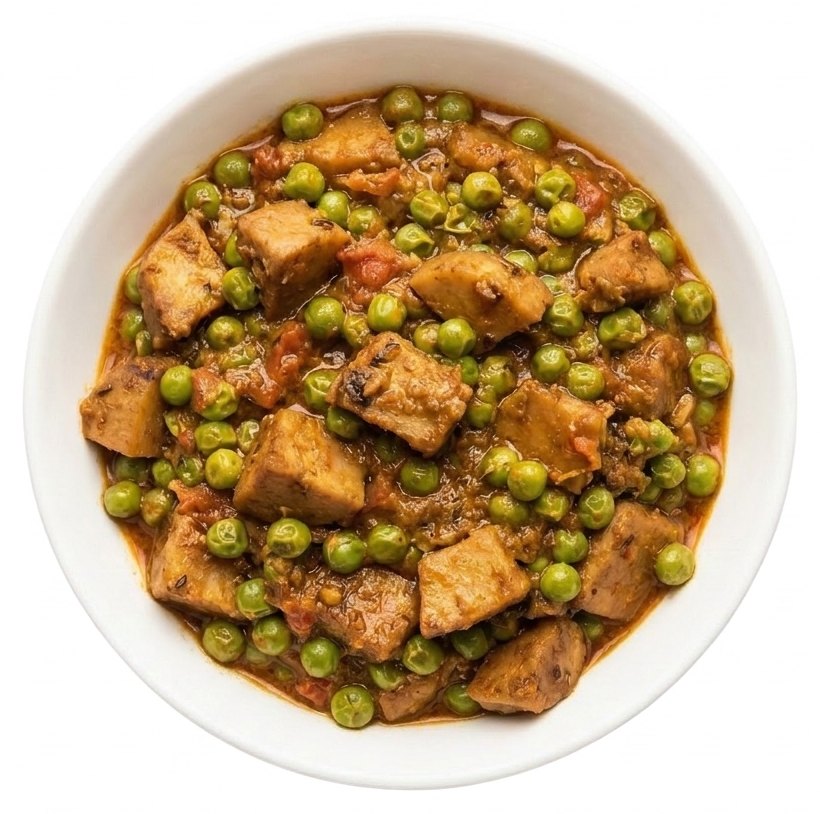
Zimikand-Matar
A hearty, spiced curry featuring tender browned elephant's foot yam and sweet green peas simmered in a tangy tomato and yoghurt sauce.
Tempering spices
1.4 gFried in the ghee after the yam (step 3)Ground spices
4.5 gCooked with the tomatoes (step 4)Finishing spices
3.9 gStirred in with the yoghurt towards the end (step 6)Everything else

Method
- Bring a large pot of water to a rolling boil, add 500 g elephant's foot yam, and cook for about 10 minutes until tender. Drain well and cut into 4-cm (1½-inch) pieces.
- Warm 180 g ghee in a large, heavy pot over medium heat. Fry the yam pieces for roughly 5 minutes until browned and golden, then lift them out with a slotted spoon and set aside.
- Toss the tempering spices into the hot ghee and stir-fry for 1 to 2 minutes until fragrant.
- Add the ground spices, 5.8 g salt, and 240 g tomato. Sauté for 2 to 3 minutes until the tomatoes begin to soften and break down.
- Stir in the fried yam, 1000 g pea, and 250 ml water. Lower the heat, cover the pot, and simmer for 15 to 20 minutes, stirring occasionally, until the vegetables are cooked through and tender.
- Mix in 127 g plain yogurt along with the finishing spices, and continue cooking for 10 minutes more before serving.
Don't have something?


 Yam
Use the same weight; peel and boil as directed. Same starchy texture.
 Taro root
Use the same weight; peel and cook 5–10 minutes longer. Slightly gluey when mashed.
 Sweet potato
Use the same weight; peel and cook less. Softer and sweeter, so adjust sugar and spice.


 Unsalted butter
Use 120% of the weight; melt gently over low heat to avoid burning the milk solids, which will yield a softer, creamier richness rather than a nutty aroma.
 Vegetable oil
Use 85% of the weight; holds high cooking temperatures without smoking, but the final dish will lack traditional dairy depth.
 Mustard oil
Use equal weight; heat to smoking point and cool slightly before cooking, bearing in mind it introduces an assertive, pungent edge.


 Garlic powder
Use double the weight. Stir into hot oil just before adding wet ingredients; mimics the allium savoury background without the sulphurous edge.
 Garlic paste
Use 2 g for every 0.5 g of asafoetida. Sauté in oil until the raw smell clears; adds moisture and sweet allium depth.


 Ground cumin
Use 70% of the weight; add with ground spices or sauce bases rather than hot oil tempering, where it scorches quickly and turns bitter.
 Black cumin seeds
Use equal weight for oil tempering. Delivers an earthy profile with an additional musky, smoky, and slightly bitter edge.
 Fennel seed
Use 60% of the weight for tempering; offers comparable warm aroma, but leans sweet and liquorice-like rather than savoury and earthy.


 Ground ginger
Use 50% of the weight. Mimics turmeric's warm, earthy, rhizome background, but provides none of the golden-yellow colour.
 Saffron
Steep a tiny pinch (0.1 g per 2 g turmeric) in 2 tbsp warm water; use to match the rich golden hue. Contributes an aristocratic, honeyed floral flavour rather than earthy bitterness.


 Red chilli powder
Use 100% of the weight. Provides direct, sharp heat and red colour in equal measure.
 Kashmiri chilli powder
Use 150% to 200% of the weight if matching colour, but add a pinch of black pepper or hot chilli if you need equivalent fiery heat.
 Cayenne pepper
Use 75% to 100% of the weight. Offers a sharp, clean heat with slightly less earthy depth and less crimson colour.


 Ground coriander
Use 75% of the weight; stir in along with wet masala or tomato purée rather than frying in hot oil, as the fine powder burns instantly.
- Cumin seed
Use 50% of the weight for tempering in hot oil. Lacks the floral, sweet citrus flavour of coriander, introducing warm, pungent earthiness instead.
- Fennel seed
Use 50% of the weight in tempering; provides pleasant aromatic sweetness, though noticeably aniseedy rather than citrusy.


 Tomato purée
Use 40% to 50% of the fresh tomato weight mixed with a splash of water. Imparts a deeper red colour, thicker sauce, and slightly sweeter cooked flavour.
 Plain yogurt
Use 60% of the weight, whisked smooth and added on low heat. Provides rich body and sourness, though the gravy becomes paler and creamier.


 Yogurt
Use equal weight, whisked thoroughly until smooth before adding to hot dishes to prevent curdling.
 Coconut milk
Use equal weight with 1 teaspoon lemon juice mixed in. Provides rich creaminess in curries, but adds a noticeable coconut flavour.
 Single cream
Use 80% of the weight plus a squeeze of lemon juice for acidity. Enriches sauces nicely, though it is richer and less tangy.


- Ground cumin
Use 50% of the weight mixed with equal parts ground coriander and a pinch of ground cinnamon, ground cloves, and ground green cardamom. Sprinkle near the end for a warming finish.
 Lentil stew spice mix
Use 75% of the weight. Simmer briefly in the gravy; imparts roasted warmth and complexity, though it adds a slight tang and earthy lentil undertone.


 Lemon juice
Use 15 g (1 tbsp) for every 5 g of amchoor. Stir in at the very end off the heat; adds liquid and fresh citrus aroma rather than dry fruity tang.
 Tamarind extract
Use 75% of the weight, dissolved in a splash of warm water. Simmer briefly; darkens the gravy and provides a deeper, caramelised sourness.

Similar dishes

- Same: Matar ki Phali shares peas, cumin seeds, asafoetida, garam masala, and amchoor with this dish.
- Different: Matar ki Phali is a dry braise of whole pea pods in vegetable oil, omitting the yam, shelled peas, tomatoes, yogurt, ghee, turmeric, and chilli powder used in this dish.

- Same: Both dishes feature green peas mixed with plain yogurt and seasoned with cumin seed, chilli powder, and salt.
- Different: Matar ka Raita is a chilled, uncooked yogurt side dish seasoned with sugar, omitting the elephant's foot yam, tomatoes, ghee, amchoor, and cooked ground spices used in this curry.

- Same: Dal ka Kima also simmers green peas in a ghee-based tomato and yogurt sauce seasoned with coriander, turmeric, and garam masala.
- Different: Instead of elephant's foot yam, it features fried moong dal cooked with a heavy base of onions, garlic, and ginger, omitting the cumin, asafoetida, chilli powder, and amchoor used here.
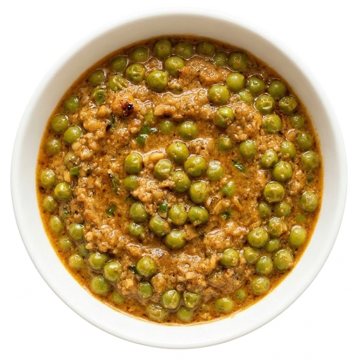
- Same: Khoya Matar also features green peas cooked in ghee with asafoetida, cumin seeds, chilli powder, coriander, and garam masala.
- Different: Khoya Matar uses browned khoya instead of elephant's foot yam, adds fresh ginger, green chillies, and cloves, and completely omits the tomatoes, yogurt, amchoor, and turmeric found in this dish.