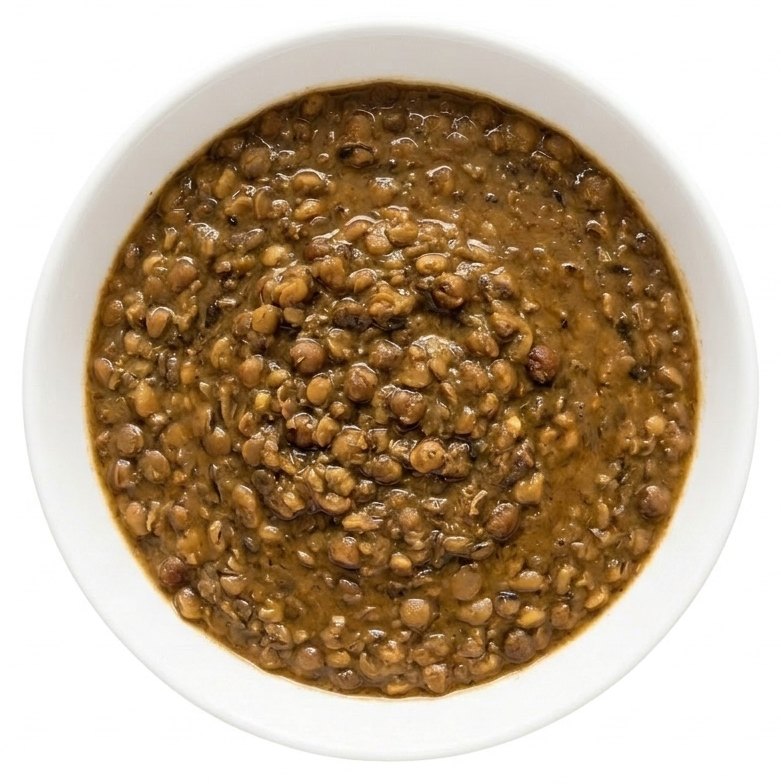
Shyama
A slow-cooked, hearty mixed-lentil dal with a thick, velvety texture and fragrant spiced tempering.
Ground spices
26 gStirred into the simmering dal (step 3)Everything else

Method
- Place the mixed pulses—including 100 g urad dal and 100 g chana dal—into a large bowl, cover generously with water, and soak overnight.
- Drain the soaked pulses and transfer them to a pressure cooker covered with fresh water. Cook under pressure for 5 minutes, then let the pressure release naturally before opening (alternatively, boil in a heavy pot for 20 to 30 minutes until tender). Drain the pulses, reserving the cooking liquid, and crush them lightly with a spatula.
- Transfer the crushed pulses to a deep, heavy-bottomed pot or kadhai. Pour in the reserved cooking liquid, add the ground spices, and season with salt to taste. Cook gently over low-medium heat for about 2 hours until the soup achieves a rich, creamy consistency, removing dal grains if preferred.
- Heat 13.5 g ghee or vegetable oil in a small frying pan over medium heat. Fry the tempering aromatics for 1 to 2 minutes until fragrant and slightly darkened, then pour the hot oil over the dal. Garnish to serve.
Don't have something?
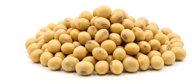
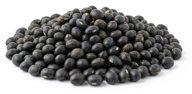 Dried black soya bean
Use the same weight; soak overnight and pressure-cook until tender. Darker colour and slightly stronger bean flavour.
 Chickpea
Use the same weight of dried chickpeas, soaked overnight and boiled until soft. Firmer, nuttier and less oily than soy bean.
 Whole mung bean
Use the same weight; soak 4 hours and cook until soft. Cooks faster and gives a softer, milder dal.


 Green bean
Use the same weight, top and tail, and cook the same way. Closest match.
 French bean
Use the same weight and trim; cooking time is the same.
 Cluster bean
Use the same weight, cut into similar lengths, and cook 2 minutes longer until tender.


- Chickpea
Use the same dried weight, soak overnight and pressure cook 15-20 minutes longer. Firmer and nuttier.
 Black-eyed pea
Use the same weight; no soaking needed and cooks 20-25 minutes faster. Less creamy.
 Red cowpea
Use the same weight, soak 2 hours and cook 15-20 minutes less. Softer and earthier.


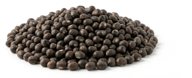 Whole black gram
Use equal weight. Needs longer soaking and cooking; the dark skins impart an earthy flavour and greyish-black hue unless thoroughly rubbed off.
 Chana dal
Use equal weight when tempering (tadka). Provides a comparable nutty, crunchy texture in hot oil, though grains are slightly larger.
 Split mung beans
Use equal weight for batters or dals. Ferments and cooks faster, producing a lighter, less sticky, and less viscous consistency.

 Yellow split peas
Use 100% of the weight. Soak for at least 1 hour; takes about 10 minutes longer to cook through and has a marginally earthier flavour.
 Pigeon peas
Use 100% of the weight. Reduces cooking time by about 10 minutes and breaks down softer, giving a smoother consistency rather than distinct grains.
- Black gram
For tempering or tadka only: use 70% of the weight. Browns faster in hot oil, providing a nutty, crunchy bite.


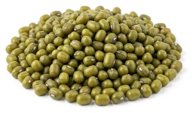 Whole mung beans
Use the same weight. Soak 4 hours and cook 20–25 minutes; it is softer and much less earthy.
- Black-eyed pea
Use the same weight. Soak 4 hours and simmer 20–25 minutes; flavour is milder and the broth less dark.
- Red cowpea
Use the same weight. Soak 4 hours and cook until tender, about 25 minutes; it gives a similar firm bite but a gentler taste.

- Red cowpea
Use the same weight; it is closely related and cooks in a similar time. Soak as directed.
 Dried chickpea
Use the same weight, but soak overnight and cook much longer; the texture will be firmer and nuttier.


 Coriander seeds
Dry-roast lightly in a pan and grind to a fine powder; use equal weight (1:1). Offers a noticeably fresher, brighter citrus note.
 Ground cumin
Use 50% to 75% of the weight. Lacks the floral, citrusy profile of coriander and turns the gravy heavier, earthier, and darker.
 Garam masala
Use 50% of the weight and stir in near the end of cooking. Adds warmth and depth since it contains ground coriander, but introduces stronger spices like clove and cinnamon.


 Cumin seed
Dry-roast briefly and grind finely; use equal weight (1:1). Imparts an even punchier, nuttier, toasty aroma than pre-ground cumin.
- Ground coriander
Use equal weight (1:1). Adds mild, lemony sweetness rather than cumin's smoky, earthy bite; curries will taste lighter and less savoury.
 Black cumin seeds
Grind finely; use 60% to 75% of the weight. Produces a darker, more complex, smoky-herbal flavour suited to rich gravies.


 Coriander leaf
Use equal weight, chopped fresh and stirred in off the heat or used as garnish. Matches the citrus-herbal profile identically.
 Mint
Use 40% to 50% of the weight; chop finely and add at the very end. Adds fresh herbal brightness, but shifts the aroma toward cool menthol.


 Peanut oil
Use equal weight; handles high tempering heat well and keeps flavours neutral.
 Butter
Use equal weight; cook over gentle heat to prevent browning the milk solids too quickly.


 Dried red chilli
Use about 60–70% of the blend weight as crushed dried red chilli, and add fresh garlic paste at about 30–40% of the blend weight. Soak the chillies if a smooth paste is needed. Keeps the heat and garlic but loses the dried-garlic depth.
 Red chilli paste
Use about 1.5 times the weight and stir in 1 crushed garlic clove per 10 g of blend. Fresher and wetter, so fry a little longer to drive off moisture.
 Dried red chilli flakes
Use the same weight of flakes and add garlic paste at about half the flakes' weight. Quicker, no soaking, but coarser and less rounded.


Similar dishes

- Same: Dibba Roti shares the use of urad dal, ground cumin, salt, and vegetable oil with this dish.
- Different: Dibba Roti is pan-fried as a thick pancake made solely from urad dal and served with Adrak ki Chutney, omitting the chana dal, ground coriander, and slow-cooked stewing method of this dish.

- Same: Khasta Kachori also features urad dal seasoned with ground cumin and ground coriander and cooked using ghee and oil.
- Different: Rather than a slow-cooked, soupy stew of urad and chana lentils, Khasta Kachori is a deep-fried pastry containing only urad dal spiced additionally with ginger, green chilli, chilli powder, fennel seed, asafoetida, and sugar.
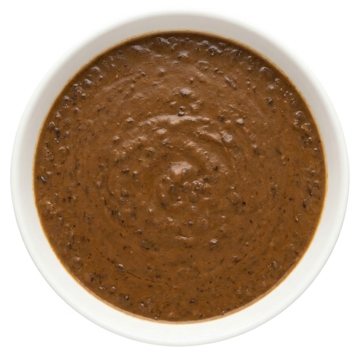
- Same: Dal Makhani shares urad dal, ground coriander, ground cumin, ghee or oil and a slow-cooked lentil base with this dish.
- Different: Dal Makhani adds onion, tomato, green chilli, asafoetida, Kashmiri chilli powder, double cream and butter, while this dish uses soy bean, French green bean, kidney bean, chana dal, horse gram and black-eyed pea with a dried red chilli and garlic tempering.
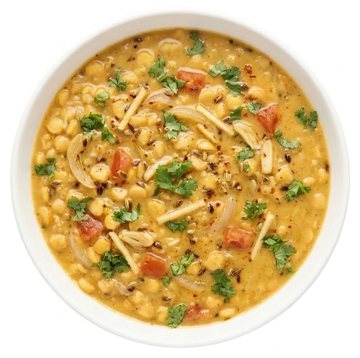
- Same: Tadka Dal shares with this dish a chana dal base, garlic, ground coriander, salt, coriander garnish, and a fat-based tempering.
- Different: Tadka Dal uses only chana dal with water, turmeric, cumin seed, fennel seed, Kashmiri chilli powder, onion, tomato, ginger and vegetable oil, while this dish slow-cooks soy, kidney, french green and black-eyed beans with urad, chana and horse gram, ground cumin, dried red chillies and garlic, and ghee or vegetable oil.