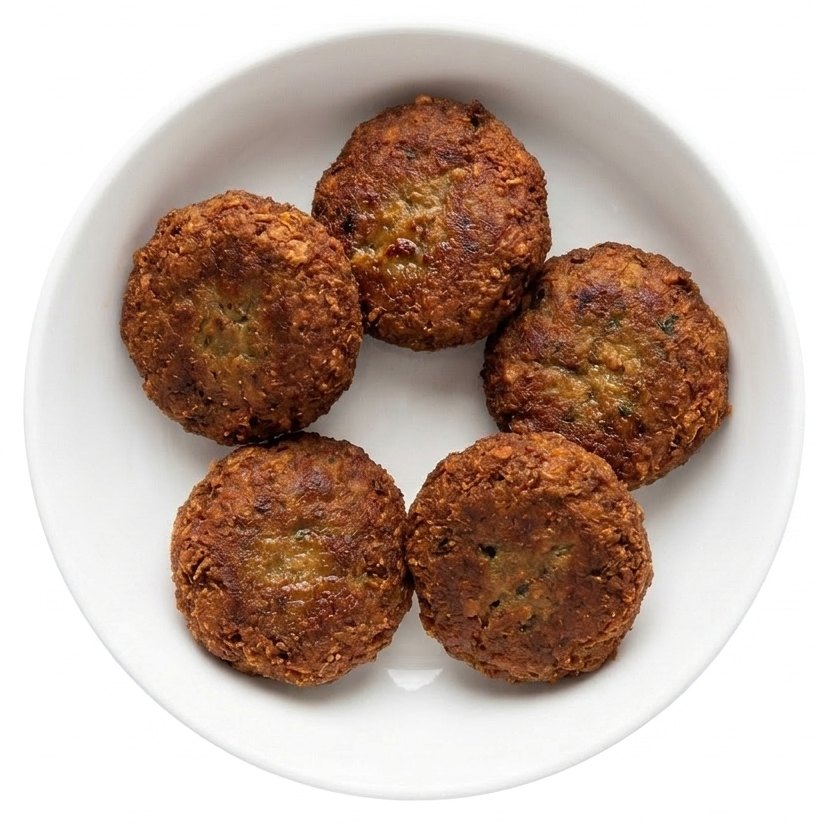
Shami Kebab
Tender patties made from minced lamb and lentils cooked down with whole spices, processed into a velvety paste, and fried until crisp outside. They are rich, meltingly soft, and fragrant with warm spices and fresh chillies.
Whole spices for simmering
13 gAdded to the pot with the meat and lentils (step 1)Everything else

Method
- Put 1000 g lamb, 75 g chana dal, 25.2 g masoor dal, 12 g ginger, the whole spices for simmering, and salt to taste into a saucepan, then pour in 175 ml water.
- Bring the mixture to a boil over high heat, then drop the heat to medium and simmer uncovered for around 45 minutes, until the liquid has completely cooked away and the pan is dry. Take off the heat and let cool.
- Pick out and discard the whole spices, then transfer the cooked meat mixture to a food processor and grind to a smooth paste.
- Turn the paste out into a bowl and mix in 1 g chopped coriander and 14.8 g green chilli until evenly combined.
- Divide the mixture into 20 equal portions, roll them into balls, and use damp hands to press each ball into a neat, flattened patty.
- Heat vegetable oil for deep-frying in a deep pan or kadhai to 180°C / 350°F. Deep-fry the patties in batches until browned and crisp on both sides, then remove with a slotted spoon, drain on paper towels, and serve with chutney.
Don't have something?


 Yellow split peas
Use 100% of the weight. Soak for at least 1 hour; takes about 10 minutes longer to cook through and has a marginally earthier flavour.
 Pigeon peas
Use 100% of the weight. Reduces cooking time by about 10 minutes and breaks down softer, giving a smoother consistency rather than distinct grains.
 Black gram
For tempering or tadka only: use 70% of the weight. Browns faster in hot oil, providing a nutty, crunchy bite.


 Split mung beans
Use equal weight; cooks down to a creamy, comforting purée in roughly the same 20-25 minutes, with a paler yellow colour.
- Pigeon peas
Use equal weight; needs 15 minutes longer cooking or pressure cooking, producing a slightly grainier, nuttier dal.
- Chana dal
Use equal weight; pre-soak for 1 hour and cook for 20 minutes longer; stays whole rather than breaking down into a silky soup.


 Ground black cardamom
Use 0.5 g of ground seeds for each whole pod. Stir directly into the curry base; delivers identical smoky flavour without woody husks.
 Green cardamom pod
Use equal pod count or weight. Crack slightly and fry whole; tastes sweet, menthol-fresh, and floral rather than dark and smoky.


 Green cardamom seed
Use 35 to 40% of the total pod weight; lightly bruise the seeds before frying in oil to release their essential oils.
 Ground green cardamom
Use 20 to 25% of the pod weight (about 1 generous pinch per pod); stir in toward the end of cooking so the delicate floral notes do not dissipate.
 White cardamom pod
Use 1:1 by pod count or weight; crack gently before using, though it is slightly less intensely floral.


 Dried kashmiri chilli
Use equal weight whole. Fry in hot oil or ghee as tempered spice; gives a richer red colour with slightly milder heat.
 Red chilli powder
Use 50% to 70% of the weight. Stir into the oil with ground spices; distributes heat evenly throughout the dish without whole chilli skins.


 Coarsely ground black pepper
Use 75% of the weight. Add midway through simmering; spreads heat evenly through the dish instead of delivering isolated bursts.
 Ground black pepper
Use 50% of the weight. Stir in near the end of cooking; significantly darkens light gravies and provides an immediate, sharp bite.


 Ceylon cinnamon
True cinnamon: thinner, papery quills, milder and sweeter. Use about 1.5 times the weight, and taste.
 Ground cinnamon (cassia)
Use about a third of the weight (0.5 g ground for a 2.5 cm piece), stirred in with the ground spices rather than fried whole, since the powder burns quickly.
 Cassia buds
Use 60-70% of the weight; stronger and more peppery, so taste before adding more.


 Ground cloves
Use 1 g ground for 4 g whole (or 1 small pinch per 2 to 3 whole cloves). Add with spice powders; disperses intense warmth quickly, so use with restraint.
 Allspice berries
Use 100% of the weight whole in tempering. Imparts a warm, clove-like aromatic profile combined with hints of nutmeg and cinnamon.
- Black cardamom pod
Use 1 pod for 3 to 4 cloves in whole tempering. Shares a camphor-like warmth and medicinal depth, though it introduces a distinct smoky undertone.


 Fresh ginger
Use equal weight; scrape off the skin and grate or finely julienne according to the recipe.
 Ginger paste
Use equal weight; stir straight into the sizzling aromatics, taking care as the extra moisture may spit.
 Ground ginger
Use 15 to 20% of the weight; add alongside ground spices, noting it imparts warm, dry heat rather than zesty freshness.


 Coriander leaf
Use equal weight, chopped fresh and stirred in off the heat or used as garnish. Matches the citrus-herbal profile identically.
 Mint
Use 40% to 50% of the weight; chop finely and add at the very end. Adds fresh herbal brightness, but shifts the aroma toward cool menthol.


 Chilli powder
Use 10 to 15% of the weight (about 1/4 teaspoon per chilli); imparts dry pungent heat and reddens the dish without the grassy crunch.
- Dried red chilli
Use 1 dried pod per fresh green chilli; snap in half and temper in hot oil for a deeper, toastier heat.


 Peanut oil
Use 1:1 by weight. Handles high-heat frying identically and introduces a very subtle, pleasant nuttiness.
 Ghee
Use 1:1 by weight. Yields a much richer, authentic aroma and a glossy, heavier mouthfeel.
 Mustard oil
Use 1:1 by weight. Heat until smoking, then cool slightly before cooking to temper its intensely pungent, sharp mustard kick.


 Mint chutney
Use the same weight for the milder, fresher option; adjust lemon or salt at the end.
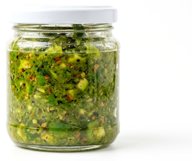 Raw green mango chutney
Use the same weight for the sour option; it is sharper, so taste before adding extra lemon.
 Tamarind chutney or mint chutney
Use the same weight; the tamarind side is sweeter and more sour, so balance with sugar and salt.


Similar dishes

- Same: Both are fried lamb and chana dal kebabs seasoned with black and green cardamom, black peppercorns, dried red chillies, and green chillies, soured with Chintapandu Thokku.
- Different: Sikampoor Kebab (I) adds turmeric, fresh coriander, and a seasoned onion stuffing, but omits the masoor dal, cinnamon stick, cloves, and ginger present in this dish.

- Same: Khare Masale ka Gosht also features lamb seasoned with whole spices including black and green cardamom, cinnamon, cloves, dried red chillies, and black peppercorns.
- Different: Instead of cooking minced lamb with lentils to form fried patties, it simmers lamb pieces into a curry using ghee, yogurt, onions, garlic, turmeric, and coriander seeds.

- Same: Both recipes combine lamb and chana dal simmered with warm whole spices like cinnamon, cloves, and green and black cardamom.
- Different: Dalcha Gosht is a slow-cooked stew enriched with ghee, yogurt, curry leaves, and lemon juice, whereas this dish blends lamb with masoor dal and fries the mixture in vegetable oil.

- Same: Both dishes are spiced lamb and chana dal patties bound with green cardamom, cinnamon, and cloves, then fried in vegetable oil.
- Different: Sikampoor Kebab (II) features a spiced onion stuffing, garlic, black cumin, and lemon juice and is deep-fried, whereas this dish includes masoor dal, ginger, black cardamom, and Chintapandu Thokku with no filling.