Indian cooking
Indian cooking / Dishes / Tali Mangori
Tali Mangori (Fried Moong Dal Dumplings)

Tali Mangori

Fried Moong Dal Dumplings
Vegetarian●●●Origin AwadhPrep 20 minutes, plus soaking timeCook 25 minutes

These airy, savoury moong dal dumplings are deep-fried until golden, then simmered in a warming ginger-tomato gravy until tender and succulent.

Ingredients

01
200 g
legume
02
248 g250 ml
other
03
228 g250 ml
oil/fat
04
2 g2 tablespoons
herb
05
to taste
salt

Method

  1. Submerge 200 g moong dal in a bowl of water and leave to soak for 8 to 10 hours.
  2. Drain the soaked dal thoroughly and blend in a food processor until it forms a very smooth paste. Transfer to a bowl, beat vigorously by hand to incorporate air, and stir in salt to taste.
  3. Add 250 g ginger tomato sauce to a saucepan and place over low heat to warm. Pour 228 g mustard oil into a flat kadhai or wide, heavy frying pan and set over high heat.
  4. Take small portions of the batter and squeeze them between your thumb and index finger directly into the hot oil. Turn down the heat and fry undisturbed for a few minutes until steam bubbles break on the surface, then flip and fry for several minutes more until evenly golden brown.
  5. Transfer the fried dumplings with a slotted spoon directly into the warm ginger tomato sauce. Simmer gently for 10 to 15 minutes, loosening with a splash of water if needed, until piping hot.
  6. Garnish with 2 g coriander leaf and serve.

Don't have something?

Moong dal
  • Red lentils

    Use equal weight. It cooks in about the same time and breaks down to a similar soft, creamy consistency, though the colour will be slightly pinkish-orange.

  • Pigeon peas

    Use equal weight. Requires longer soaking and cooking time, and produces a slightly earthier, denser dal.

Ginger tomato sauce
  • Tomato purée

    Use the same weight and stir in ginger paste to taste, about 5% of the purée weight. Simmer briefly; close in body, fresher and less sweet.

  • Ketchup

    Use the same weight and add a pinch of ground ginger. Sweeter and more vinegary; reduce added sugar in the dish.

  • Canned chopped tomatoes

    Use the same weight, blend smooth and cook down with ginger paste until thick. More watery at the start, so allow extra simmering.

Mustard oil
  • Peanut oil

    Use equal weight. It handles high-heat cooking well, but lacks the signature pungent, nasal heat of mustard oil.

  • Vegetable oil

    Use equal weight. Neutral in flavour, so your curry will lack the characteristic Bengali or North Indian pungent punch.

Coriander leaf
  • Coriander

    Use equal weight finely chopped; this is the exact same fresh herb.

  • Mint

    Use half the weight finely chopped; provides vibrant green freshness, though the flavour profile becomes noticeably cooler and sharper.

Similar dishes

Pesarattu
Spicy Lentil Pancakes
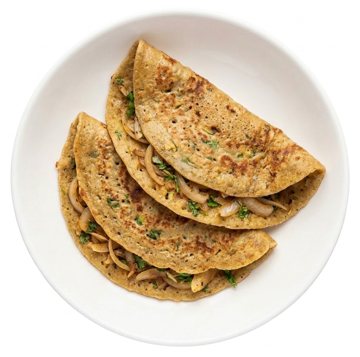
Pesarattu has a spicier, sharper flavour from the green chillies, cumin, and onions, lacking the rich, mustard oil bite and tomato-ginger undertones of this dish.
  • Same: Both dishes rely on ground moong dal as their main base, seasoned with fresh coriander leaf and salt.
  • Different: Instead of being deep-fried in mustard oil and stewed in gravy, Pesarattu is griddled as flat pancakes in vegetable oil and adds green chilli, ground cumin, garam masala, and an onion filling.
Payatham Parappu Dosa
Green Lentil Pancakes
Payatham Parappu Dosa is crisp and herb-and-chilli savoury from a fermented griddle-cooked batter, while this dish is softer and richer with fried dumplings in ginger-tomato gravy.
  • Same: Payatham Parappu Dosa shares moong dal and coriander leaf with this dish, and both are savoury Indian dishes.
  • Different: Payatham Parappu Dosa adds parboiled rice, fenugreek, green chilli, curry leaf and cumin and uses vegetable oil, while this dish uses mustard oil and ginger-tomato sauce and is deep-fried then simmered.
Payatham Pezhukku
Moong Bean Dal
Payatham Pezhukku is lightly spiced with coconut and curry leaf notes, while this dish is richer, fried and sour from its ginger-tomato gravy.
  • Same: Payatham Pezhukku and this dish both use moong as the main ingredient and are seasoned with salt.
  • Different: Payatham Pezhukku uses whole mung bean, dried red chilli, coconut oil and curry leaves, while this dish uses moong dal, ginger-tomato sauce, mustard oil and coriander and is deep-fried then simmered as dumplings.
Dibba Roti
Thick Pancakes
Dibba Roti is crisp and golden outside with a soft, thick, cumin-scented interior, whereas this dish is airy and succulent in a warming ginger-tomato gravy.
  • Same: Dibba Roti shares with this dish a savoury dal base and salt.
  • Different: Dibba Roti uses urad dal and rice with ground cumin and vegetable oil, while this dish uses moong dal, mustard oil, and a ginger-tomato sauce and is deep-fried then simmered.