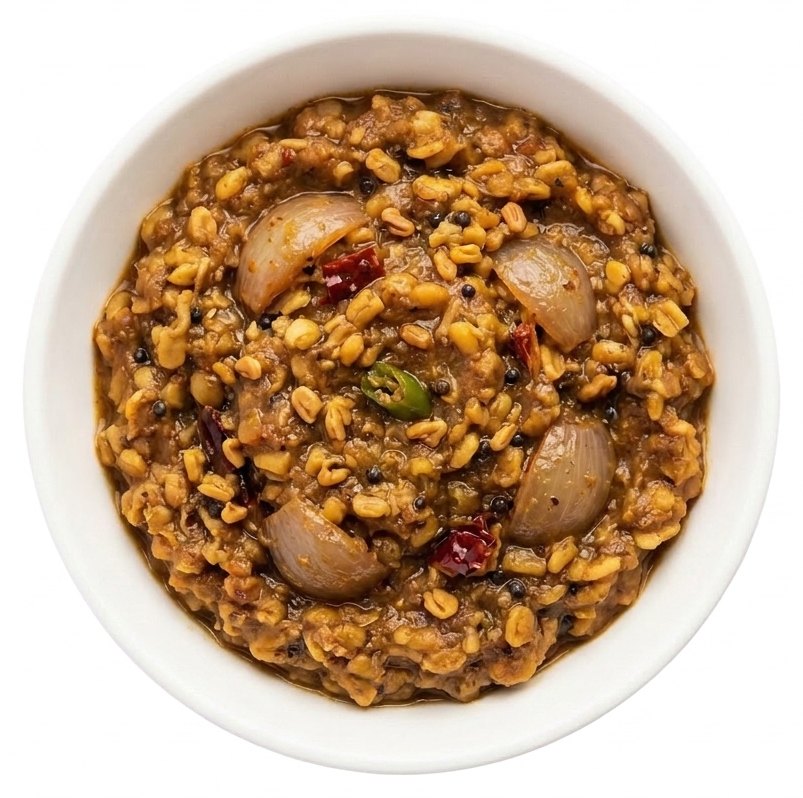
Moong Dal ki Chutney
A savoury, tangy lentil chutney flavoured with toasted spices and sour tamarind. It makes an ideal accompaniment to dosas and other savoury snacks.
Whole spices for frying
10 gFried with the dal (step 1)Everything else

Method
- Warm 9 g vegetable oil in a frying pan over medium heat. Add the whole spices for frying and 0.5 cup moong dal, stir-frying for 1 to 2 minutes until deeply browned. Remove from the heat and set aside to cool.
- Combine the cooled fried dal mixture with 36 g green chilli, 1 tsp ginger, 150 g onion, and 125 g tamarind extract. Transfer to a blender and blitz until smooth, pouring in a splash of water if needed to help it blend.
- Stir in 0.5 tsp sugar and season with salt to taste. Serve immediately or store in a sealed container in the fridge for up to 2 days.
Don't have something?


 Peanut oil
Use 1:1 by weight. Handles high-heat frying identically and introduces a very subtle, pleasant nuttiness.
 Ghee
Use 1:1 by weight. Yields a much richer, authentic aroma and a glossy, heavier mouthfeel.
 Mustard oil
Use 1:1 by weight. Heat until smoking, then cool slightly before cooking to temper its intensely pungent, sharp mustard kick.


 Mustard seed
Use 50% of the weight, crush or grind. Sharper heat and less maple-bitter; fry briefly in oil before adding.
 Caraway seeds
Use the same weight, crush lightly. Similar bitter-seed note but more aniseed; reduce other sweet spices slightly.
 Ajwain seeds
Use 25–30% of the weight, crush. Much stronger thyme-like flavour; do not overdo.


 Dried kashmiri chilli
Use equal weight whole. Fry in hot oil or ghee as tempered spice; gives a richer red colour with slightly milder heat.
 Red chilli powder
Use 50% to 70% of the weight. Stir into the oil with ground spices; distributes heat evenly throughout the dish without whole chilli skins.

 Black mustard seed
Use the same weight. The seeds are smaller and hotter; fry in hot oil until they pop, about 20–30 seconds, and reduce the heat if they darken too fast. The dish will be a little sharper.
 Yellow mustard seeds
Use the same weight. They are milder and larger; fry a few seconds longer until they pop. The finished dish will have less pungency.
 Ground mustard seed
Use 70% of the weight of whole seed, added with the other ground spices rather than fried whole. You lose the popping texture and the heat comes through more evenly.



 Red lentils
Use equal weight. It cooks in about the same time and breaks down to a similar soft, creamy consistency, though the colour will be slightly pinkish-orange.
 Pigeon peas
Use equal weight. Requires longer soaking and cooking time, and produces a slightly earthier, denser dal.


 Chilli powder
Use 10 to 15% of the weight (about 1/4 teaspoon per chilli); imparts dry pungent heat and reddens the dish without the grassy crunch.
- Dried red chilli
Use 1 dried pod per fresh green chilli; snap in half and temper in hot oil for a deeper, toastier heat.


 Ginger paste
Use the same weight; it is practically the same.
 Fresh ginger
Grate the same weight; it is the same but more fibrous.
 Ground ginger
Use about 30% of the weight, mixed with a little water; it is drier and hotter, with less fresh brightness.






 Tamarind
Use 180% of the weight of compressed tamarind; soak in three times its weight of boiling water for 15 minutes, knead, and strain out the thick pulp.
 Dried mango powder
Use 35% of the weight dissolved in two tablespoons of warm water. Provides sharp tang, though the resulting sauce will be lighter in colour.
 Lemon juice
Use equal weight, added right at the end of cooking. Adds sharp acidity without the deep brown hue or pulpy thickness.


 Caster sugar
Use the same weight and grind to a fine powder in a dry blender. Add 3% cornflour by weight if you need it to stay powdery.
 Granulated sugar
Use the same weight and grind in small batches until fine. It is coarser and may feel gritty in uncooked icings.
 Sugar candy
Use the same weight and grind to a powder. It is harder to grind and gives a slightly crunchier result.


Similar dishes

- Same: Both dishes use tamarind extract for sourness, lentils, and a tempering of mustard seeds and dried red chillies.
- Different: Jeera Rasam is a thin broth tempered in ghee with cumin seeds, curry leaves, rasam podi, and a tiny amount of toor dal, omitting this dish's moong dal base, onion, fenugreek seeds, vegetable oil, and fresh green chillies.

- Same: Masoor ki Chutney shares a savoury, tangy lentil-chutney base with this dish, using tamarind, dried red chilli, mustard seed, onion, oil, and salt.
- Different: Masoor ki Chutney uses whole masoor dal and dried coconut and adds garlic paste, coriander, cumin, asafoetida, curry leaf, and a separate mustard-onion tempering, while this dish uses moong dal, fenugreek, green chilli, ginger, and icing sugar and has no coconut.

- Same: Payatham Parappu Dosa also uses moong dal as a primary base, seasoned with fenugreek seeds, green chillies, and salt in vegetable oil.
- Different: Payatham Parappu Dosa is prepared as a griddled pancake flavoured with ginger, cumin seeds, curry leaves, and coriander leaves, omitting the onion, mustard seeds, dried red chillies, and tamarind extract cooked into this chutney.

- Same: Masiyal and this dish both use lentils, tamarind as the souring agent, vegetable oil, mustard seed, dried red chilli, green chilli, and salt.
- Different: Masiyal uses toor dal and spinach mashed together, plus sambar masala and curry leaf, while this dish uses moong dal, onion, ginger, fenugreek seed, and icing sugar in a chutney style.