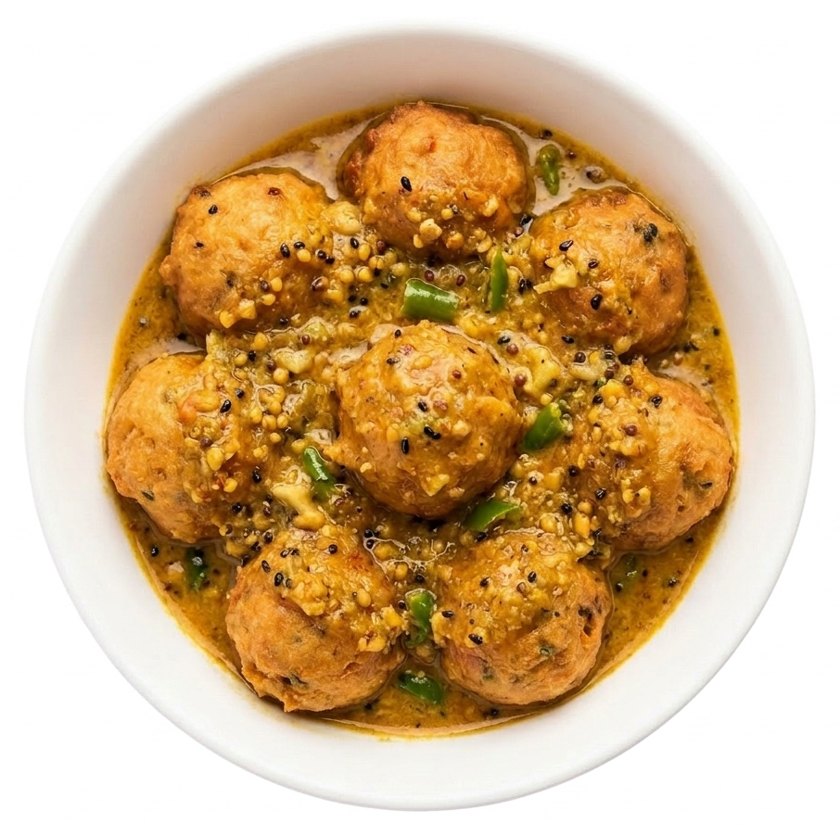
Borar Jhaal
Crisp urad dal fritters simmered in a sharp, pungent mustard gravy with green chillies. The fried lentil balls soften as they absorb the spiced, warming sauce.
Dal ball spices
2.9 gBlended with the dal (step 2)Mustard sauce seeds
7 gMixed into the sauce liquid (step 5)Tempering spice
3 gFried in the oil (step 6)Everything else

Method
- Cover 100 g urad dal with water in a bowl and leave to soak for 30 minutes, then drain thoroughly.
- Transfer the drained dal to a food processor along with 24 g green chilli, 2.1 g granulated sugar, salt to taste, and the dal ball spices. Puree to a thick paste.
- Divide and roll the paste into 12 equal truffle-sized balls, pressing firmly so they hold their shape.
- Heat 228 g mustard oil in a kadhai or deep frying pan to 180°C/350°F. Turn down the heat slightly, slide in the dal balls, and fry for 5 minutes until deep golden. Lift out with a slotted spoon and drain on paper towels.
- In a mixing bowl, combine the mustard sauce seeds, 12 g green chilli, 4.2 g granulated sugar, and 750 ml water.
- Ladle 3 tablespoons of the hot frying oil into a separate frying pan over medium-high heat. Add the tempering spice and fry for 30 seconds until aromatic.
- Pour the mustard sauce mixture into the pan and bring to a boil. Lower the heat and simmer gently for 10 minutes.
- Add the fried dal balls to the sauce, gently turn them to coat, and take the pan off the heat to let them soak. Serve with plain boiled rice.
Don't have something?


 Whole black gram
Use equal weight. Needs longer soaking and cooking; the dark skins impart an earthy flavour and greyish-black hue unless thoroughly rubbed off.
 Chana dal
Use equal weight when tempering (tadka). Provides a comparable nutty, crunchy texture in hot oil, though grains are slightly larger.
 Split mung beans
Use equal weight for batters or dals. Ferments and cooks faster, producing a lighter, less sticky, and less viscous consistency.


 Chilli powder
Use 10 to 15% of the weight (about 1/4 teaspoon per chilli); imparts dry pungent heat and reddens the dish without the grassy crunch.
 Dried red chilli
Use 1 dried pod per fresh green chilli; snap in half and temper in hot oil for a deeper, toastier heat.


 Jaggery
Use equal weight; grate or shave finely so it dissolves rapidly, giving a warm, caramel-like sweetness and slightly darker sauce.


 Fresh ginger
Use equal weight; peel and grate very finely on a microplane or pound to a fine paste in a mortar.
 Ginger
Use equal weight; mince finely and crush with the flat of a knife before frying.
 Ground ginger
Use 20% of the weight; add directly with the dry spice powders, though it yields an earthier, less pungent profile.


 Garlic powder
Use double the weight. Stir into hot oil just before adding wet ingredients; mimics the allium savoury background without the sulphurous edge.
 Garlic paste
Use 2 g for every 0.5 g of asafoetida. Sauté in oil until the raw smell clears; adds moisture and sweet allium depth.


 Peanut oil
Use equal weight. It handles high-heat cooking well, but lacks the signature pungent, nasal heat of mustard oil.
 Vegetable oil
Use equal weight. Neutral in flavour, so your curry will lack the characteristic Bengali or North Indian pungent punch.


 Black cumin seeds
Use equal weight. Imparts an earthy, slightly bitter note in temperings, though it lacks nigella's oniony sharpness.
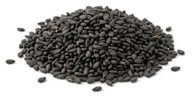 Black sesame seeds
Use equal weight. Gives a similar speckled appearance and light crunch on breads, but provides a nutty rather than herbaceous, onion-like flavour.


 Steamed rice
Use equal weight. Fluff with a fork before serving; absorbs curries and dals in identical fashion.
 Basmati rice
Cook 40% of the required boiled weight in raw basmati rice using 2 parts water to 1 part rice. Gives longer, more aromatic, separate grains.


 Mustard seeds
Use equal weight. Pop in hot fat until they crackle and turn greyish; yields an almost identical nutty, pungent finish.
 Yellow mustard seeds
Use equal weight. Fry over medium heat; delivers a milder, sweeter pop and turns bitter quickly if the oil is excessively hot.


- Mustard seed
Use the same weight for tempering. It is the closest match; watch the heat because it can pop faster than yellow mustard seed.
- Black mustard seed
Use the same weight, or 75% if you want less heat. It is sharper and more pungent; temper in hot oil as usual.
 Mustard powder
Use about half the weight of whole seed, mix with a little water and add near the end. It will not give the same whole-seed crunch in a tempering.

Similar dishes
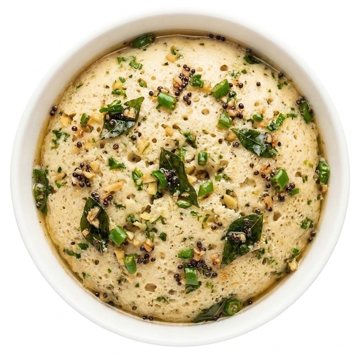
- Same: Both dishes are lentil preparations seasoned with ginger, green chillies, sugar, and black mustard seeds.
- Different: Dhokla uses chana dal, vegetable oil, and lemon juice to make a steamed sponge cake rather than frying urad dal dumplings to simmer in a mustard oil gravy.

- Same: Sukhi Urad ki Dal shares the base of urad dal seasoned with ginger, green chillies, asafoetida, and salt.
- Different: Sukhi Urad ki Dal is a dry lentil dish cooked in ghee with cumin seeds, turmeric, and dried red chillies, whereas this dish uses deep-fried lentil fritters simmered in a mustard-seed paste and mustard oil gravy.

- Same: Gujarati Moong Dal Dhokla shares lentils, green chilli, asafoetida, mustard seed and sugar with this dish.
- Different: Gujarati Moong Dal Dhokla uses soaked green moong dal, lime, fruit salt, curry leaves, sesame, coriander and coconut and is steamed, while this dish uses urad dal fritters simmered in a mustard-oil gravy with nigella seeds.

- Same: Both dishes feature urad dal seasoned with ginger, green chillies, and asafoetida.
- Different: Khasta Kachori encases the spiced lentil filling in a flaky pastry deep-fried in ghee and vegetable oil, whereas this dish simmers fried dal dumplings in a gravy made with mustard seeds, nigella seeds, and mustard oil.