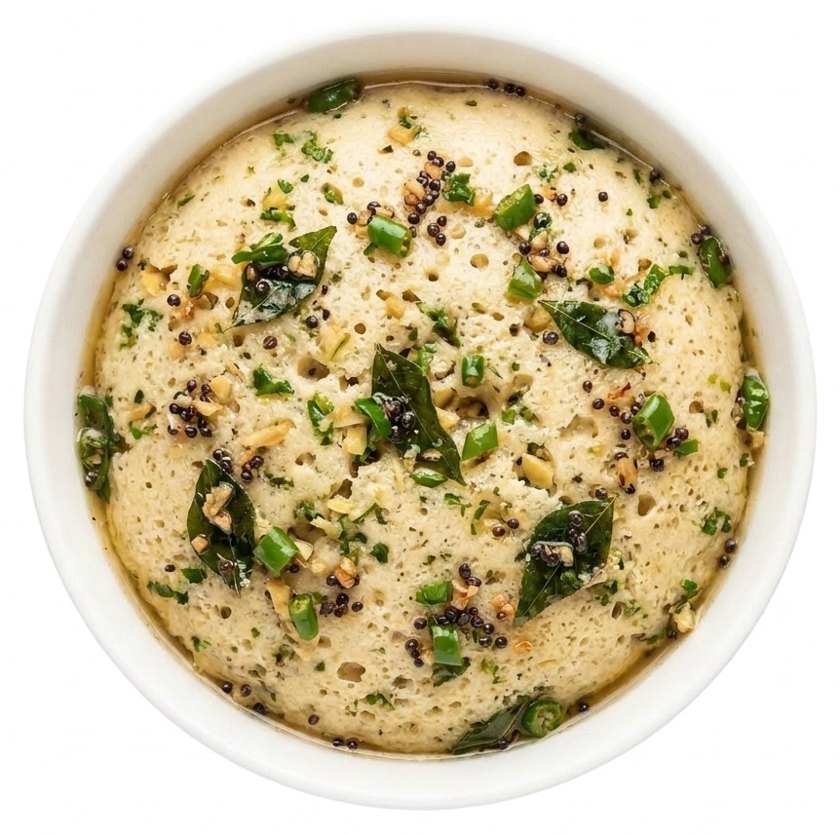
Dhokla
A savoury Gujarati steamed lentil sponge cake infused with ginger and green chilli, finished with an aromatic mustard seed and curry leaf tempering.
Tempering spice
7 gFried with chillies for the tempering (step 5)Everything else


Method
- Soak 500 g chana dal in water overnight, then drain well and process in a blender until it forms a thick, smooth paste with a soft dropping consistency.
- Grease a 1.5-litre round cake tin with a little vegetable oil and set it inside a steamer over medium heat, or position it on a trivet inside a large lidded saucepan with hot water reaching halfway up the tin sides.
- In a wide mixing bowl, briskly combine the ground dal, 12 g ginger, 10.2 g lemon juice, 12–18 g green chilli, 4.2 g granulated sugar, 1 teaspoon bicarbonate of soda, 3 tablespoons of the 67.5 g vegetable oil, salt to taste, and 250 ml lukewarm water.
- Transfer the batter into the heated tin so it is slightly over half full. Cover the top with baking paper or a clean cloth, secure the steamer lid, and steam for 50–60 minutes until the sponge has risen and feels firm to the touch. Let the tin stand out of the steamer for 15 minutes, then slice the cake into wedges inside the container.
- Warm the remaining vegetable oil in a small heavy-based pan over low heat. Add 10 curry leaves and fry for 1 minute, then add 36–42 g green chilli along with the tempering spice and cook for roughly 2 minutes until crackling. Stir in 125 ml water, pour the warm liquid evenly over the dhokla, and serve with chutney.
Don't have something?


 Yellow split peas
Use 100% of the weight. Soak for at least 1 hour; takes about 10 minutes longer to cook through and has a marginally earthier flavour.
 Pigeon peas
Use 100% of the weight. Reduces cooking time by about 10 minutes and breaks down softer, giving a smoother consistency rather than distinct grains.
 Black gram
For tempering or tadka only: use 70% of the weight. Browns faster in hot oil, providing a nutty, crunchy bite.


 Fresh ginger
Use equal weight; scrape off the skin and grate or finely julienne according to the recipe.
 Ginger paste
Use equal weight; stir straight into the sizzling aromatics, taking care as the extra moisture may spit.
 Ground ginger
Use 15 to 20% of the weight; add alongside ground spices, noting it imparts warm, dry heat rather than zesty freshness.


 Lime juice
Use equal volume or weight; delivers almost identical sharp acidity with a faintly more aromatic, bitter-edged profile.
 Dried mango powder
Use 25% of the weight (about 1 g amchoor for 4 g juice); provides clean fruity tartness without thinning the sauce.
 White vinegar
Use 75% of the volume; gives direct sourness without any citrus floral fragrance.


 Chilli powder
Use 10 to 15% of the weight (about 1/4 teaspoon per chilli); imparts dry pungent heat and reddens the dish without the grassy crunch.
 Dried red chilli
Use 1 dried pod per fresh green chilli; snap in half and temper in hot oil for a deeper, toastier heat.


 Jaggery
Use equal weight; grate or shave finely so it dissolves rapidly, giving a warm, caramel-like sweetness and slightly darker sauce.


 Baking soda
Use the same weight; it is the same ingredient under another name.
 Baking powder
Use about 3 g baking powder for 1 g bicarbonate of soda; it already contains acid, so expect slight extra rise and a different taste in baking.
 Alkaline water
Only for soaking or tenderising, not baking; use enough to cover and expect a much weaker effect.


 Peanut oil
Use 1:1 by weight. Handles high-heat frying identically and introduces a very subtle, pleasant nuttiness.
 Ghee
Use 1:1 by weight. Yields a much richer, authentic aroma and a glossy, heavier mouthfeel.
 Mustard oil
Use 1:1 by weight. Heat until smoking, then cool slightly before cooking to temper its intensely pungent, sharp mustard kick.


 Mint chutney
Use the same weight; it is herbier and less sweet, so add a pinch of sugar and a squeeze of lemon if the dish expects tamarind chutney.
 Tamarind and coriander chutney
Use the same weight; more sour and herbal, good when mint chutney is missing.
 Date and tamarind chutney
Use the same weight; sweeter and thicker, loosen with 1–2 tsp water and taste for sourness.


 Bay leaf
Fry 1 bay leaf for every 5 curry leaves in hot oil; imparts a warm, woodsy background note, but misses the citrus-sulphury punch entirely.
- Lime juice
Add a small squeeze (about 5 ml per sprig of curry leaves) right before serving; provides sharp citrus top notes without the toasty, herbal aroma.


 Mustard seeds
Use equal weight. Pop in hot fat until they crackle and turn greyish; yields an almost identical nutty, pungent finish.
 Yellow mustard seeds
Use equal weight. Fry over medium heat; delivers a milder, sweeter pop and turns bitter quickly if the oil is excessively hot.


Similar dishes
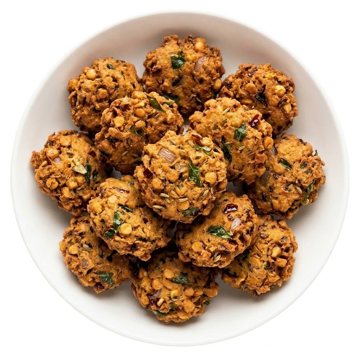
- Same: Masala Vada shares chana dal, ginger, curry leaf, salt, and chutney with this dish.
- Different: Masala Vada adds onion, fennel seed, and dried red chilli, and it is deep-fried in vegetable oil, while this dish is steamed with bicarbonate of soda, sugar, and lemon juice and finished with a mustard-seed tempering.

- Same: Payatham Parappu Dosa shares with this dish a savoury Indian lentil base flavoured with ginger, green chilli, curry leaf and vegetable oil.
- Different: Payatham Parappu Dosa uses parboiled rice, moong dal, fenugreek, coriander leaf and cumin seed in a fermented batter cooked as crisp crêpes, while this dish uses chana dal with lemon juice and bicarbonate of soda and is steamed, then tempered with black mustard seed and curry leaf.

- Same: Borar Jhaal also uses a ground lentil base seasoned with ginger, green chillies, sugar, and black mustard seeds.
- Different: Borar Jhaal uses urad dal fried in mustard oil and simmered in gravy with nigella seeds and asafoetida, whereas this dish steams chana dal with vegetable oil and lemon juice into a sponge cake.

- Same: Andhra Masala Vadai shares chana dal, ginger, green chilli, curry leaf, vegetable oil and salt with this dish.
- Different: It adds onion and asafoetida and uses bird's-eye chilli, while this dish adds lemon juice, sugar, bicarbonate of soda and a mustard seed tempering and is steamed rather than deep-fried.