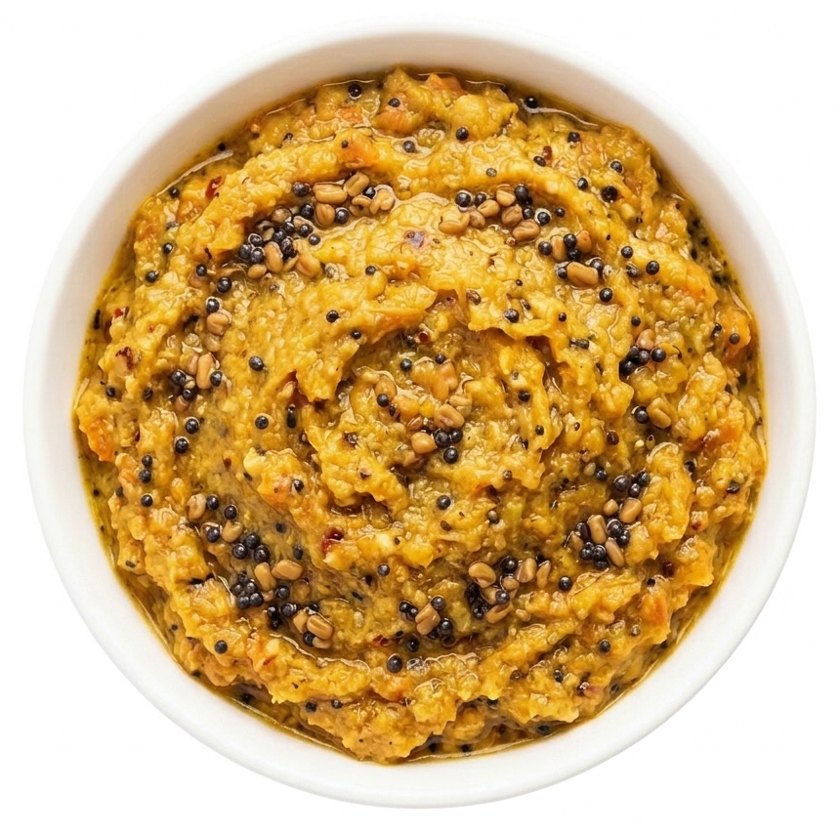
Andhra Carrot Pachadi
A tangy Andhra-style carrot and unripe mango chutney, ground coarse with soaked chillies and mustard, then finished with a mustard-fenugreek tadka. It tastes sharp, fruity and lightly bitter-hot, with a warm spice aroma.
Soaking masala
16 gSoaked in warm water at the start (step 1)Tadka spices
6 gFried in the oil for the tadka (step 8)Everything else

Method
- Put the soaking masala (6 g dried kashmiri chilli and 10.5 g black mustard seed) in a bowl, pour over 109 g warm water and leave for 30 minutes.
- Blend the soaking masala and its liquid to a smooth paste.
- Cut 450 g carrot in half.
- Dice one half finely and keep it separate.
- Cut the other half into rough chunks.
- Add 120 g unripe mango and the rough carrot chunks to the blender and pulse to a coarse paste; set aside.
- Heat 40.5 g vegetable oil in a heavy-based saucepan over medium heat.
- Add the tadka spices (0.3 g asafoetida, 1.8 g black mustard seed and 3.7 g fenugreek seed) and fry for 2–3 seconds.
- Lower the heat and add the finely diced carrot.
- Cover and cook on low for 10 minutes, stirring once halfway, until the carrot is slightly softened.
- Turn off the heat.
- Add the blended paste and 12.6 g granulated sugar.
- Season with salt to taste and stir well.
Don't have something?

 Kashmiri chilli powder
Use 1 g powder for every 1.5 g whole dried chilli; whisk with a spoonful of warm water and stir into the masala to provide identical ruby colour and mild heat.
 Dried red chilli
Use 35% to 40% of the weight; discard seeds before tearing into oil to temper. Delivers a much fiercer heat, with significantly less red colouring.


 Mustard seeds
Use equal weight. Pop in hot fat until they crackle and turn greyish; yields an almost identical nutty, pungent finish.
 Yellow mustard seeds
Use equal weight. Fry over medium heat; delivers a milder, sweeter pop and turns bitter quickly if the oil is excessively hot.


 Stock
Use the same weight in savoury dishes; it adds body, so adjust salt.
 Milk
Use the same weight only in doughs or creamy dishes; it makes the result richer.
 Coconut water
Use the same weight in curries or rice; it adds sweetness and a faint coconut taste.


 Turnip
Use the same weight; peel and cut as for carrot. It is less sweet and slightly peppery, so add a pinch of sugar and expect a softer, more earthy result.
 Potato
Use the same weight; cut into similar pieces and add 5–10 minutes' extra cooking. It gives bulk but no carrot sweetness or colour.
 Courgette
Use the same weight; cut a little larger and add near the end. It releases water, so reduce other liquid slightly and expect a softer texture.


 Raw green mango
Use the same weight; peel and grate or slice. It gives the same sourness and texture.
 Green mango
Use the same weight; peel and prepare as the recipe says. Check sourness before adding extra lime.
 Dried mango powder
For sourness only, use about 1–2 tsp (3–6 g) for 100 g mango and add with the spices. It gives no texture.


 Peanut oil
Use 1:1 by weight. Handles high-heat frying identically and introduces a very subtle, pleasant nuttiness.
 Ghee
Use 1:1 by weight. Yields a much richer, authentic aroma and a glossy, heavier mouthfeel.
 Mustard oil
Use 1:1 by weight. Heat until smoking, then cool slightly before cooking to temper its intensely pungent, sharp mustard kick.


 Garlic powder
Use double the weight. Stir into hot oil just before adding wet ingredients; mimics the allium savoury background without the sulphurous edge.
 Garlic paste
Use 2 g for every 0.5 g of asafoetida. Sauté in oil until the raw smell clears; adds moisture and sweet allium depth.


- Mustard seed
Use 50% of the weight, crush or grind. Sharper heat and less maple-bitter; fry briefly in oil before adding.
 Caraway seeds
Use the same weight, crush lightly. Similar bitter-seed note but more aniseed; reduce other sweet spices slightly.
 Ajwain seeds
Use 25–30% of the weight, crush. Much stronger thyme-like flavour; do not overdo.


 Jaggery
Use equal weight; grate or shave finely so it dissolves rapidly, giving a warm, caramel-like sweetness and slightly darker sauce.

Similar dishes

- Same: Kosumbari shares carrot, raw mango, black mustard seed, vegetable oil and salt with this dish, and both use a mustard-seed tempering.
- Different: Kosumbari is a raw grated salad with cucumber, fresh coconut, lime, coriander leaf, green chilli, curry leaf and sugar, while this dish is a chutney with dried Kashmiri chilli, fenugreek, asafoetida and water.

- Same: Gajar Kaanji shares carrot, black mustard seed, chilli and salt with this dish.
- Different: Gajar Kaanji is a fermented water drink with chilli powder and much more mustard seed; it lacks unripe mango, vegetable oil, fenugreek, asafoetida, sugar and the dried Kashmiri chilli tadka.
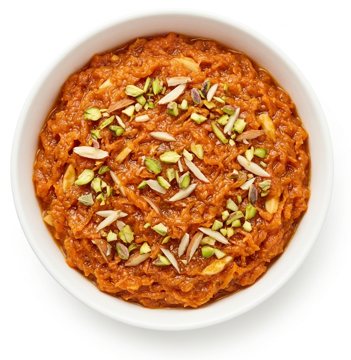
- Same: Gajar Halwa shares carrot and added sugar with this dish.
- Different: Gajar Halwa has ghee, double cream, cardamom, rosewater and nuts and is slow-cooked to a pudding, while this dish has vegetable oil, unripe mango, mustard, dried chilli, asafoetida and a fenugreek tadka and is a chutney.

- Same: Avakk shares mustard seed, dried chilli, fenugreek, sour mango, salt and oil with this dish.
- Different: Avakk uses far more mustard seed and dried red chilli, sour green mango, sesame oil and coarse salt, and it lacks carrot, water, sugar and asafoetida; it is a preserved pickle under oil rather than a carrot chutney with a tadka.