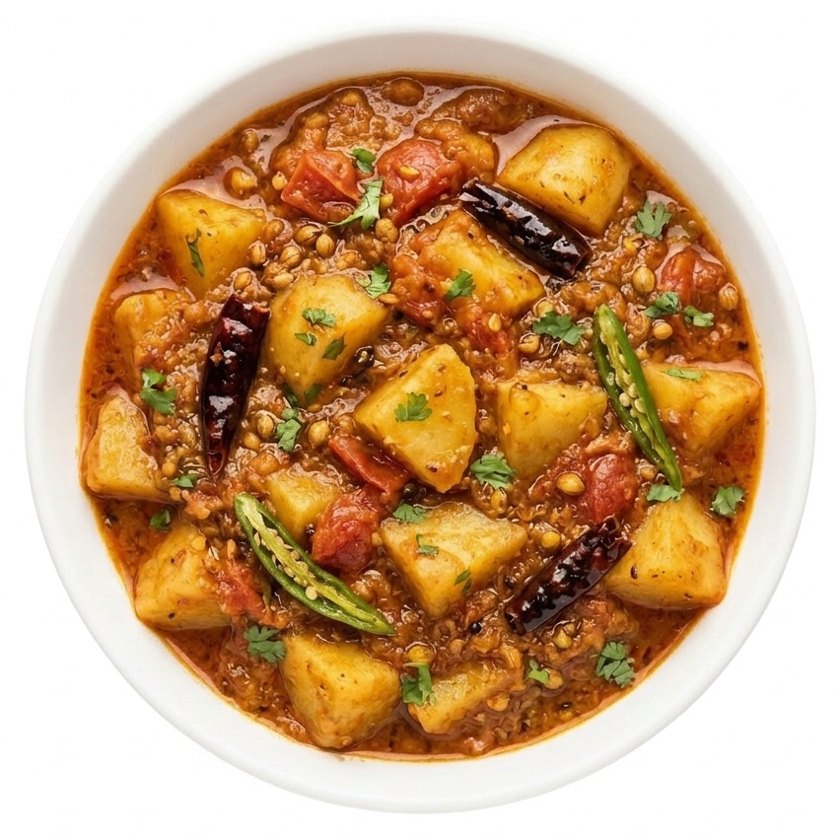
Aloo Tamatar
A comforting North Indian potato curry simmered in a vibrant, spiced tomato gravy flavoured with mustard oil and crackled aromatics.
Whole tempering spices
10 gFried in the hot oil (step 1)Asafoetida
0.3 gBloomed right before the tomatoes (step 2)Ground spices
4.1 gStirred into the tomato base (step 3)Everything else


Method
- Warm 228 g mustard oil in a heavy pan over high heat, then lower the flame. Tip in the whole tempering spices and cook for 1 minute until the seeds crackle and the chillies darken slightly.
- Drop in the asafoetida, stir briefly, then add 480 g tomato and fry for 1 minute.
- Add the ground spices along with salt to taste. Cook for 2 to 3 minutes, until the tomatoes soften thoroughly and melt into a pulpy base.
- Pour in 250 ml water and bring to a boil. Tumble in 150 g potato and 24–30 g green chilli, then simmer for 8 to 10 minutes until the potatoes are completely tender and the gravy has thickened.
- Garnish with 4 g coriander leaf before serving.
Don't have something?


 Peanut oil
Use equal weight. It handles high-heat cooking well, but lacks the signature pungent, nasal heat of mustard oil.
 Vegetable oil
Use equal weight. Neutral in flavour, so your curry will lack the characteristic Bengali or North Indian pungent punch.


 Dried kashmiri chilli
Use equal weight whole. Fry in hot oil or ghee as tempered spice; gives a richer red colour with slightly milder heat.
 Red chilli powder
Use 50% to 70% of the weight. Stir into the oil with ground spices; distributes heat evenly throughout the dish without whole chilli skins.


 Ground coriander
Use 75% of the weight; stir in along with wet masala or tomato purée rather than frying in hot oil, as the fine powder burns instantly.
 Cumin seed
Use 50% of the weight for tempering in hot oil. Lacks the floral, sweet citrus flavour of coriander, introducing warm, pungent earthiness instead.
 Fennel seed
Use 50% of the weight in tempering; provides pleasant aromatic sweetness, though noticeably aniseedy rather than citrusy.


 Garlic powder
Use double the weight. Stir into hot oil just before adding wet ingredients; mimics the allium savoury background without the sulphurous edge.
 Garlic paste
Use 2 g for every 0.5 g of asafoetida. Sauté in oil until the raw smell clears; adds moisture and sweet allium depth.


 Tomato purée
Use 40% to 50% of the fresh tomato weight mixed with a splash of water. Imparts a deeper red colour, thicker sauce, and slightly sweeter cooked flavour.
 Plain yogurt
Use 60% of the weight, whisked smooth and added on low heat. Provides rich body and sourness, though the gravy becomes paler and creamier.


 Ground ginger
Use 50% of the weight. Mimics turmeric's warm, earthy, rhizome background, but provides none of the golden-yellow colour.
 Saffron
Steep a tiny pinch (0.1 g per 2 g turmeric) in 2 tbsp warm water; use to match the rich golden hue. Contributes an aristocratic, honeyed floral flavour rather than earthy bitterness.


- Red chilli powder
Use 100% of the weight. Provides direct, sharp heat and red colour in equal measure.
 Kashmiri chilli powder
Use 150% to 200% of the weight if matching colour, but add a pinch of black pepper or hot chilli if you need equivalent fiery heat.
 Cayenne pepper
Use 75% to 100% of the weight. Offers a sharp, clean heat with slightly less earthy depth and less crimson colour.



 Eggplant
Use equal weight. Cut into large chunks; cooks down much faster (10-12 minutes) and softens into the sauce rather than staying starchy and firm.
 Paneer
Use 80% of the weight. Cube and add in the last 5-10 minutes of cooking; adds rich dairy protein instead of starchy bulk.
 Dried chickpea
Use 45% dry weight. Soak overnight and boil until fully soft before stirring into the sauce to simmer for 10 minutes.


- Chilli powder
Use 10 to 15% of the weight (about 1/4 teaspoon per chilli); imparts dry pungent heat and reddens the dish without the grassy crunch.
- Dried red chilli
Use 1 dried pod per fresh green chilli; snap in half and temper in hot oil for a deeper, toastier heat.


Similar dishes

- Same: Aloo Tamatar ka Chokha shares the base of potatoes and tomatoes seasoned with mustard oil, green chillies, and chilli powder.
- Different: Instead of simmering a gravy with coriander seeds, asafoetida, turmeric, and abundant mustard oil, it mashes the potatoes with charred tomatoes, fresh ginger, cumin seeds, and far less oil.
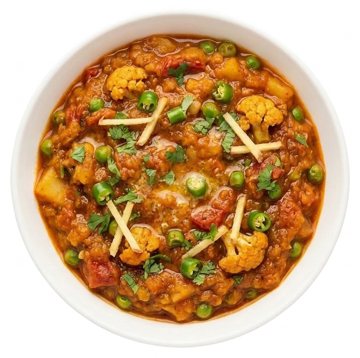
- Same: Pao Bhaji shares a tomato and potato base seasoned with green chillies, red chilli powder, and fresh coriander.
- Different: It is mashed and cooked on a flat griddle with butter, ginger, cumin, and garam masala, rather than simmered in mustard oil with whole coriander seeds, turmeric, and asafoetida.

- Same: Both dishes are built on a tomato base spiced with dried red chillies, green chillies, turmeric, chilli powder, and fresh coriander.
- Different: Pappu Charu is a thin, broth-like soup cooked with tamarind extract, onion, curry leaves, and cumin in minimal vegetable oil, omitting the potatoes, asafoetida, and heavy mustard oil base of this dish.

- Same: Dahiwale Aloo and this dish are both potato curries seasoned with asafoetida, dried red chilli, chilli powder, turmeric, and salt.
- Different: Dahiwale Aloo uses vegetable oil, mustard seeds, curry leaves, ground cumin, ground coriander, garam masala, and 540 g yogurt, and lacks this dish's mustard oil, tomato, coriander seeds, green chilli, and coriander leaf.