
Aam Ada Diya Bhaaja Moong Dal
Nutty, toasted split moong dal simmered with fragrant spices, enriched with milk, and finished with the fresh, peppery kick of galangal.
Ground spices for the dal
6 gAdded to the boiling water with the lentils (step 2)Whole spices for tempering
4.6 gFried in the hot fat (step 4)Everything else

Method
- Warm a dry frying pan or tawa over medium-high heat. Add 250 g split moong dal and toast, stirring constantly, for several minutes until golden. Take off the heat, let it cool completely, then rinse well under cold water and drain.
- Pour 1.2 litres of water into a large saucepan and bring to a rolling boil. Tip in the toasted dal along with the ground spices for the dal. Turn the heat down, cover with a lid, and simmer gently for 10 minutes, lifting off any foam from the surface.
- Season with salt to taste and scatter in 24 g green chilli. Cover again and simmer for another 20 minutes, or until the dal softens thoroughly.
- In a small skillet, heat 4.5 g ghee or vegetable oil over medium heat. Tip in the whole spices for tempering and fry for roughly 2 minutes until the chillies darken in colour.
- Pour the hot spice mixture and fat directly into the simmering dal, cover immediately, and cook for 3 minutes.
- Stir in 2 tablespoon galangal paste, 4.2 g granulated sugar, and 30.6 g milk. Simmer on low heat for 2 minutes to let the flavours infuse, warming everything through gently without letting it boil.
Don't have something?


 Split green mung beans
Use the same weight; slightly earthier and greener, with similar cooking time.
 Split mung beans
Use the same weight; essentially the same dal, so adjust only the colour and slight flavour.
 Red lentils
Use the same weight; cooks faster and softer, and turns pink, so reduce cooking time.


 Ground ginger
Use 50% of the weight. Mimics turmeric's warm, earthy, rhizome background, but provides none of the golden-yellow colour.
 Saffron
Steep a tiny pinch (0.1 g per 2 g turmeric) in 2 tbsp warm water; use to match the rich golden hue. Contributes an aristocratic, honeyed floral flavour rather than earthy bitterness.


 Red chilli powder
Use 100% of the weight. Provides direct, sharp heat and red colour in equal measure.
 Kashmiri chilli powder
Use 150% to 200% of the weight if matching colour, but add a pinch of black pepper or hot chilli if you need equivalent fiery heat.
 Cayenne pepper
Use 75% to 100% of the weight. Offers a sharp, clean heat with slightly less earthy depth and less crimson colour.


- Chilli powder
Use 10 to 15% of the weight (about 1/4 teaspoon per chilli); imparts dry pungent heat and reddens the dish without the grassy crunch.
 Dried red chilli
Use 1 dried pod per fresh green chilli; snap in half and temper in hot oil for a deeper, toastier heat.


 Peanut oil
Use equal weight; handles high tempering heat well and keeps flavours neutral.
 Butter
Use equal weight; cook over gentle heat to prevent browning the milk solids too quickly.


 Ground cumin
Use 70% of the weight; add with ground spices or sauce bases rather than hot oil tempering, where it scorches quickly and turns bitter.
 Black cumin seeds
Use equal weight for oil tempering. Delivers an earthy profile with an additional musky, smoky, and slightly bitter edge.
 Fennel seed
Use 60% of the weight for tempering; offers comparable warm aroma, but leans sweet and liquorice-like rather than savoury and earthy.


 Dried kashmiri chilli
Use equal weight whole. Fry in hot oil or ghee as tempered spice; gives a richer red colour with slightly milder heat.
- Red chilli powder
Use 50% to 70% of the weight. Stir into the oil with ground spices; distributes heat evenly throughout the dish without whole chilli skins.


 Cinnamon stick
Use a 2 cm piece (about 1 g) for every 1 to 2 bay leaves. Fry in whole-spice temperings; provides the cassia-like warmth typical of Indian tejpatta.
 Ground cinnamon (cassia)
Use 0.5 g per leaf. Stir into the sauce during simmering; gives the same warm woodiness but darkens the colour slightly.


 Ginger paste
Use the same weight; it is sharper and less citrusy, so reduce any other ginger in the recipe slightly.
 Fresh ginger
Grate the same weight and crush to a paste; the flavour will be more pungent and less piney.


 Jaggery
Use equal weight; grate or shave finely so it dissolves rapidly, giving a warm, caramel-like sweetness and slightly darker sauce.


 Whole milk
Use equal weight; provides the standard rich dairy fat and body expected in creamy Indian bases.
 Single cream
Dilute 3 parts cream with 1 part water to match the weight; yields a richer, glossier gravy that resists curdling.
 Plain yogurt
Whisk thoroughly and use equal weight; adds extra body and a mild pleasant acidity, best added off the heat.

Similar dishes

- Same: Both dishes season their legumes using cumin seeds, dried red chillies, green chillies, turmeric, and chilli powder.
- Different: Hari Matar ke Kofte simmers deep-fried green gram dumplings in a garlic- and asafoetida-spiced yoghurt gravy, whereas this dish simmers roasted split moong dal with milk, bay leaf, sugar, and galangal.

- Same: Both dishes temper lentils in ghee with cumin seeds, dried red chillies, green chillies, and turmeric.
- Different: Sukhi Urad ki Dal is cooked into a dry preparation using urad dal, ginger, and asafoetida, rather than roasted moong dal simmered with milk, bay leaf, sugar, and galangal.

- Same: Both dishes feature mung beans seasoned with cumin seeds, green chillies, chilli powder, and sugar.
- Different: Ankur ka Raita is an uncooked yogurt-based side made with raw mung sprouts, raw onions, and coriander leaf, whereas this dish is a warm dal cooked with ghee or oil, milk, turmeric, dried red chillies, bay leaf, and galangal.
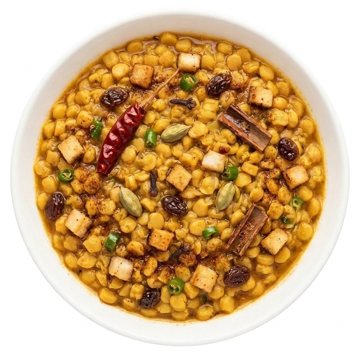
- Same: Both lentil preparations share a spice base of cumin seeds, bay leaves, dried red chillies, green chillies, turmeric, and chilli powder cooked in ghee.
- Different: Chholar Dal uses chana dal instead of roasted moong dal, adds coconut, raisins, ground cumin, cinnamon, cardamom, and cloves, and leaves out the milk and galangal.