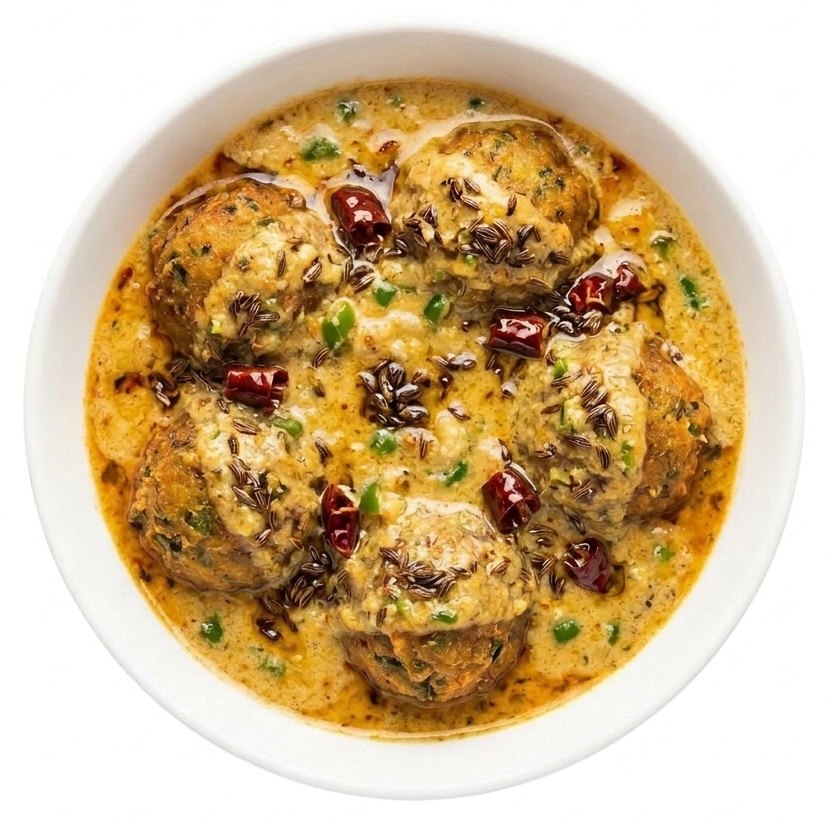
Hari Matar ke Kofte
Crisp fried green gram fritters submerged in a tangy, lightly spiced yoghurt curry, topped with a sizzling cumin and chilli temper.
Ground spices for the sauce
6 gWhisked into the yoghurt liquid in step 1Aromatics for the base
13 gStir-fried in hot oil in step 2Tempering spices
6 gSizzled in ghee in step 6Everything else

Method
- Whisk 203 g plain yogurt with 500 ml water in a large mixing bowl until completely combined. Incorporate 50 g of the 150 g moong dal flour, the ground spices for the sauce, and salt to taste, whisking into a smooth liquid.
- Warm 18 g vegetable oil in a saucepan over low heat. Add the aromatics for the base along with 3.3 g green chilli and stir-fry for 25 seconds.
- Pour the yoghurt mixture into the pan and simmer gently for 10 minutes until thoroughly cooked and fluid.
- Heat vegetable oil for deep-frying in a deep, heavy pot to 180°C (350°F). In a separate bowl, stir the remaining 100 g moong dal flour with enough water to produce a medium-thick batter, whipping it thoroughly with your hands.
- Drop small ladlefuls of batter into the hot oil in batches, frying for 2 to 3 minutes until crisp and golden brown. Transfer the dumplings with a slotted spoon directly into the simmering sauce, cook briefly together, and adjust the salt to taste.
- Heat 13.5 g ghee or vegetable oil in a small pan over medium heat. Fry the cumin seeds from the tempering spices for 1 minute until crackling, toss in the dried red chilli for 2 minutes, then pour the hot oil and spices over the curry.
Don't have something?


 Yogurt
Use equal weight, whisked thoroughly until smooth before adding to hot dishes to prevent curdling.
 Coconut milk
Use equal weight with 1 teaspoon lemon juice mixed in. Provides rich creaminess in curries, but adds a noticeable coconut flavour.
 Single cream
Use 80% of the weight plus a squeeze of lemon juice for acidity. Enriches sauces nicely, though it is richer and less tangy.


 Gram flour
Use the same weight; it is more absorbent and tastes stronger, so add water gradually and taste.
 Chickpea flour
Same as gram flour; use the same weight, sift, and adjust liquid because it thickens quickly.
 Rice flour
Use 70% rice flour with 30% gram flour for a closer texture; pure rice flour gives a crisper, gluten-free result but less binding.


 Red chilli powder
Use 100% of the weight. Provides direct, sharp heat and red colour in equal measure.
 Kashmiri chilli powder
Use 150% to 200% of the weight if matching colour, but add a pinch of black pepper or hot chilli if you need equivalent fiery heat.
 Cayenne pepper
Use 75% to 100% of the weight. Offers a sharp, clean heat with slightly less earthy depth and less crimson colour.


 Ground ginger
Use 50% of the weight. Mimics turmeric's warm, earthy, rhizome background, but provides none of the golden-yellow colour.
 Saffron
Steep a tiny pinch (0.1 g per 2 g turmeric) in 2 tbsp warm water; use to match the rich golden hue. Contributes an aristocratic, honeyed floral flavour rather than earthy bitterness.


 Peanut oil
Use 1:1 by weight. Handles high-heat frying identically and introduces a very subtle, pleasant nuttiness.
 Ghee
Use 1:1 by weight. Yields a much richer, authentic aroma and a glossy, heavier mouthfeel.
 Mustard oil
Use 1:1 by weight. Heat until smoking, then cool slightly before cooking to temper its intensely pungent, sharp mustard kick.


 Ground cumin
Use 70% of the weight; add with ground spices or sauce bases rather than hot oil tempering, where it scorches quickly and turns bitter.
 Black cumin seeds
Use equal weight for oil tempering. Delivers an earthy profile with an additional musky, smoky, and slightly bitter edge.
 Fennel seed
Use 60% of the weight for tempering; offers comparable warm aroma, but leans sweet and liquorice-like rather than savoury and earthy.


 Garlic powder
Use double the weight. Stir into hot oil just before adding wet ingredients; mimics the allium savoury background without the sulphurous edge.
 Garlic paste
Use 2 g for every 0.5 g of asafoetida. Sauté in oil until the raw smell clears; adds moisture and sweet allium depth.


 Garlic
Use equal weight; crush or finely grate to a smooth pulp to replicate the same fresh, pungent moisture in your base gravy.
- Garlic powder
Use 20 to 25% of the weight; mix with a teaspoon of water before adding to oil so it does not burn, noting it lacks the fresh bite.


- Chilli powder
Use 10 to 15% of the weight (about 1/4 teaspoon per chilli); imparts dry pungent heat and reddens the dish without the grassy crunch.
 Dried red chilli
Use 1 dried pod per fresh green chilli; snap in half and temper in hot oil for a deeper, toastier heat.


- Peanut oil
Use equal weight; handles high tempering heat well and keeps flavours neutral.
 Butter
Use equal weight; cook over gentle heat to prevent browning the milk solids too quickly.


 Dried kashmiri chilli
Use equal weight whole. Fry in hot oil or ghee as tempered spice; gives a richer red colour with slightly milder heat.
- Red chilli powder
Use 50% to 70% of the weight. Stir into the oil with ground spices; distributes heat evenly throughout the dish without whole chilli skins.
Similar dishes

- Same: Sukhi Urad ki Dal shares the common tempering spices of cumin seed, dried red chilli, and asafoetida cooked in ghee, along with turmeric and green chillies.
- Different: Rather than frying green gram dumplings to simmer in a yogurt-and-garlic gravy, it is a dry-cooked urad dal preparation flavored with fresh ginger and made without yogurt or garlic.

- Same: Both recipes are moong-based dishes tempered with cumin seeds, dried red chillies, green chillies, turmeric, and chilli powder.
- Different: Instead of deep-fried fritters simmered in a garlicky yogurt sauce, Aam Ada Diya Bhaaja Moong Dal is a soupy, simmered lentil dish prepared with roasted dal, milk, sugar, and bay leaf.

- Same: Like this dish, Karhi Pakori features fried pulse fritters simmered in a tangy yogurt gravy finished with a tempering of cumin, dried red chilies, and asafoetida.
- Different: Karhi Pakori uses moong dal instead of green gram for the fritters, thickens its larger base of yogurt with chickpea flour, adds mustard seeds, and omits the garlic paste and fresh green chilies found in this dish.
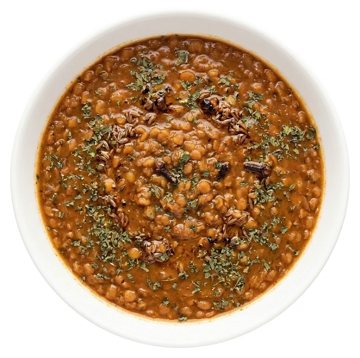
- Same: Masoor ki Dal shares with this dish the spices asafoetida, turmeric, cumin seed, and chilli powder, plus salt and a fat of ghee or vegetable oil.
- Different: Masoor ki Dal is a simmered masoor dal with rice cooking water, ginger, ground coriander, clove, and dried mint, while this dish is fried mung bean flour fritters in a yoghurt curry with garlic paste, green chilli, and a cumin and dried red chilli temper.