Rava Bonda
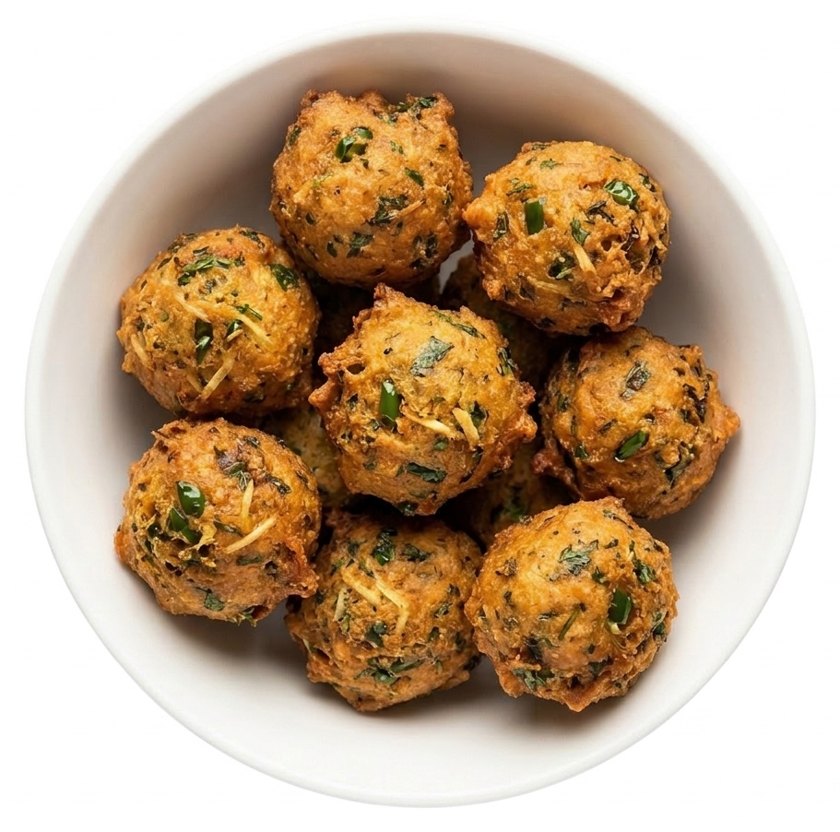
These crisp, golden South Indian semolina fritters are studded with fresh ginger, green chillies, and aromatic herbs. They feature a crunchy crust with a soft, savoury interior.
Batter seasoning
1.4 gMixed with the semolina and aromatics (step 1)Everything else

Method
- Place 200 g semolina, 4 tablespoons yoghurt, 18–24 g green chilli, 12 g ginger, 2 tablespoons curry leaves, 1–2 g coriander leaf, the batter seasoning, and salt to taste into a wide mixing bowl. Trickle in 2 tablespoons of water bit by bit, working everything together into a dense, stiff dough.
- Form the mixture into small, lime-sized spheres, making roughly 25 to 30 dumplings.
- Pour vegetable oil for deep-frying into a kadhai or deep pan and heat it to 180°C (350°F), testing the temperature by dropping in a bread cube to see if it colors in 30 seconds, then ease the heat down slightly.
- Gently lower batches of 6–8 balls into the hot oil and fry for 3–4 minutes, turning them continuously so they brown evenly, until crisp and golden brown all over.
- Lift out the cooked bondas using a slotted spoon and place them on kitchen paper to absorb excess oil before serving the remaining batches.
Don't have something?


 Semolina
Use the same weight and pulse in a blender until fine. If not fine enough, soak 10 minutes before cooking.
 Coarse semolina
Use the same weight, grind finer or soak 10–15 minutes longer. Coarser texture; good for upma but not fine batters.
 Cream of wheat
Use the same weight. Similar fine grain; cooking time is about the same, stir well to avoid lumps.


 Soured natural yoghurt
Use the same weight; stir well before adding. Same consistency and sourness.
 Full-fat natural yoghurt
Use the same weight; add 10 ml lemon juice per 200 g and rest 10 minutes. Stir before use.
 Yogurt
Use the same weight; whisk with lemon juice to taste. Add off the heat to avoid splitting.


 Chilli powder
Use 10 to 15% of the weight (about 1/4 teaspoon per chilli); imparts dry pungent heat and reddens the dish without the grassy crunch.
 Dried red chilli
Use 1 dried pod per fresh green chilli; snap in half and temper in hot oil for a deeper, toastier heat.


 Garlic powder
Use double the weight. Stir into hot oil just before adding wet ingredients; mimics the allium savoury background without the sulphurous edge.
 Garlic paste
Use 2 g for every 0.5 g of asafoetida. Sauté in oil until the raw smell clears; adds moisture and sweet allium depth.


 Fresh ginger
Use equal weight; scrape off the skin and grate or finely julienne according to the recipe.
 Ginger paste
Use equal weight; stir straight into the sizzling aromatics, taking care as the extra moisture may spit.
 Ground ginger
Use 15 to 20% of the weight; add alongside ground spices, noting it imparts warm, dry heat rather than zesty freshness.


 Almond
Use 100% of the weight. Soak in boiling water and slip off skins before frying or grinding; gives a lighter, slightly less sweet richness to curries.
 Poppy seed
Use 60% of the weight for gravies. Soak in warm water and grind into a fine paste to thicken royal kormas without adding heavy oiliness.
 Shelled peanut
Use 100% of the weight. Roast, skin, and grind; creates a thicker, earthier texture typical of Maharashtrian and western Indian curries.


 Peanut oil
Use 1:1 by weight. Handles high-heat frying identically and introduces a very subtle, pleasant nuttiness.
 Ghee
Use 1:1 by weight. Yields a much richer, authentic aroma and a glossy, heavier mouthfeel.
 Mustard oil
Use 1:1 by weight. Heat until smoking, then cool slightly before cooking to temper its intensely pungent, sharp mustard kick.


Similar dishes

- Same: Both dishes use semolina as their primary starch, cooked with oil and seasoned with salt.
- Different: Suji Paratha is an unleavened flatbread cooked on a griddle with olive oil, whereas this dish is seasoned with green chillies, ginger, asafoetida, and coriander leaves, then deep-fried in vegetable oil.

- Same: Maddur Vada is also a deep-fried South Indian semolina snack seasoned with green chillies, asafoetida, and coriander.
- Different: It adds chana dal and rich ghee while omitting ginger, and is pressed into flat patties rather than shaped into round dumplings.
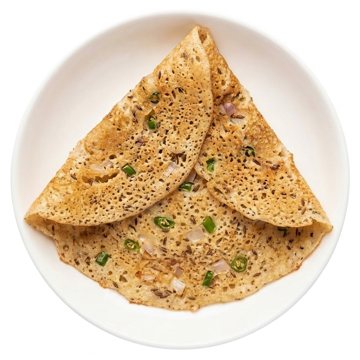
- Same: Rava Dosa also uses a semolina base seasoned with green chillies and cooked with vegetable oil.
- Different: Instead of being deep-fried with ginger, asafoetida, and coriander leaf, Rava Dosa is pan-griddled as a thin pancake containing onions, cumin seeds, and butter.

- Same: Rava Idli shares fine semolina, green chilli, ginger, asafoetida, yogurt, salt, and vegetable oil with this dish.
- Different: Rava Idli adds urad dal, chana dal, mustard seeds, curry leaves, and baking powder, uses plain yogurt instead of sour yogurt, lacks cashew nuts, and is steamed rather than fried.