
Suji Paratha
Semolina Paratha
VegetarianOrigin AwadhPrep 30 minutes, plus standing timeCook 15 minutesMakes 8
Crisp, golden unleavened flatbreads made with a semolina dough. They offer a lightly textured, flaky crumb with a rich, toasted taste.
Ingredients

Method
- Combine 300 g semolina, salt to taste and 27 g of the 81 g olive oil in a wide mixing bowl. Gradually pour in enough water to bring the ingredients into a pliable dough.
- Turn the dough out onto a lightly dusted surface and work it vigorously for 5 minutes until supple and uniform.
- Transfer the dough to a lightly greased bowl, drape with a damp kitchen towel, and allow it to rest in a warm area for 30 minutes.
- Cut the rested dough into 8 equal pieces, shape each piece into a ball, and roll each one out into a 20-cm flat round disc.
- Warm a tawa or heavy skillet over medium heat and add about 7 g of the remaining olive oil, heating until faintly smoking.
- Lay a rolled flatbread into the hot pan and cook for roughly 30 seconds per side until speckled with golden-brown spots. Remove from the pan and repeat with the remaining dough portions and oil.
Don't have something?


 Semolina
Use the same weight and pulse in a blender until fine. If not fine enough, soak 10 minutes before cooking.
 Coarse semolina
Use the same weight, grind finer or soak 10–15 minutes longer. Coarser texture; good for upma but not fine batters.
 Cream of wheat
Use the same weight. Similar fine grain; cooking time is about the same, stir well to avoid lumps.


 Peanut oil
Use equal weight. Provides a high smoke point with mild flavour, well suited for sautéeing spices.
 Vegetable oil
Use equal weight. Neutral in flavour, making it a reliable all-round substitute for general frying and tempering.


Similar dishes

Rava Bonda
Fried Semolina Dumplings
Rava Bonda is spicier and more pungent due to the chillies, ginger, and asafoetida, whereas this dish has a simple, mild, toasted grain flavour.
- Same: Both dishes use semolina as their primary grain and are seasoned with salt.
- Different: Rava Bonda is deep-fried in vegetable oil as dumplings rather than griddled with olive oil as flatbreads, and it adds green chillies, ginger, asafoetida, and coriander leaves.
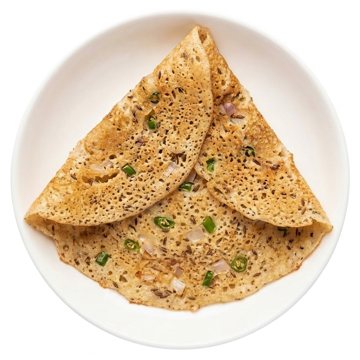
Rava Dosa
Semolina Pancakes
It delivers a much spicier and more pungent savory flavor from the chillies and aromatics compared to the plain, toasted taste of this dish.
- Same: Rava Dosa is also a crisp, golden griddled bread made primarily from semolina.
- Different: Instead of being rolled from a simple dough with olive oil, it is poured from a batter containing flour, onions, green chillies, and cumin seeds, then cooked using vegetable oil and butter.

Maddur Vada
Semolina & Rice Patties
Maddur Vada tastes crunchy and savoury with green chilli heat, asafoetida aroma and ghee richness, while this dish tastes flaky and toasted from semolina and olive oil.
- Same: Maddur Vada and this dish both use fine semolina and salt and are cooked as crisp, unleavened Indian foods.
- Different: Maddur Vada adds rice flour, chana dal, green chilli, asafoetida, coriander leaf, ghee and vegetable oil, while this dish uses only semolina, olive oil and salt; Maddur Vada is shaped into patties and fried, while this dish is a semolina dough flatbread.

Suji Halwa
Semolina Halwa
Suji Halwa tastes soft, grainy and sweet with cardamom, while this dish is crisp and toasted with a savory salt profile.
- Same: Suji Halwa shares semolina as its main ingredient with this dish.
- Different: Unlike this dish, Suji Halwa uses ghee, clotted cream, sugar, cardamom, raisins and nuts and is cooked as a soft pudding rather than a salted olive-oil dough flatbread.