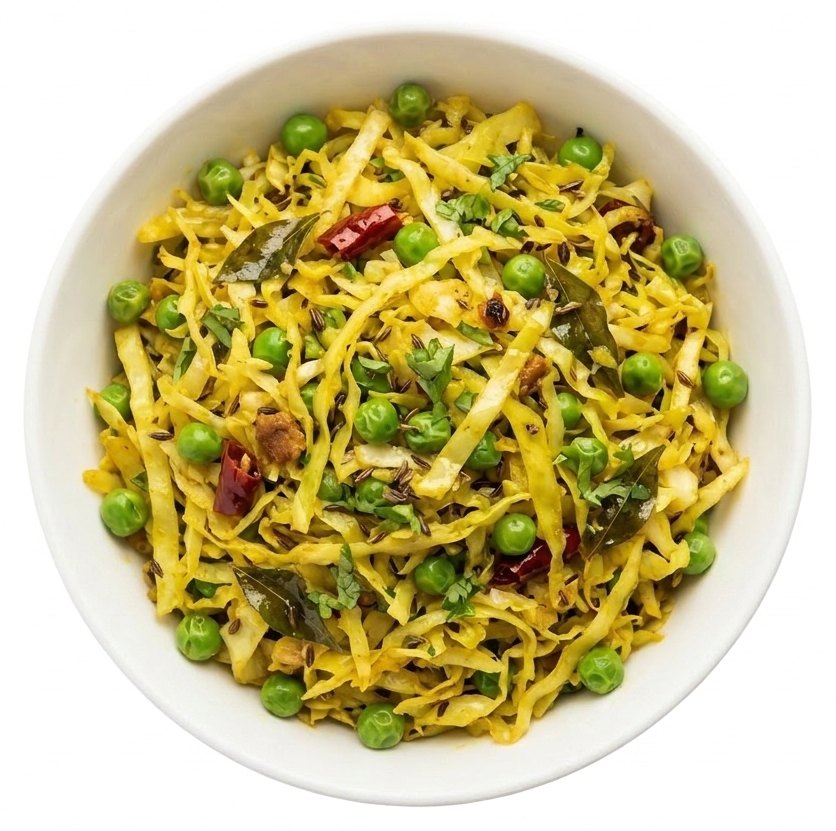
Maharashtrian Kobichi Bhaji
A dry Maharashtrian-style cabbage stir-fry with green peas, scented with a cumin and asafoetida tempering plus turmeric. The cabbage stays tender with a little crunch, and the spice is mild and warm.
Whole spices for the oil
4.5 gAdded to the hot oil at the start (step 2)Dried chilli for the tempering
3 gAdded once the cumin crackles (step 2)Ground turmeric
3 gStirred in after the curry leaves (step 3)Everything else

Method
- Heat 40.5 g vegetable oil in a deep sauté pan over medium heat.
- Add the whole spices for the oil and stir until the cumin crackles. Add the dried chilli for the tempering and 1.2–1.8 g curry leaf; stir for a few seconds.
- Stir in the ground turmeric.
- Add 600 g white cabbage, thinly shredded, and fry for 4–5 minutes over medium heat, stirring often.
- Add 100 g green pea and a splash of water if the pan looks dry; season with salt to taste.
- Cover, lower the heat and cook for 3–4 minutes, until the cabbage is fully cooked but still has a little crunch.
- Switch off the heat and leave to rest for a few minutes. Scatter coriander to taste over the top.
Don't have something?


 Peanut oil
Use 1:1 by weight. Handles high-heat frying identically and introduces a very subtle, pleasant nuttiness.
 Ghee
Use 1:1 by weight. Yields a much richer, authentic aroma and a glossy, heavier mouthfeel.
 Mustard oil
Use 1:1 by weight. Heat until smoking, then cool slightly before cooking to temper its intensely pungent, sharp mustard kick.


 Garlic powder
Use double the weight. Stir into hot oil just before adding wet ingredients; mimics the allium savoury background without the sulphurous edge.
 Garlic paste
Use 2 g for every 0.5 g of asafoetida. Sauté in oil until the raw smell clears; adds moisture and sweet allium depth.


 Ground cumin
Use 70% of the weight; add with ground spices or sauce bases rather than hot oil tempering, where it scorches quickly and turns bitter.
 Black cumin seeds
Use equal weight for oil tempering. Delivers an earthy profile with an additional musky, smoky, and slightly bitter edge.
 Fennel seed
Use 60% of the weight for tempering; offers comparable warm aroma, but leans sweet and liquorice-like rather than savoury and earthy.


 Dried kashmiri chilli
Use the same weight; similar mild heat and good colour. Remove seeds if you want it milder.
 Kashmiri red chilli powder
Use half the weight of whole chilli (1 g powder for 2 g whole); add to hot oil briefly so it does not burn.
 Paprika
Use the same weight; sweeter and milder, good for colour. Add a pinch of cayenne pepper if you need heat.


 Bay leaf
Fry 1 bay leaf for every 5 curry leaves in hot oil; imparts a warm, woodsy background note, but misses the citrus-sulphury punch entirely.
 Lime juice
Add a small squeeze (about 5 ml per sprig of curry leaves) right before serving; provides sharp citrus top notes without the toasty, herbal aroma.


 Ground ginger
Use 50% of the weight. Mimics turmeric's warm, earthy, rhizome background, but provides none of the golden-yellow colour.
 Saffron
Steep a tiny pinch (0.1 g per 2 g turmeric) in 2 tbsp warm water; use to match the rich golden hue. Contributes an aristocratic, honeyed floral flavour rather than earthy bitterness.


 Sweetheart cabbage
Use 100% of the weight. Finely shred; cooks slightly faster than firm white cabbage and gives a sweeter, tender crunch in thorans and sabzis.
- Savoy cabbage
Use 100% of the weight. Shred finely; holds its shape well when stir-fried and carries spiced oil effectively.
 Brussels sprouts
Use 90% of the weight. Finely shred or halve; offers an identical brassica crunch and slight peppery bite.




 Coriander leaf
Use equal weight, chopped fresh and stirred in off the heat or used as garnish. Matches the citrus-herbal profile identically.
 Mint
Use 40% to 50% of the weight; chop finely and add at the very end. Adds fresh herbal brightness, but shifts the aroma toward cool menthol.


Similar dishes
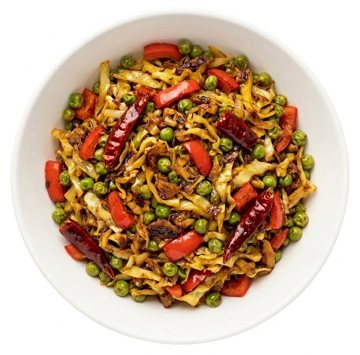
- Same: Gobi-Matar-Mithee Lal Mirch shares with this dish a dry cabbage-and-pea stir-fry seasoned with cumin, turmeric, dried red chilli and oil.
- Different: Gobi-Matar-Mithee Lal Mirch adds red bell pepper and uses corn oil and frozen peas, while it lacks this dish's asafoetida, curry leaf and coriander and uses a much larger cabbage-to-pea ratio.

- Same: Gujarati Sambharo shares cabbage, turmeric, asafoetida, curry leaf, coriander and salt with this dish.
- Different: Gujarati Sambharo adds carrot, red bell pepper, ghee, black mustard seed, green bird's-eye chilli, ground coriander, caster sugar and lime, while this dish uses vegetable oil, cumin seed, dried mild red chilli and green peas.
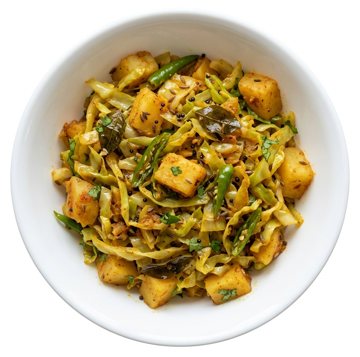
- Same: Gujarati Batata Cabbage Nu Shaak shares with this dish a dry cabbage stir-fry style, vegetable oil, asafoetida, cumin seed, curry leaf, turmeric, salt and coriander.
- Different: Gujarati Batata Cabbage Nu Shaak adds 600 g potato, mustard seed, bird’s eye chilli, Kashmiri chilli powder, ground coriander and sugar, uses 900 g cabbage and 27 g oil, and lacks this dish’s 100 g green peas, dried mild red chilli and 40.5 g oil.

- Same: Maharashtrian Rassa shares vegetable oil, asafoetida, cumin seed, curry leaf, turmeric, green peas, salt and coriander with this dish.
- Different: Maharashtrian Rassa adds garlic, green bird’s eye chilli, tomato, tomato purée, jaggery, Kashmiri chilli powder and ground coriander, and it is a saucy curry rather than a dry cabbage stir-fry.