Indian cooking
Indian cooking / Dishes / Gosht ka Achar
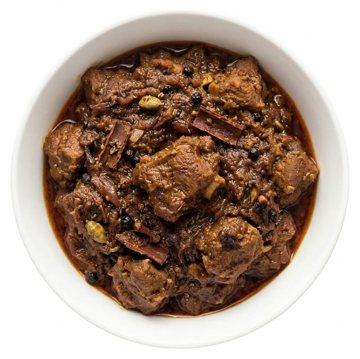
Gosht ka Achar (Lamb Pickle)

Gosht ka Achar

Lamb Pickle
Non-vegetarian●●●Origin PunjabPrep 1 hour, plus cooling timeMakes 750g / 1lb 10oz

A punchy, sharp meat preserve featuring browned chunks of lamb suspended in a fiery spiced oil and vinegar base. The flavour profile is intensely hot, savoury, and tart with warm notes of ginger and garlic.

Ground spices

108 gStirred into the hot oil with the vinegar and sugar (step 4)
Mix the spices together until uniformly combined.

Everything else

01
Boneless lamb · Muttoncut into 2.5-cm / 1-inch cubes
1000 g
meat
02
456 g500 ml
oil/fat
03
90 g15 chillies
vegetable
04
1.5 g½ clove
aromatic
05
Ginger · Adrakpeeled and thinly sliced
24 g1 piece
aromatic
06
127 g125 ml
souring agent
07
13 g1 tablespoon
sweetener
08
to taste
salt

Method

  1. Place 1000 g lamb (cut into 2.5-cm / 1-inch cubes) into a heavy pan with salt to taste and just enough water to submerge the cubes. Bring to a boil and cook for roughly 10 minutes until tender, letting all the remaining cooking liquid boil away completely.
  2. Warm 456 g vegetable oil in a separate wide pan over medium heat. Fry the cooked meat for around 10 minutes until thoroughly browned on all sides, then lift it out with a slotted spoon and reserve on a plate.
  3. Toss 90 g de-seeded green chilli, 1.5 g garlic, and 24 g peeled, thinly sliced ginger into the hot oil, stirring for 1 minute until lightly golden.
  4. Tip in the ground spices, 1 teaspoon ground ginger, 127 g white malt vinegar, and 12.6 g granulated sugar, seasoning with salt to taste. Sauté over medium heat for 2 to 3 minutes until bubbling and fragrant.
  5. Return the browned meat to the boiling sauce, lower the heat, and simmer gently for 3 minutes.
  6. Take the pan off the stove and let the pickle cool completely to room temperature. Pack into an airtight glass jar or ceramic vessel, seal tightly, and store in the refrigerator for up to 3 weeks.

Don't have something?

Boneless lamb
  • Boneless lamb shoulder

    Use same weight; shoulder is well marbled and best for slow curry, with similar cooking time.

  • Boneless leg of lamb

    Use same weight; leg is leaner, so simmer 10 minutes less to avoid dryness.

  • Boneless lamb fillet

    Use same weight but simmer 15–20 minutes less; fillet is tender and cooks quickly.

Vegetable oil
  • Peanut oil

    Use 1:1 by weight. Handles high-heat frying identically and introduces a very subtle, pleasant nuttiness.

  • Ghee

    Use 1:1 by weight. Yields a much richer, authentic aroma and a glossy, heavier mouthfeel.

  • Mustard oil

    Use 1:1 by weight. Heat until smoking, then cool slightly before cooking to temper its intensely pungent, sharp mustard kick.

Green chilli
  • Chilli powder

    Use 10 to 15% of the weight (about 1/4 teaspoon per chilli); imparts dry pungent heat and reddens the dish without the grassy crunch.

  • Dried red chilli

    Use 1 dried pod per fresh green chilli; snap in half and temper in hot oil for a deeper, toastier heat.

Garlic
  • Garlic paste

    Use equal weight. Fry gently in oil or ghee with the ginger; incorporates smoothly into curries without visible minced bits.

  • Garlic powder

    Use 15% to 20% of the weight (about 1 g for every 5 to 6 g fresh cloves). Whisk into sauces; gives a savoury, toasted garlic flavour without raw pungency.

  • Shallot

    Use 1.5 times the weight, very finely minced. Sauté until golden; provides savoury allium sweetness, though it lacks garlic's pungent sulphur bite.

Ginger
  • Fresh ginger

    Use equal weight; scrape off the skin and grate or finely julienne according to the recipe.

  • Ginger paste

    Use equal weight; stir straight into the sizzling aromatics, taking care as the extra moisture may spit.

  • Ground ginger

    Use 15 to 20% of the weight; add alongside ground spices, noting it imparts warm, dry heat rather than zesty freshness.

Chilli powder
  • Red chilli powder

    Use 100% of the weight. Provides direct, sharp heat and red colour in equal measure.

  • Kashmiri chilli powder

    Use 150% to 200% of the weight if matching colour, but add a pinch of black pepper or hot chilli if you need equivalent fiery heat.

  • Cayenne pepper

    Use 75% to 100% of the weight. Offers a sharp, clean heat with slightly less earthy depth and less crimson colour.

Ground turmeric
  • Ground ginger

    Use 50% of the weight. Mimics turmeric's warm, earthy, rhizome background, but provides none of the golden-yellow colour.

  • Saffron

    Steep a tiny pinch (0.1 g per 2 g turmeric) in 2 tbsp warm water; use to match the rich golden hue. Contributes an aristocratic, honeyed floral flavour rather than earthy bitterness.


Ground fresh ginger
  • Ginger paste

    Use the same weight; it is practically the same.

  • Fresh ginger

    Grate the same weight; it is the same but more fibrous.

  • Ground ginger

    Use about 30% of the weight, mixed with a little water; it is drier and hotter, with less fresh brightness.

Ground garlic
  • Garlic powder

    Use equal weight (1:1). Behaves virtually identically, dissolving seamlessly into dry rubs or wet gravies.

  • Garlic paste

    Use 300% to 400% of the weight (e.g. 3–4 g paste for 1 g ground). Sauté in oil to cook off the raw moisture; imparts a fresher, sharper punch.

  • Garlic

    Finely mince or grate fresh cloves; use 300% to 400% of the weight. Fry gently in oil early in the cooking process to mellow the pungency.

White malt vinegar
  • White vinegar

    Use 90% of the weight. It is sharper and lacks the mild malty grain undertone, so temper with a tiny pinch of sugar if needed.

  • Lemon juice

    Use 100% of the weight. Best for marinades or quick chutneys; imparts fresh citrus flavour instead of fermented acidity.

Granulated sugar
  • Jaggery

    Use equal weight; grate or shave finely so it dissolves rapidly, giving a warm, caramel-like sweetness and slightly darker sauce.

Similar dishes

Kossha Mangsho
Lamb Curry (I)
Kossha Mangsho is richer, milder, and creamier with a mellow yogurt tang, whereas this dish is far hotter and sharply acidic from vinegar.
  • Same: Kossha Mangsho also features lamb cooked with ginger, garlic, green chillies, turmeric, chilli powder, and sugar.
  • Different: Rather than preserving meat in vegetable oil and malt vinegar, Kossha Mangsho is a slow-cooked curry made with mustard oil, yogurt, onions, and black cardamom.
Kaleji ka Salan
Liver Curry
Kaleji ka Salan is much milder and richer from the yoghurt gravy, lacking the fiery heat and sharp vinegar tang of this dish.
  • Same: Kaleji ka Salan also cooks meat in vegetable oil seasoned with ginger, garlic, and chilli powder.
  • Different: Instead of pickling lamb in vinegar, turmeric, green chillies, sugar, and heavy oil, it simmers liver into a gravy with onions and yoghurt.
Attirachi Peralan
Lamb Curry (II)
Attirachi Peralan tastes drier, onion-and-spice forward and only mildly tart, not intensely hot, savoury and vinegar-sharp like this dish.
  • Same: Attirachi Peralan shares lamb, vegetable oil, ginger, garlic, turmeric, chilli powder, white malt vinegar and salt with this dish.
  • Different: Attirachi Peralan uses far less vinegar and oil, adds mustard seed, onion, black pepper, cardamom, clove, cinnamon and coriander, and lacks green chilli and sugar; it is a slow-simmered dry curry, while this dish is a pickle in spiced oil and vinegar.
Tala Gosht
Fried Lamb
Tala Gosht tastes rich and savoury without the intense vinegar tartness, sweetness, or extreme chilli heat of this dish.
  • Same: Both dishes feature lamb cooked in vegetable oil and seasoned with ginger, garlic, turmeric, chilli powder, and salt.
  • Different: Tala Gosht is pan-fried rather than preserved, using less oil and omitting the white malt vinegar, sugar, and green chillies used in this dish.