
Aloo Kele ki Bhujiya
A lightly spiced, comforting vegetable dish combining pan-fried potatoes and sweet bananas simmered in a gentle, savoury yoghurt gravy.
Tempering spices
3.1 gFried in the oil (step 3)Ground spices
3.2 gAdded to the potatoes and bananas (step 4)Everything else


Method
- Warm about 40 g of the 54 g ghee or vegetable oil in a heavy frying pan over medium heat, then fry the 1800 g potato in batches for 10–15 minutes until golden brown, removing them to paper towels to drain.
- Place the 6 bananas (peeled and cut into rounds, about 1cm / ½ inch thick) into the hot frying pan and cook for 2 minutes, turning gently to avoid scorching, then lift out and set aside.
- Heat the remaining ghee or vegetable oil in a separate large pan over medium heat, drop in the tempering spices, and fry for 1 minute until they crackle.
- Transfer the browned potatoes and bananas into the pan, add the ground spices, salt to taste, and 250 ml of water, then give the pan a gentle swirl, cover, and simmer over low heat for 10–15 minutes until the potatoes are tender.
- Fold in 60 g plain yogurt, cover the pan, and simmer over very low heat for another 10 minutes.
Don't have something?


 Peanut oil
Use equal weight; handles high tempering heat well and keeps flavours neutral.
 Butter
Use equal weight; cook over gentle heat to prevent browning the milk solids too quickly.



 Eggplant
Use equal weight. Cut into large chunks; cooks down much faster (10-12 minutes) and softens into the sauce rather than staying starchy and firm.
 Paneer
Use 80% of the weight. Cube and add in the last 5-10 minutes of cooking; adds rich dairy protein instead of starchy bulk.
 Dried chickpea
Use 45% dry weight. Soak overnight and boil until fully soft before stirring into the sauce to simmer for 10 minutes.


 Raw banana
Use the same weight; peel and boil until tender. It behaves almost identically.
 Green plantain
Use the same weight; peel and cook a little longer. It is firmer and starchier.
- Potato
Use the same weight; cut to the same size. It is softer and less starchy, so the dish loses some body.


 Garlic powder
Use double the weight. Stir into hot oil just before adding wet ingredients; mimics the allium savoury background without the sulphurous edge.
 Garlic paste
Use 2 g for every 0.5 g of asafoetida. Sauté in oil until the raw smell clears; adds moisture and sweet allium depth.


 Ground cumin
Use 70% of the weight; add with ground spices or sauce bases rather than hot oil tempering, where it scorches quickly and turns bitter.
 Black cumin seeds
Use equal weight for oil tempering. Delivers an earthy profile with an additional musky, smoky, and slightly bitter edge.
 Fennel seed
Use 60% of the weight for tempering; offers comparable warm aroma, but leans sweet and liquorice-like rather than savoury and earthy.


 Mustard seed
Use 50% of the weight, crush or grind. Sharper heat and less maple-bitter; fry briefly in oil before adding.
 Caraway seeds
Use the same weight, crush lightly. Similar bitter-seed note but more aniseed; reduce other sweet spices slightly.
 Ajwain seeds
Use 25–30% of the weight, crush. Much stronger thyme-like flavour; do not overdo.


- Black cumin seeds
Use equal weight. Imparts an earthy, slightly bitter note in temperings, though it lacks nigella's oniony sharpness.
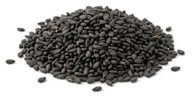 Black sesame seeds
Use equal weight. Gives a similar speckled appearance and light crunch on breads, but provides a nutty rather than herbaceous, onion-like flavour.

 Chilli powder
Use equal weight. Stir in directly with the dry spices; delivers comparable heat and red colour.
 Kashmiri chilli powder
Use 130% to 150% of the weight. Provides brilliant ruby colour with roughly half the fiery heat.
 Yellow chilli powder
Use 75% of the weight. Gives a sharp, clean pungency without tinting the sauce red.


 Ginger paste
Use 300% to 400% of the weight (e.g. 3–4 g paste for 1 g ground). Fry in oil alongside onions; provides a juicy, pungent kick rather than a dry, baking-spice heat.
 Fresh ginger
Peel and grate finely; use 300% to 400% of the weight. Add to the hot oil early; delivers bright, peppery warmth rather than the mellow, woody heat of dry ginger.
 Ground mace
Use 50% of the weight. Imparts a warm, spicy undertone in rich gravies, but lacks ginger's fiery, sharp zest.



 Coriander seeds
Dry-roast lightly in a pan and grind to a fine powder; use equal weight (1:1). Offers a noticeably fresher, brighter citrus note.
- Ground cumin
Use 50% to 75% of the weight. Lacks the floral, citrusy profile of coriander and turns the gravy heavier, earthier, and darker.
 Garam masala
Use 50% of the weight and stir in near the end of cooking. Adds warmth and depth since it contains ground coriander, but introduces stronger spices like clove and cinnamon.


 Yogurt
Use equal weight, whisked thoroughly until smooth before adding to hot dishes to prevent curdling.
 Coconut milk
Use equal weight with 1 teaspoon lemon juice mixed in. Provides rich creaminess in curries, but adds a noticeable coconut flavour.
 Single cream
Use 80% of the weight plus a squeeze of lemon juice for acidity. Enriches sauces nicely, though it is richer and less tangy.


Similar dishes
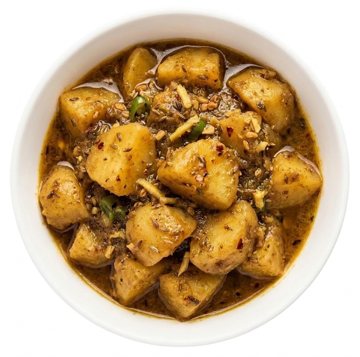
- Same: Khatte Aloo also features potatoes cooked with cumin, fenugreek, asafoetida, ground coriander, and chilli powder.
- Different: Khatte Aloo is fried in mustard oil rather than ghee, sours the dish with amchoor instead of yogurt, and adds turmeric, cloves, fresh ginger, and green chillies without including bananas or nigella seeds.

- Same: U.P.-Style Aloo Ki Sabzi shares potatoes, yoghurt, asafoetida, cumin, ground coriander and salt with this dish.
- Different: It uses boiled diced potatoes, green peas, fresh ginger, green bird’s eye chilli, sugar and coriander leaves, and lacks this dish’s green banana, fenugreek, nigella, red chilli powder and ground ginger.

- Same: Dum Kathhal also features potatoes seasoned with cumin, fenugreek seeds, asafoetida, ginger, and red chilli powder.
- Different: Dum Kathhal uses green jackfruit, fresh ginger, garam masala, and pungent mustard oil, while leaving out this dish's nigella seeds and yogurt.
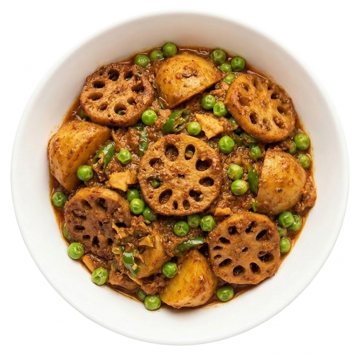
- Same: Dum Nadru also uses potatoes cooked in ghee or vegetable oil and shares spices like cumin, asafoetida, chilli powder, ground coriander, and ground ginger.
- Different: Dum Nadru is baked rather than simmered, incorporates lotus roots, peas, fresh ginger, green chillies, cloves, sugar, and Kashmiri garam masala, but omits this dish's yogurt, nigella, and fenugreek seeds.