Indian cooking
Indian cooking / Dishes / Dum Kathhal
Dum Kathhal (Spicy Baked Jackfruit)

Dum Kathhal

Spicy Baked Jackfruit
Vegetarian●●●Origin HyderabadPrep 30 minutesCook 30–45 minutes

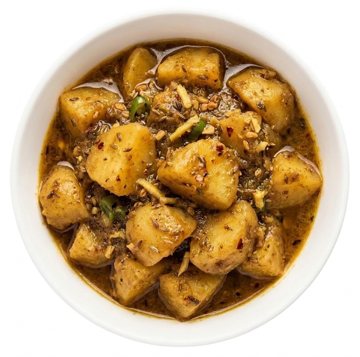
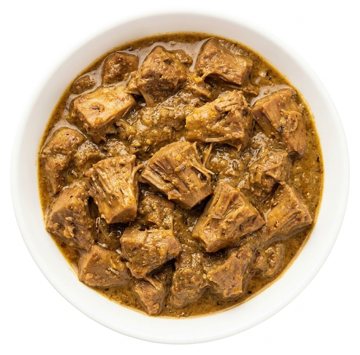
Tender pieces of green jackfruit and potatoes are deeply browned in pungent mustard oil, then simmered until soft in a fragrant, gently spiced gravy. The resulting dish has a satisfying, meaty texture complemented by warm notes of fenugreek and garam masala.

Tempering spices

3.3 gBloomed in hot fat to build the base (step 3)
01
~0.3 gpinch
spice
02
1.1 g½ teaspoon
spice
03
1.9 g½ teaspoon
spice
Keep whole; they will sizzle in the hot ghee.

Simmering spice mix

7 gStirred in with the liquid and vegetables (step 4)
01
1.8 g1 teaspoon
spice
02
2.6 g1 teaspoon
spice
03
2.6 g1 teaspoon
spice blend
Mix the ground spices together to distribute evenly into the gravy.

Everything else

02
228 g250 ml
oil/fat
03
Potato · Aloocut in half
300 g
vegetable
05
Ginger · Adrakpeeled and chopped
12 g1 piece
aromatic
06
1 g1 tablespoon
herb
07
to taste
salt

Method

  1. Put on protective gloves to prevent sticking, then trim the tough outer skin from 750 g jackfruit, discard any seeds, and cut the flesh into chunks roughly 8 cm long by 4 cm wide.
  2. Heat 228 g mustard oil in a heavy pan over medium heat, then fry the jackfruit and 300 g potato (cut in half) in batches for about 15 minutes until evenly golden brown; lift out and reserve.
  3. Warm 100 g ghee or vegetable oil in another wide, heavy pan set over medium heat, then add the tempering spices and sizzle for about 1 minute until the seeds crackle.
  4. Add the browned jackfruit and potatoes to the pan along with the simmering spice mix, 12 g ginger (peeled and chopped), salt to taste, and 500 ml water. Lower the heat slightly and cook at a steady simmer for roughly 15 minutes, shaking the pan from time to time, until both the potatoes and jackfruit are tender throughout.
  5. Scatter in 1 g coriander leaf (chopped) and fold through just before removing from the stove.

Don't have something?

Jackfruit
  • Ripe mango

    Use the same weight, chopped. It is softer and more acidic, so add it late in cooking or use raw in desserts.

  • Canned pineapple

    Use the same weight, drained and chopped. It is more tart and firm; simmer briefly if the recipe is cooked.

  • Banana

    Use the same weight, sliced. It is much softer and sweeter, so fold in at the end rather than cooking long.

Mustard oil
  • Peanut oil

    Use equal weight. It handles high-heat cooking well, but lacks the signature pungent, nasal heat of mustard oil.

  • Vegetable oil

    Use equal weight. Neutral in flavour, so your curry will lack the characteristic Bengali or North Indian pungent punch.

Potato
  • Eggplant

    Use equal weight. Cut into large chunks; cooks down much faster (10-12 minutes) and softens into the sauce rather than staying starchy and firm.

  • Paneer

    Use 80% of the weight. Cube and add in the last 5-10 minutes of cooking; adds rich dairy protein instead of starchy bulk.

  • Dried chickpea

    Use 45% dry weight. Soak overnight and boil until fully soft before stirring into the sauce to simmer for 10 minutes.

Ghee or vegetable oil
  • Peanut oil

    Use equal weight; handles high tempering heat well and keeps flavours neutral.

  • Butter

    Use equal weight; cook over gentle heat to prevent browning the milk solids too quickly.

Asafoetida
  • Garlic powder

    Use double the weight. Stir into hot oil just before adding wet ingredients; mimics the allium savoury background without the sulphurous edge.

  • Garlic paste

    Use 2 g for every 0.5 g of asafoetida. Sauté in oil until the raw smell clears; adds moisture and sweet allium depth.

Cumin seed
  • Ground cumin

    Use 70% of the weight; add with ground spices or sauce bases rather than hot oil tempering, where it scorches quickly and turns bitter.

  • Black cumin seeds

    Use equal weight for oil tempering. Delivers an earthy profile with an additional musky, smoky, and slightly bitter edge.

  • Fennel seed

    Use 60% of the weight for tempering; offers comparable warm aroma, but leans sweet and liquorice-like rather than savoury and earthy.

Fenugreek seed
  • Mustard seed

    Use 50% of the weight, crush or grind. Sharper heat and less maple-bitter; fry briefly in oil before adding.

  • Caraway seeds

    Use the same weight, crush lightly. Similar bitter-seed note but more aniseed; reduce other sweet spices slightly.

  • Ajwain seeds

    Use 25–30% of the weight, crush. Much stronger thyme-like flavour; do not overdo.

Ground ginger
  • Ginger paste

    Use 300% to 400% of the weight (e.g. 3–4 g paste for 1 g ground). Fry in oil alongside onions; provides a juicy, pungent kick rather than a dry, baking-spice heat.

  • Fresh ginger

    Peel and grate finely; use 300% to 400% of the weight. Add to the hot oil early; delivers bright, peppery warmth rather than the mellow, woody heat of dry ginger.

  • Ground mace

    Use 50% of the weight. Imparts a warm, spicy undertone in rich gravies, but lacks ginger's fiery, sharp zest.

Chilli powder
  • Red chilli powder

    Use 100% of the weight. Provides direct, sharp heat and red colour in equal measure.

  • Kashmiri chilli powder

    Use 150% to 200% of the weight if matching colour, but add a pinch of black pepper or hot chilli if you need equivalent fiery heat.

  • Cayenne pepper

    Use 75% to 100% of the weight. Offers a sharp, clean heat with slightly less earthy depth and less crimson colour.

Ginger
  • Fresh ginger

    Use equal weight; scrape off the skin and grate or finely julienne according to the recipe.

  • Ginger paste

    Use equal weight; stir straight into the sizzling aromatics, taking care as the extra moisture may spit.

  • Ground ginger

    Use 15 to 20% of the weight; add alongside ground spices, noting it imparts warm, dry heat rather than zesty freshness.

Garam masala
  • Ground cumin

    Use 50% of the weight mixed with equal parts ground coriander and a pinch of ground cinnamon, ground cloves, and ground green cardamom. Sprinkle near the end for a warming finish.

  • Lentil stew spice mix

    Use 75% of the weight. Simmer briefly in the gravy; imparts roasted warmth and complexity, though it adds a slight tang and earthy lentil undertone.

Coriander leaf
  • Coriander

    Use equal weight finely chopped; this is the exact same fresh herb.

  • Mint

    Use half the weight finely chopped; provides vibrant green freshness, though the flavour profile becomes noticeably cooler and sharper.

Similar dishes

Khatte Aloo
Sour Potatoes
It has a prominently sour, tangy bite from the amchoor rather than the warm, rich finish of this dish's spiced gravy.
  • Same: Khatte Aloo also cooks potatoes in pungent mustard oil seasoned with ginger, cumin seeds, fenugreek, and asafoetida.
  • Different: It omits the jackfruit, ghee, and garam masala, adding dried mango powder, turmeric, ground coriander, cloves, and fresh green chillies instead.
Kathhal ki Subzi
Braised Jackfruit with Yoghurt Sauce
Kathhal ki Subzi tastes tangy from yogurt and amchoor, whereas this dish tastes warmer from fenugreek and mustard oil and has potato alongside the jackfruit.
  • Same: Kathhal ki Subzi shares jackfruit, asafoetida, cumin seed, chilli powder, garam masala, and salt with this dish, and both brown the jackfruit before simmering it in a spiced gravy.
  • Different: Kathhal ki Subzi uses yogurt and amchoor for sourness plus ground coriander and turmeric, while this dish uses mustard oil, potato, fenugreek seed, fresh and ground ginger, and coriander leaf.
Aloo Chaat
Piquant Potatoes in Spicy Yoghurt
Aloo Chaat tastes much tangier, sharper, and fresher from the lemon juice and chaat masala, lacking the warm, pungent depth of this dish's mustard oil and fenugreek.
  • Same: Aloo Chaat also uses potatoes seasoned with ground and fresh ginger, chilli powder, and fresh coriander.
  • Different: Unlike this simmered jackfruit gravy cooked in mustard oil, Aloo Chaat is a dry-tossed dish featuring only potatoes, dressed with lemon juice, fresh green chillies, and chaat masala instead of fenugreek and garam masala.
Aloo Chutneywale
Chutney-coated Potatoes
Aloo Chutneywale tastes tangier and creamier from yogurt, unripe mango and green chutney, with nutty cashew and paneer, while this dish is mustard-oil pungent and meaty with warm fenugreek and garam masala.
  • Same: Aloo Chutneywale shares potatoes, cumin seed, chilli powder, garam masala, ginger and salt with this dish.
  • Different: Aloo Chutneywale has paneer, cashew, yogurt, coriander, mint, unripe mango, onion, garlic and tomato, and lacks this dish's jackfruit, mustard oil, asafoetida and fenugreek; its potatoes are hollowed, stuffed and simmered in a yogurt-cashew sauce.