
Karam Kalle ka Raita
A crisp, cooling yoghurt relish balanced by crunchy cabbage, fresh green chillies, and fragrant roasted spices.
Raita spices
9 gAdded to the yoghurt and cabbage (step 2)Everything else

Method
- Submerge 450 g thinly sliced cabbage in warm, salted water for 30 minutes. Tip into a colander and let it drain completely for 30 minutes.
- Transfer the drained cabbage to a large mixing bowl. Add 507 g whisked plain yogurt, 4.2 g granulated sugar, 6 g chopped green chilli, 1 teaspoon roasted and crushed peanuts, chopped coriander leaf to taste, salt to taste, and the raita spices. Fold thoroughly to coat the cabbage evenly.
- Refrigerate for 30 minutes before serving.
Don't have something?


 Sweetheart cabbage
Use 100% of the weight. Finely shred; cooks slightly faster than firm white cabbage and gives a sweeter, tender crunch in thorans and sabzis.
- Savoy cabbage
Use 100% of the weight. Shred finely; holds its shape well when stir-fried and carries spiced oil effectively.
 Brussels sprouts
Use 90% of the weight. Finely shred or halve; offers an identical brassica crunch and slight peppery bite.


 Ground cumin
Use 70% of the weight; add with ground spices or sauce bases rather than hot oil tempering, where it scorches quickly and turns bitter.
 Black cumin seeds
Use equal weight for oil tempering. Delivers an earthy profile with an additional musky, smoky, and slightly bitter edge.
 Fennel seed
Use 60% of the weight for tempering; offers comparable warm aroma, but leans sweet and liquorice-like rather than savoury and earthy.


 Roasted peanut
Use the same weight; adjust salt if they are already salted, and crush or grind as the recipe asks.
 Cashew nut
Use the same weight; they are richer and softer, so roast for a shorter time and reduce added fat.
 Almond
Use the same weight; blanch and peel for sauces, or chop for texture. They are firmer and less oily.


 Yogurt
Use equal weight, whisked thoroughly until smooth before adding to hot dishes to prevent curdling.
 Coconut milk
Use equal weight with 1 teaspoon lemon juice mixed in. Provides rich creaminess in curries, but adds a noticeable coconut flavour.
 Single cream
Use 80% of the weight plus a squeeze of lemon juice for acidity. Enriches sauces nicely, though it is richer and less tangy.


 Red chilli powder
Use 100% of the weight. Provides direct, sharp heat and red colour in equal measure.
 Kashmiri chilli powder
Use 150% to 200% of the weight if matching colour, but add a pinch of black pepper or hot chilli if you need equivalent fiery heat.
 Cayenne pepper
Use 75% to 100% of the weight. Offers a sharp, clean heat with slightly less earthy depth and less crimson colour.


 Jaggery
Use equal weight; grate or shave finely so it dissolves rapidly, giving a warm, caramel-like sweetness and slightly darker sauce.


- Chilli powder
Use 10 to 15% of the weight (about 1/4 teaspoon per chilli); imparts dry pungent heat and reddens the dish without the grassy crunch.
 Dried red chilli
Use 1 dried pod per fresh green chilli; snap in half and temper in hot oil for a deeper, toastier heat.

Similar dishes

- Same: Kosu Podi also features shredded cabbage seasoned with cumin seeds, green chillies, and fresh coriander.
- Different: Instead of being folded raw into plain yogurt with sugar and chilli powder, Kosu Podi is stir-fried in vegetable oil with onion, garlic, fresh coconut, chana dal, and urad dal.
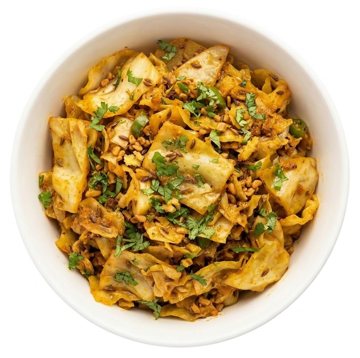
- Same: Karamkalla shares cabbage as its primary vegetable, seasoned with green chillies, chilli powder, cumin seeds, sugar, and coriander.
- Different: Karamkalla is a warm stir-fry cooked in vegetable oil with fresh and ground ginger, turmeric, asafoetida, and fenugreek seeds, completely omitting the yogurt base used in this dish.

- Same: Maharashtrian Thecha shares peanuts, cumin seed, coriander leaf, green chilli, and salt with this dish.
- Different: Maharashtrian Thecha adds garlic and vegetable oil and uses bird's-eye chillies pounded with roasted peanuts, while this dish uses yogurt, cabbage, sugar, and chilli powder in a raita.

- Same: Muttokos Thoran shares cabbage, green chilli, cumin seed and salt with this dish.
- Different: It is a coconut-oil stir-fry with mustard seed, urad dal, curry leaf, shallot and fresh coconut, while this dish is a yogurt-based raita with peanut, coriander, chilli powder and sugar.