Bengali Tamatar Chutney
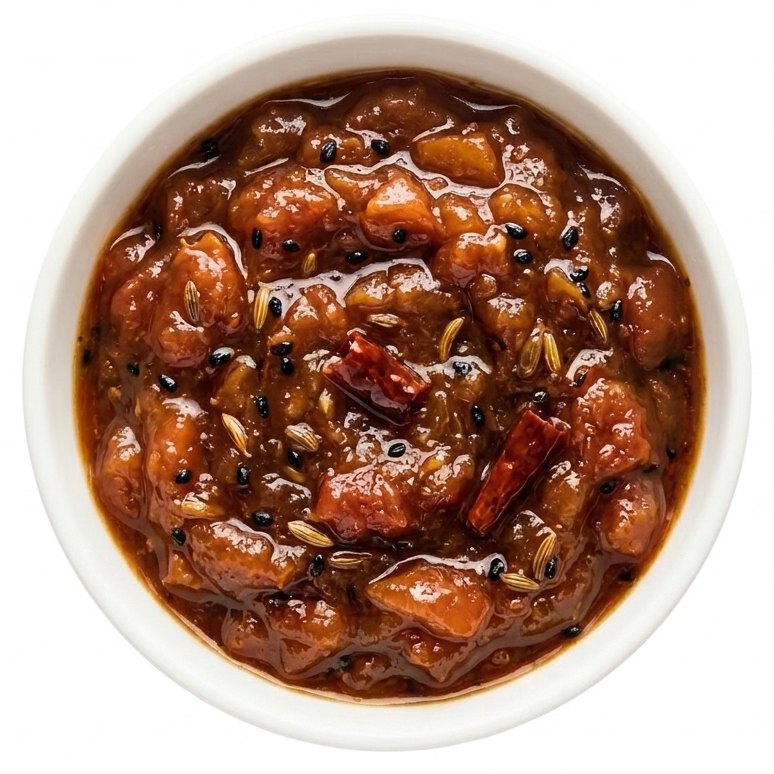
Bengali tomato chutney is a thick, glossy sweet-sour preserve made from tomatoes, jaggery and vinegar, scented with whole spices and mild chilli. It tastes tangy, caramel-sweet and warmly spiced.
Whole spices for the oil
10 gAdded to the hot oil (step 2)Ground chilli for the sauce
2.6 gStirred in once the tomatoes begin to break down (step 4)Everything else

Method
- Heat 67.5 g vegetable oil in a heavy saucepan over medium heat.
- Add the whole spices for the oil (2 g fennel seed, 2.1 g cumin seed, 3 g nigella seeds and 4 g dried mild red chilli) and fry for a few seconds.
- Add 800 g tomato, roughly chopped, and cook for 10 minutes.
- When the tomato starts to break down, add the ground chilli for the sauce (2.6 g kashmiri chilli powder), 250 g jaggery, 101 g malt vinegar and 0.3 g salt; stir well.
- Lower the heat and cook uncovered for 1 hour 15 minutes, stirring often so the chutney does not catch on the base of the pan.
- Turn off the heat when the chutney has thickened and darkened.
- Let it cool, then spoon into sterilised jars, seal and refrigerate; use within 2 weeks.
Don't have something?


 Peanut oil
Use 1:1 by weight. Handles high-heat frying identically and introduces a very subtle, pleasant nuttiness.
 Ghee
Use 1:1 by weight. Yields a much richer, authentic aroma and a glossy, heavier mouthfeel.
 Mustard oil
Use 1:1 by weight. Heat until smoking, then cool slightly before cooking to temper its intensely pungent, sharp mustard kick.


 Aniseed
Use 75% of the weight. Fry in hot oil or ghee; has a sharper, more pronounced liquorice flavour, so use a lighter hand.
 Ground fennel seed
Use 60% of the weight. Stir into the sauce with ground masalas; provides identical sweet aniseed flavour without whole seed crunch.
 Star anise
Use one point (single carpel) per 1 g of fennel seeds. Simmer in gravies and remove before serving; gives a deeper, woodier liquorice aroma.


 Ground cumin
Use 70% of the weight; add with ground spices or sauce bases rather than hot oil tempering, where it scorches quickly and turns bitter.
 Black cumin seeds
Use equal weight for oil tempering. Delivers an earthy profile with an additional musky, smoky, and slightly bitter edge.
- Fennel seed
Use 60% of the weight for tempering; offers comparable warm aroma, but leans sweet and liquorice-like rather than savoury and earthy.


- Black cumin seeds
Use equal weight. Imparts an earthy, slightly bitter note in temperings, though it lacks nigella's oniony sharpness.
 Black sesame seeds
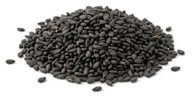
Use equal weight. Gives a similar speckled appearance and light crunch on breads, but provides a nutty rather than herbaceous, onion-like flavour.


 Dried kashmiri chilli
Use the same weight; similar mild heat and good colour. Remove seeds if you want it milder.
 Kashmiri red chilli powder
Use half the weight of whole chilli (1 g powder for 2 g whole); add to hot oil briefly so it does not burn.
 Paprika
Use the same weight; sweeter and milder, good for colour. Add a pinch of cayenne pepper if you need heat.


 Tomato purée
Use 40% to 50% of the fresh tomato weight mixed with a splash of water. Imparts a deeper red colour, thicker sauce, and slightly sweeter cooked flavour.
 Plain yogurt
Use 60% of the weight, whisked smooth and added on low heat. Provides rich body and sourness, though the gravy becomes paler and creamier.


- Dried kashmiri chilli
Grind deseeded dried pods to an equal weight of powder; gives identical vivid red colour and gentle warmth.
 Red chilli powder
Use 25% of the weight mixed with sweet paprika for colour; straight red chilli powder is substantially hotter and will make the dish fiery.
 Chilli powder
Use one-third of the weight; the sauce will be less intensely red and notably sharper in heat.


 Granulated sugar
Use 80% of the weight. Granulated sugar is sweeter by weight, but gives a cleaner, one-dimensional sweetness that lacks jaggery's caramel, molasses depth.
 Raisin
Soak and blend into a paste; use 100% to 120% of the weight. Adds rich, natural, fruity sweetness with complex, dark molasses notes that thicken the gravy.


 White malt vinegar
Use the same weight; sharper and clearer; reduce salt slightly.
 White vinegar
Use 90% of the weight, diluted with 10% water; harsher, so taste.
 Lime juice
Use the same weight; fresher sourness but no malt flavour; reduce salt.


Similar dishes

- Same: Bhune Tamatar Ki Chutney shares tomatoes, Kashmiri chilli powder, salt, a thick chutney texture and mild chilli heat with this dish.
- Different: Bhune Tamatar Ki Chutney uses mustard oil, garlic and sugar, and gets tang from roasted tomatoes, while this dish uses vegetable oil, jaggery and malt vinegar with fennel, cumin, nigella and dried red chilli.
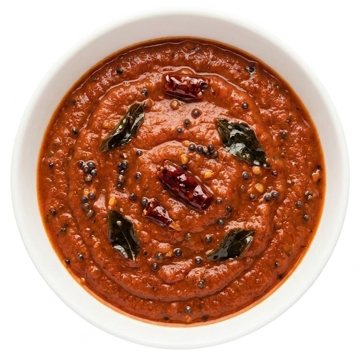
- Same: Tomato Chutney shares with this dish a tomato base cooked in vegetable oil with cumin seed, Kashmiri chilli powder, dried red chilli and salt.
- Different: Tomato Chutney uses onion and garlic as bulk, tamarind paste for sourness and a mustard-seed and curry-leaf tempering, and it lacks this dish's jaggery, malt vinegar, nigella seeds and fennel seed.

- Same: Tamatar ka Kut shares tomatoes, vegetable oil, cumin seed, nigella seeds and dried red chilli with this dish.
- Different: Tamatar ka Kut adds onion, ginger-garlic paste, curry leaves, fenugreek, turmeric, sesame, chickpea flour and mustard seed, and it lacks this dish's jaggery and malt vinegar.

- Same: Aloo Tamatar ka Chokha shares tomato, cumin seed, chilli, and vegetable oil with this dish.
- Different: Aloo Tamatar ka Chokha adds potato, green chilli, ginger, mustard oil, and coriander, while this dish uses jaggery, malt vinegar, nigella seeds, fennel seed, and Kashmiri chilli powder.