Indian cooking
Indian cooking / Dishes / Aloo Matar Rasedar
Aloo Matar Rasedar (Potatoes & Peas in Sauce)

Aloo Matar Rasedar

Potatoes & Peas in Sauce
Vegetarian●●●Origin AwadhPrep 30 minutesCook 10 minutes

A classic North Indian curry pairing golden fried potatoes and sweet green peas in a lightly spiced tomato broth. It is mildly piquant, warm, and comforting.

Tempering spices

2.4 gFried in hot fat at the start (step 3)
01
~0.3 gpinch
spice
02
2.1 g1 teaspoon
spice
Keep whole; they will crackle in the oil together.

Spices for the peas

0.8 gStirred into the simmering peas (step 4)
01
0.1 g2 cloves
spice
02
0.7 g¼ teaspoon
spice
Measure together to add directly to the peas.

Finishing spice

1.8 gSprinkled over the potatoes and sauce (step 5)
01
1.8 g1 teaspoon
spice
Keep separate to dust over the pan near the end.

Everything else

01
81 g6 tablespoons
oil/fat
02
Potato · Aloocut into medium-sized pieces
500 g
vegetable
03
Pea · Matarshelled if fresh
500 g
vegetable
04
240 g2 tomatoes
vegetable
05
to taste
herb
06
to taste
salt

Method

  1. Pour enough extra oil for shallow-frying into a wide skillet over medium heat. Fry 500 g potato for 15–20 minutes, turning regularly, until tender throughout and pale golden. Transfer with a slotted spoon to a plate and set aside.
  2. Immerse 240 g tomato in boiling water for 30 seconds. Lift out, slip off the skins once cool enough to handle, and mash the flesh thoroughly into a smooth pulp.
  3. Warm 81 g vegetable oil or ghee in a heavy saucepan over medium heat. Add the tempering spices and fry for 1 minute until the cumin crackles.
  4. Tip in 500 g pea and 125 ml water. Cover the pan and simmer for 5 minutes, shaking the pan or stirring carefully so the peas do not crush. Add the spices for the peas along with 1 teaspoon Garam Masala Kashmiri.
  5. When the peas are nearly tender, fold in the fried potatoes, mashed tomato pulp, the finishing spice, and salt to taste, plus finely chopped fenugreek (or fresh coriander) to taste. Splash in a little water if the sauce is too thick, stir gently, and simmer for 3–5 minutes until everything is heated through and the flavours have melded.

Don't have something?

Ghee or vegetable oil
  • Peanut oil

    Use equal weight; handles high tempering heat well and keeps flavours neutral.

  • Butter

    Use equal weight; cook over gentle heat to prevent browning the milk solids too quickly.

Potato
  • Eggplant

    Use equal weight. Cut into large chunks; cooks down much faster (10-12 minutes) and softens into the sauce rather than staying starchy and firm.

  • Paneer

    Use 80% of the weight. Cube and add in the last 5-10 minutes of cooking; adds rich dairy protein instead of starchy bulk.

  • Dried chickpea

    Use 45% dry weight. Soak overnight and boil until fully soft before stirring into the sauce to simmer for 10 minutes.

Asafoetida
  • Garlic powder

    Use double the weight. Stir into hot oil just before adding wet ingredients; mimics the allium savoury background without the sulphurous edge.

  • Garlic paste

    Use 2 g for every 0.5 g of asafoetida. Sauté in oil until the raw smell clears; adds moisture and sweet allium depth.

Cumin seed
  • Ground cumin

    Use 70% of the weight; add with ground spices or sauce bases rather than hot oil tempering, where it scorches quickly and turns bitter.

  • Black cumin seeds

    Use equal weight for oil tempering. Delivers an earthy profile with an additional musky, smoky, and slightly bitter edge.

  • Fennel seed

    Use 60% of the weight for tempering; offers comparable warm aroma, but leans sweet and liquorice-like rather than savoury and earthy.

Pea
  • Green pea

    Use equal weight directly from fresh or frozen. Toss into the pan near the end of cooking to preserve sweetness and bright green colour.

  • Chana dal

    Use 70% of the weight, boiled until tender but holding shape. Adds pleasant body and starch, though it lacks the juicy sweetness of fresh peas.

Clove
  • Ground cloves

    Use 1 g ground for 4 g whole (or 1 small pinch per 2 to 3 whole cloves). Add with spice powders; disperses intense warmth quickly, so use with restraint.

  • Allspice berries

    Use 100% of the weight whole in tempering. Imparts a warm, clove-like aromatic profile combined with hints of nutmeg and cinnamon.

  • Black cardamom pod

    Use 1 pod for 3 to 4 cloves in whole tempering. Shares a camphor-like warmth and medicinal depth, though it introduces a distinct smoky undertone.

Chilli powder
  • Red chilli powder

    Use 100% of the weight. Provides direct, sharp heat and red colour in equal measure.

  • Kashmiri chilli powder

    Use 150% to 200% of the weight if matching colour, but add a pinch of black pepper or hot chilli if you need equivalent fiery heat.

  • Cayenne pepper

    Use 75% to 100% of the weight. Offers a sharp, clean heat with slightly less earthy depth and less crimson colour.

Kashmiri garam masala
  • Garam masala

    Use 75–80% of the weight; add at the same stage. More pungent and less aromatic, so taste before adding more.

  • Ground garam masala

    Use 75–80% of the weight; stir in off the heat. Finer powder, so it releases aroma quickly.

  • Ground cardamom and mace

    Use 20–25% of the weight alongside garam masala for aroma; it lacks the full spice profile.

Ground coriander
  • Coriander seeds

    Dry-roast lightly in a pan and grind to a fine powder; use equal weight (1:1). Offers a noticeably fresher, brighter citrus note.

  • Ground cumin

    Use 50% to 75% of the weight. Lacks the floral, citrusy profile of coriander and turns the gravy heavier, earthier, and darker.

  • Garam masala

    Use 50% of the weight and stir in near the end of cooking. Adds warmth and depth since it contains ground coriander, but introduces stronger spices like clove and cinnamon.

Tomato
  • Tomato purée

    Use 40% to 50% of the fresh tomato weight mixed with a splash of water. Imparts a deeper red colour, thicker sauce, and slightly sweeter cooked flavour.


  • Plain yogurt

    Use 60% of the weight, whisked smooth and added on low heat. Provides rich body and sourness, though the gravy becomes paler and creamier.

Fenugreek leaves
  • Dried fenugreek leaf

    Use 10% of the fresh weight, rub between the palms or soak in warm water for 5 minutes. More hay-like and less fresh-bitter; add near the end.

  • Spinach

    Use the same weight, chop and wilt. Gives leafy body but none of methi's bitter aroma; adjust salt and add a pinch of sugar.

  • Fenugreek shoots

    Use the same weight, chop finely and discard any tough stems. Milder and more tender; cook 2–3 minutes less.

Similar dishes

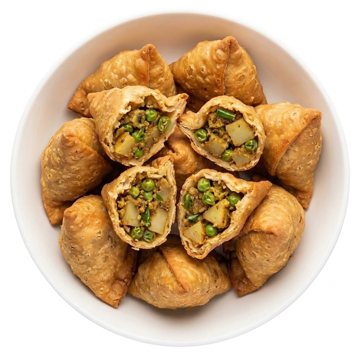
Samosa
Samosas
Samosa is crisp, fried, and sharper in heat from the fresh chillies and ginger, whereas this dish is saucy, mildly spiced, and tangier from tomatoes.
  • Same: Samosa shares the same core combination of potatoes and peas seasoned with cumin seeds, ground coriander, and chilli powder.
  • Different: Instead of simmering the vegetables in a tomato sauce with asafoetida and cloves, Samosa mixes them with fresh ginger, green chillies, and turmeric before wrapping and deep-frying them in pastry.
Aloo Tikki Awadhi
Potato & Pea Patties
It is much crisper, tangier, and hotter from fresh ginger and green chillies, lacking the saucy tomato richness of this dish.
  • Same: Aloo Tikki Awadhi shares the core base of potatoes and green peas seasoned with cumin seeds, ground coriander, chilli powder, and garam masala.
  • Different: Instead of simmering the vegetables in a tomato-based broth, Aloo Tikki Awadhi mixes them with fresh ginger, green chillies, and chaat masala to form griddled patties served with sweet mango chutney.
Aloo Matar Sookhe
Potatoes with Peas
It has an earthier and sharper heat from fresh green chillies and mustard seeds instead of the warm, lightly spiced richness of this dish's tomato broth.
  • Same: Aloo Matar Sookhe also combines potatoes and green peas cooked with tomatoes, cumin seeds, and vegetable oil or ghee.
  • Different: It is prepared as a dry sabzi with a much higher proportion of potatoes to peas, replacing the cloves, asafoetida, and garam masala with mustard seeds, ground turmeric, and fresh green chillies.
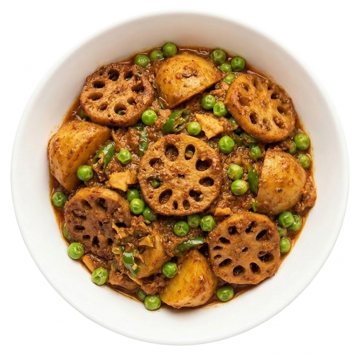
Dum Nadru
Spicy Baked Lotus Roots
Dum Nadru tastes earthier from lotus root, hotter and brighter from green chilli and ginger, and slightly sweeter than this dish's mild tomato-based broth.
  • Same: Dum Nadru shares potatoes, peas, asafoetida, cumin, clove, chilli powder, ground coriander, Kashmiri garam masala, and salt with this dish.
  • Different: Dum Nadru adds lotus root, green chilli, ginger, ground ginger, and sugar, uses 150 g ghee versus this dish's 81 g oil or ghee, and lacks this dish's tomato and fenugreek leaves.