Indian cooking
Torai (Snake Gourd Curry)

Torai

Snake Gourd Curry
Vegetarian●●●Origin UttarakhandPrep 15 minutesCook 20–25 minutes

A lightly spiced dry vegetable curry of tender snake gourd braised in its own extracted juices. A fragrant base of whole spices and warming ground ginger complements the gourd's naturally mild flavour.

Tempering spices

2.4 gBloomed in hot fat at the start (step 1)
01
1.1 g½ teaspoon
spice
02
0.9 g¼ teaspoon
spice
03
~0.3 gpinch
spice
04
0.1 g2 cloves
spice
Keep whole; they go into the hot fat together.

Ground spice blend

7 gStirred into the softened gourd (step 3)
01
1.3 g½ teaspoon
spice
02
1.8 g1 teaspoon
spice
03
3 g1 teaspoon
spice
04
0.9 g½ teaspoon
spice
Stir together to combine thoroughly.

Everything else

02
Snake gourd · Chichindapeeled and cut into 1-cm / ½-inch thick rounds
1000 g
vegetable
03
Fresh ginger · Adrakpeeled and crushed
10 g1 piece
aromatic
04
to taste
salt
05
to taste
herb

Method

  1. Warm 100 g ghee or vegetable oil in a large, heavy pan set over medium heat. Tip in the tempering spices and sizzle for a few seconds until fragrant.
  2. Tumble in 1000 g snake gourd. Place a lid on the pan and simmer over gentle heat for 15 to 20 minutes, stirring occasionally, until the gourd yields and releases its liquid.
  3. Uncover and mix in the ground spice blend, 10 g fresh ginger, and salt to taste. Sauté for around 5 minutes until the moisture evaporates completely and oil begins to separate at the edges.
  4. Remove from the heat and scatter over coriander leaf to garnish before serving.

Don't have something?

Ghee or vegetable oil
  • Peanut oil

    Use equal weight; handles high tempering heat well and keeps flavours neutral.

  • Butter

    Use equal weight; cook over gentle heat to prevent browning the milk solids too quickly.

Cumin seed
  • Ground cumin

    Use 70% of the weight; add with ground spices or sauce bases rather than hot oil tempering, where it scorches quickly and turns bitter.

  • Black cumin seeds

    Use equal weight for oil tempering. Delivers an earthy profile with an additional musky, smoky, and slightly bitter edge.

  • Fennel seed

    Use 60% of the weight for tempering; offers comparable warm aroma, but leans sweet and liquorice-like rather than savoury and earthy.

Fenugreek seed
  • Mustard seed

    Use 50% of the weight, crush or grind. Sharper heat and less maple-bitter; fry briefly in oil before adding.

  • Caraway seeds

    Use the same weight, crush lightly. Similar bitter-seed note but more aniseed; reduce other sweet spices slightly.

  • Ajwain seeds

    Use 25–30% of the weight, crush. Much stronger thyme-like flavour; do not overdo.

Asafoetida
  • Garlic powder

    Use double the weight. Stir into hot oil just before adding wet ingredients; mimics the allium savoury background without the sulphurous edge.

  • Garlic paste

    Use 2 g for every 0.5 g of asafoetida. Sauté in oil until the raw smell clears; adds moisture and sweet allium depth.

Clove
  • Ground cloves

    Use 1 g ground for 4 g whole (or 1 small pinch per 2 to 3 whole cloves). Add with spice powders; disperses intense warmth quickly, so use with restraint.

  • Allspice berries

    Use 100% of the weight whole in tempering. Imparts a warm, clove-like aromatic profile combined with hints of nutmeg and cinnamon.

  • Black cardamom pod

    Use 1 pod for 3 to 4 cloves in whole tempering. Shares a camphor-like warmth and medicinal depth, though it introduces a distinct smoky undertone.

Snake gourd
  • Courgette

    Use the same weight; halve and deseed if seedy. Cook 5 minutes less, as it softens faster.

  • Bottle gourd

    Use the same weight; peel and deseed. Cook for a similar time until tender.

  • Ridge gourd

    Use the same weight; peel and chop. Cook 3–4 minutes less and do not overcook.

Chilli powder
  • Red chilli powder

    Use 100% of the weight. Provides direct, sharp heat and red colour in equal measure.

  • Kashmiri chilli powder

    Use 150% to 200% of the weight if matching colour, but add a pinch of black pepper or hot chilli if you need equivalent fiery heat.

  • Cayenne pepper

    Use 75% to 100% of the weight. Offers a sharp, clean heat with slightly less earthy depth and less crimson colour.

Ground coriander
  • Coriander seeds

    Dry-roast lightly in a pan and grind to a fine powder; use equal weight (1:1). Offers a noticeably fresher, brighter citrus note.

  • Ground cumin

    Use 50% to 75% of the weight. Lacks the floral, citrusy profile of coriander and turns the gravy heavier, earthier, and darker.

  • Garam masala

    Use 50% of the weight and stir in near the end of cooking. Adds warmth and depth since it contains ground coriander, but introduces stronger spices like clove and cinnamon.

Ground turmeric
  • Ground ginger

    Use 50% of the weight. Mimics turmeric's warm, earthy, rhizome background, but provides none of the golden-yellow colour.

  • Saffron

    Steep a tiny pinch (0.1 g per 2 g turmeric) in 2 tbsp warm water; use to match the rich golden hue. Contributes an aristocratic, honeyed floral flavour rather than earthy bitterness.

Ground ginger
  • Ginger paste

    Use 300% to 400% of the weight (e.g. 3–4 g paste for 1 g ground). Fry in oil alongside onions; provides a juicy, pungent kick rather than a dry, baking-spice heat.

  • Fresh ginger

    Peel and grate finely; use 300% to 400% of the weight. Add to the hot oil early; delivers bright, peppery warmth rather than the mellow, woody heat of dry ginger.

  • Ground mace

    Use 50% of the weight. Imparts a warm, spicy undertone in rich gravies, but lacks ginger's fiery, sharp zest.

Fresh ginger
  • Ginger paste

    Use equal weight. Sauté in hot fat until the raw allium smell disappears; slightly wetter, but provides identical warmth and pungency.

  • Ground ginger

    Use 20% to 25% of the weight (1 g for every 4 to 5 g fresh). Stir into the gravy; adds peppery heat and warmth, though it misses the crisp, zesty kick of raw root.


Coriander leaf
  • Coriander

    Use equal weight finely chopped; this is the exact same fresh herb.

  • Mint

    Use half the weight finely chopped; provides vibrant green freshness, though the flavour profile becomes noticeably cooler and sharper.

Similar dishes

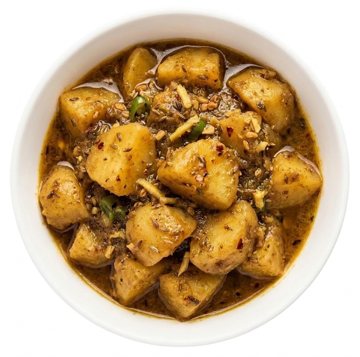
Khatte Aloo
Sour Potatoes
Khatte Aloo has a sharply tart and pungent profile from the dried mango powder and mustard oil, whereas this dish tastes milder and more delicate.
  • Same: Khatte Aloo uses the same foundational spice blend of cumin, fenugreek, asafoetida, clove, turmeric, chilli powder, ground coriander, and ginger as this dish.
  • Different: Khatte Aloo features potatoes cooked in mustard oil rather than snake gourd in ghee or vegetable oil, and it adds amchoor and green chillies while omitting coriander leaves.
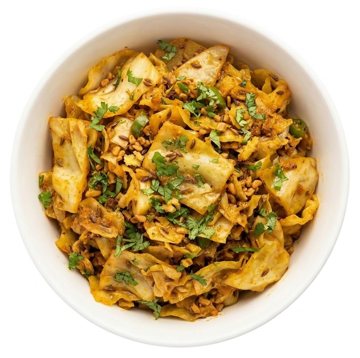
Karamkalla
Dry Cabbage in Masala
Karamkalla tastes more pungent and gently sweet from green chilli and sugar, while this dish tastes milder and gourd-forward with whole spices and ginger.
  • Same: Karamkalla shares this dish's dry vegetable style and its base of cumin seed, fenugreek seed, asafoetida, ground ginger, chilli powder, ground coriander, ground turmeric, salt, and oil or ghee.
  • Different: Karamkalla uses cabbage instead of snake gourd, adds green chilli and sugar, uses more oil, and lacks clove and fresh ginger; it is a stir-fry rather than a curry braised in the gourd's own juices.
Deewani Handi
Mixed Vegetables (III)
Deewani Handi tastes richer and creamier with sweet onion and earthy spinach notes, compared to the lighter, milder flavour of this dry gourd curry.
  • Same: Deewani Handi shares a nearly identical spice profile of cumin, fenugreek, asafoetida, chilli powder, turmeric, ground coriander, and fresh and ground ginger.
  • Different: Deewani Handi braises spinach and onions in milk to make a glossy sauce without clove, whereas this dish braises snake gourd dry in its own extracted juices.
Kachnar ki Kali
Flowers of the Bauhinia Tree
Kachnar ki Kali is tangier and more floral and astringent than this milder, earthy gourd curry.
  • Same: Kachnar ki Kali shares a base of cumin seeds, cloves, asafoetida, chilli powder, ground coriander, and fresh and ground ginger.
  • Different: Instead of snake gourd braised dry with fenugreek and turmeric, Kachnar ki Kali uses bauhinia flower buds, adds garam masala, and incorporates a large amount of plain yogurt.