
Pappuchakkalu
These crisp, golden South Indian crackers offer a satisfying crunch flavoured with fiery chillies, nutty lentils, and fragrant curry leaves.
Cumin seasoning
2.1 gGround with the chillies and curry leaves in step 2Everything else

Method
- Submerge 1 teaspoon moong dal and 4.2 g chana dal in a bowl of water to steep for 10 minutes, then drain thoroughly.
- Place 6–12 g green chilli, 0.5–1 g curry leaf, salt to taste, and the cumin seasoning into a spice mill or mortar, processing to a coarse grind.
- Combine the drained lentils in a clean vessel with the ground aromatics, 1 cup rice flour, 4 tablespoon chickpea flour, 1 tablespoon coconut, and 1 teaspoon melted butter, gradually working in enough water to knead a cohesive dough.
- Divide the mixture into 12–15 even pieces, rolling them into balls before pressing each out into a round or triangle measuring roughly 6 cm (2½ in) across and 5 mm (¼ in) thick.
- Pour vegetable oil for deep-frying into a deep, heavy saucepan and heat to 180°C (350°F), verifying the heat when a cube of bread turns brown within 30 seconds.
- Fry the dough shapes in batches for 3–4 minutes until crisp and uniformly golden brown, then lift out using a slotted spoon to drain on paper towels; let them cool fully before transferring to an airtight container for up to 10 days.
Don't have something?


 Ground cumin
Use 70% of the weight; add with ground spices or sauce bases rather than hot oil tempering, where it scorches quickly and turns bitter.
 Black cumin seeds
Use equal weight for oil tempering. Delivers an earthy profile with an additional musky, smoky, and slightly bitter edge.
 Fennel seed
Use 60% of the weight for tempering; offers comparable warm aroma, but leans sweet and liquorice-like rather than savoury and earthy.


 Chilli powder
Use 10 to 15% of the weight (about 1/4 teaspoon per chilli); imparts dry pungent heat and reddens the dish without the grassy crunch.
 Dried red chilli
Use 1 dried pod per fresh green chilli; snap in half and temper in hot oil for a deeper, toastier heat.


 Bay leaf
Fry 1 bay leaf for every 5 curry leaves in hot oil; imparts a warm, woodsy background note, but misses the citrus-sulphury punch entirely.
 Lime juice
Add a small squeeze (about 5 ml per sprig of curry leaves) right before serving; provides sharp citrus top notes without the toasty, herbal aroma.


 Red lentils
Use equal weight. It cooks in about the same time and breaks down to a similar soft, creamy consistency, though the colour will be slightly pinkish-orange.
 Pigeon peas
Use equal weight. Requires longer soaking and cooking time, and produces a slightly earthier, denser dal.


 Yellow split peas
Use 100% of the weight. Soak for at least 1 hour; takes about 10 minutes longer to cook through and has a marginally earthier flavour.
- Pigeon peas
Use 100% of the weight. Reduces cooking time by about 10 minutes and breaks down softer, giving a smoother consistency rather than distinct grains.
 Black gram
For tempering or tadka only: use 70% of the weight. Browns faster in hot oil, providing a nutty, crunchy bite.


 Cornflour
Use about 60–70% of the weight for thickening; for coatings use the same weight but the crust is denser.
 Plain flour
Use the same weight for coatings; contains gluten, browns faster and is less crisp.
 Fine semolina
Use the same weight for crisp coatings; coarser texture and needs a short rest.


 Yellow split pea flour
Use 100% of the weight. Many commercial gram flours are milled from split peas; performs identically in pakora batters and kadhi.
 Cornstarch
For crisping batters or binding cutlets: use 50% to 60% of the weight. Produces a very crisp shell but lacks the earthy, roasted nutty flavour of besan.


 Grated desiccated coconut
Use equal weight directly; it is the identical ingredient under a different label.
 Fresh coconut
Grate finely and use 130% to 140% of the weight to compensate for higher moisture; toast gently in a dry pan over low heat if a dry texture is needed.
 Dried coconut
Grate finely using a microplane and use equal weight. Offers a slightly oilier, toastier coconut profile.


 Melted ghee
Use the same weight; nuttier and keeps better. Reduce salt if the butter was salted.
 Vegetable oil
Use 80% of the weight; no dairy flavour and less richness. Good for frying, less good for finishing.
 Melted unsalted butter
Use the same weight; adjust salt in the dish if your butter was salted.


 Peanut oil
Use 1:1 by weight. Handles high-heat frying identically and introduces a very subtle, pleasant nuttiness.
 Ghee
Use 1:1 by weight. Yields a much richer, authentic aroma and a glossy, heavier mouthfeel.
 Mustard oil
Use 1:1 by weight. Heat until smoking, then cool slightly before cooking to temper its intensely pungent, sharp mustard kick.


Similar dishes
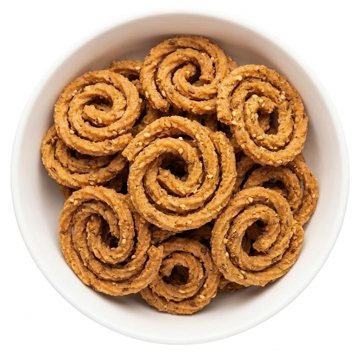
- Same: Both are deep-fried South Indian rice and lentil snacks seasoned with cumin seeds and fried in vegetable oil.
- Different: Mangupullu uses whole basmati rice, sesame seeds, and ghee shaped into rings, but omits the chickpea flour, chana dal, green chillies, and curry leaves found in this dish.

- Same: Puli Bongaralu shares rice flour, chana dal, green chilli, curry leaf, vegetable oil, and salt with this dish, and both are savoury South Indian fried snacks.
- Different: Puli Bongaralu adds urad dal, onion, ginger, mustard seed, dried red chilli, and asafoetida and is shaped into patties, while this dish uses chickpea flour, moong dal, desiccated coconut, cumin, and melted butter and is made as thin crisp crackers.
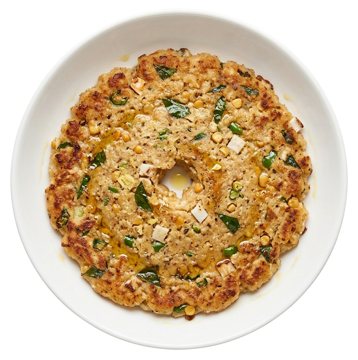
- Same: Malabar Adai shares green chillies, curry leaves, chana dal, and vegetable oil with this dish.
- Different: Malabar Adai is pan-cooked as a batter pancake incorporating fresh coconut and ginger, whereas this dish is deep-fried into dry crackers using chickpea flour, moong dal, and cumin seeds.

- Same: Masala Idli shares rice, chana dal, green chilli, cumin, curry leaf, coconut, vegetable oil and salt with this dish.
- Different: Masala Idli uses fermented parboiled rice and urad dal, is steamed, and adds ginger, coriander leaf, mustard seed and asafoetida, while this dish uses rice flour, chickpea flour, moong dal, desiccated coconut and butter and is fried in oil.