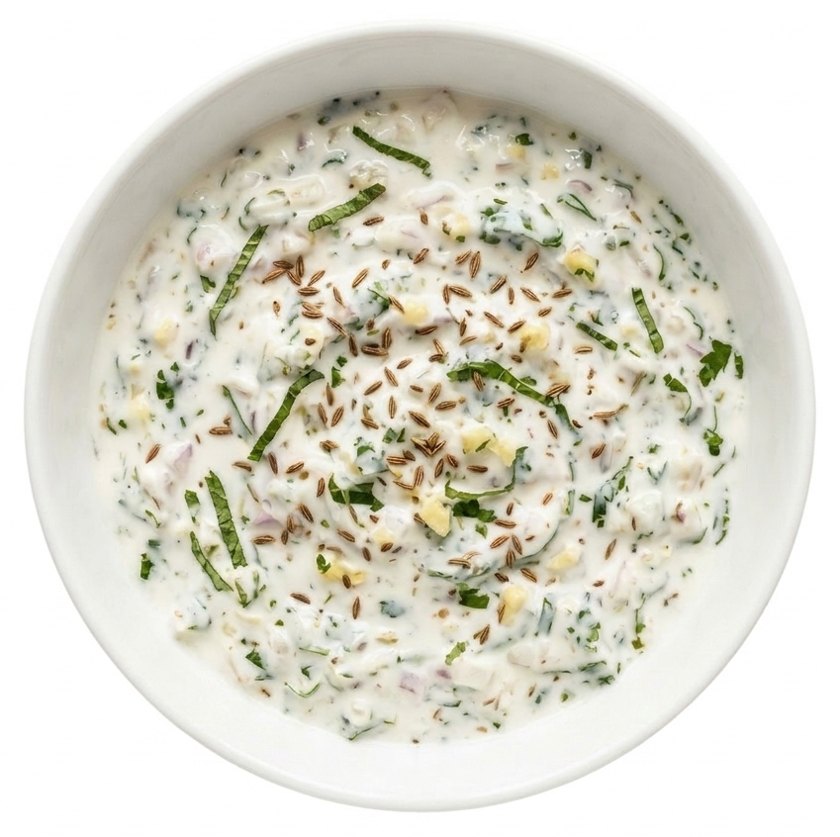
Shallot & Ginger Raita
A thick, cooling yoghurt raita with sweet chopped shallot, warm ginger, fresh mint and coriander, finished with toasted cumin and a sweet-salt balance. It is creamy and fresh with a gentle warmth.
Toasted cumin for the raita
6 gStirred into the drained yoghurt with the mint and coriander (step 4)Everything else

Method
- Line a bowl or sieve with muslin, spoon in 500 g Greek yoghurt, tie the cloth at the top and suspend it over a dish for 1 hour to drain. Leave the yoghurt undisturbed while it hangs.
- Finely chop 80 g banana shallot, a thumb-size piece of fresh ginger root, 3 g mint and 3 g coriander leaves.
- Stir the chopped shallot and ginger into the drained yoghurt.
- Stir in 3 g mint, 3 g coriander and the toasted cumin for the raita.
- Season to taste with caster sugar and sea salt, using more sugar than salt.
- Refrigerate until needed.
Don't have something?


 Hung natural yoghurt
Use the same weight and whisk smooth; same thick consistency.
 Full-fat natural yoghurt
Use 1.25 times the weight and strain through muslin for 30 minutes; looser if not strained.
 Hung yogurt
Use the same weight; virtually identical.







 Ginger paste
Use equal weight. Sauté in hot fat until the raw allium smell disappears; slightly wetter, but provides identical warmth and pungency.
 Ground ginger
Use 20% to 25% of the weight (1 g for every 4 to 5 g fresh). Stir into the gravy; adds peppery heat and warmth, though it misses the crisp, zesty kick of raw root.


 Dried mint
Use about 30% of the weight of fresh mint. Rub between your palms to crush before stirring in; the flavour will be more intensely herbal and less bright.
 Coriander leaf
Use equal weight, finely chopped. Adds fresh citrusy green notes, but lacks the cooling menthol lift.


 Coriander (cilantro) or basil
Use the same weight, choosing the coriander element if available. If only basil is available, expect a sweeter, more aniseed flavour.
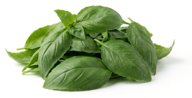 Basil leaves
Use the same weight. Basil is sweeter and more aromatic in a different way; add near the end so it keeps its perfume.
 Coriander paste
Use 1.5 times the weight and reduce other liquid slightly; it is less fresh and more concentrated, so taste before adding more.


 Ground cumin
Use 70% of the weight; add with ground spices or sauce bases rather than hot oil tempering, where it scorches quickly and turns bitter.
 Black cumin seeds
Use equal weight for oil tempering. Delivers an earthy profile with an additional musky, smoky, and slightly bitter edge.
 Fennel seed
Use 60% of the weight for tempering; offers comparable warm aroma, but leans sweet and liquorice-like rather than savoury and earthy.


 Granulated sugar
Use the same weight. It is slightly coarser, so stir a little longer to dissolve; in baking, grind briefly if a fine texture matters.
 Demerara sugar
Use the same weight, but dissolve it earlier as it is coarser. It adds a light caramel note and a little colour.
 Ground jaggery or soft brown sugar
Use the same weight; crush or grate jaggery first. It darkens the dish and adds molasses flavour, so reduce other liquid slightly.


Similar dishes

- Same: Both are cooling raitas built on Greek yoghurt with shallot, caster sugar and sea salt. Both rely on yoghurt for tang and creaminess, with no added spice fat beyond the dairy base.
- Different: Burnt Onion Raita uses 1000 g shallot against this dish's 80 g banana shallot. It roasts the shallots until deeply blackened and grinds them, while this dish uses chopped raw shallot and adds ginger, mint, coriander and toasted cumin. It lacks this dish's fresh herbs and cumin.
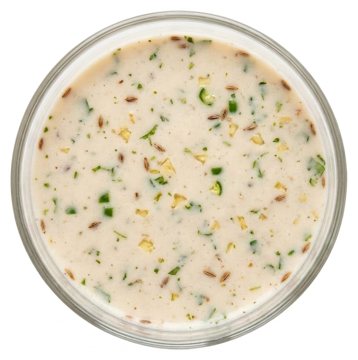
- Same: Mattha/Chaas shares Greek yoghurt, cumin seed, fresh ginger and coriander with this dish, and both are cooling.
- Different: Unlike this dish, Mattha/Chaas is thinned with 398 g water into a drink, adds green bird's-eye chilli, and lacks shallot, mint and caster sugar.
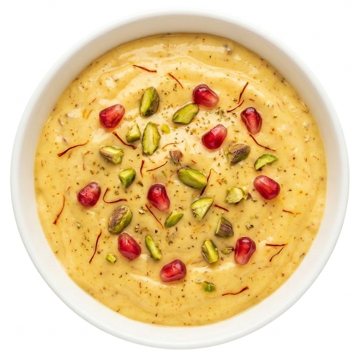
- Same: Shrikhand and this dish are both thick, cooling Greek yoghurt preparations served cold.
- Different: Shrikhand uses twice the yoghurt and is sweetened with caster sugar, saffron and green cardamom, then topped with pistachio and pomegranate seeds; it lacks this dish's shallot, ginger, mint, coriander, toasted cumin and sea salt.

- Same: Pudine Ka Raita shares a Greek yoghurt base with this dish, and both use ginger, mint, coriander and cumin seed.
- Different: Pudine Ka Raita uses much more mint and spring onion, less yoghurt, no shallot and no caster sugar, and it is blended rather than topped with chopped shallot; it also uses black salt alongside sea salt.