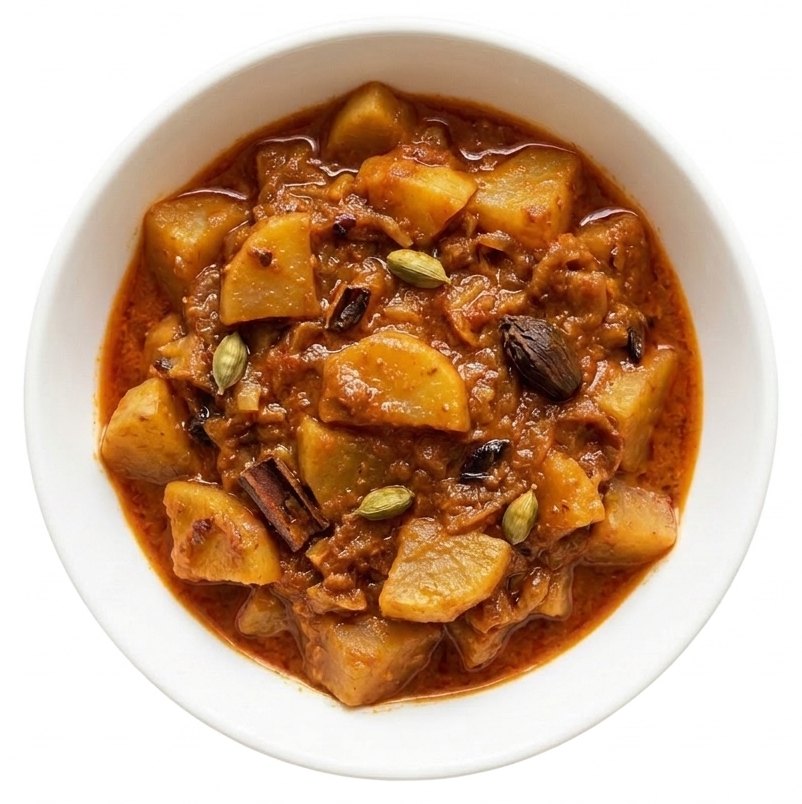
Shalgam ki Subzi
Tender turnip pieces simmered in an aromatic gravy infused with whole cardamoms, cinnamon, garlic, and fried onion, then finished with puréed tomato.
Sauce spices and aromatics
44 gAdded to the simmering water (step 3)Everything else

Method
- Toss 250 g peeled turnips with salt to taste in a bowl and leave for 15 minutes to draw out moisture. Rinse thoroughly and pat completely dry with paper towels.
- Heat 27 g vegetable oil in a non-stick frying pan over medium heat. Add the turnips and sauté for roughly 5 minutes until lightly golden, then lift them out and set aside.
- In a deep, heavy-based pan, combine 250 ml water, the sauce spices and aromatics, 1 tablespoon fried onion paste (Tala Pisa Pyaz), and salt to taste. Bring to a boil while stirring constantly, then keep at a steady boil for 7 to 8 minutes.
- Tip the fried turnips into the bubbling liquid, lower the heat slightly, and cook for approximately 20 minutes until tender throughout.
- Take the pan off the heat, mix in 120 g puréed tomato, and stir continuously for 2 to 3 minutes.
Don't have something?


 Potato
Use the same weight; cut to the same size. It is softer and less peppery, and will thicken the dish more.
 White radish
Use the same weight; cut to the same size. It gives a sharper, more watery result, so cook a little longer.
 Carrot
Use the same weight; cut to the same size. It is sweeter and firmer, so the dish will taste milder.


 Peanut oil
Use 1:1 by weight. Handles high-heat frying identically and introduces a very subtle, pleasant nuttiness.
 Ghee
Use 1:1 by weight. Yields a much richer, authentic aroma and a glossy, heavier mouthfeel.
 Mustard oil
Use 1:1 by weight. Heat until smoking, then cool slightly before cooking to temper its intensely pungent, sharp mustard kick.


 Ground ginger
Use 50% of the weight. Mimics turmeric's warm, earthy, rhizome background, but provides none of the golden-yellow colour.
 Saffron
Steep a tiny pinch (0.1 g per 2 g turmeric) in 2 tbsp warm water; use to match the rich golden hue. Contributes an aristocratic, honeyed floral flavour rather than earthy bitterness.


 Ceylon cinnamon
True cinnamon: thinner, papery quills, milder and sweeter. Use about 1.5 times the weight, and taste.
 Ground cinnamon (cassia)
Use about a third of the weight (0.5 g ground for a 2.5 cm piece), stirred in with the ground spices rather than fried whole, since the powder burns quickly.
 Cassia buds
Use 60-70% of the weight; stronger and more peppery, so taste before adding more.


 Green cardamom seed
Use 35 to 40% of the total pod weight; lightly bruise the seeds before frying in oil to release their essential oils.
 Ground green cardamom
Use 20 to 25% of the pod weight (about 1 generous pinch per pod); stir in toward the end of cooking so the delicate floral notes do not dissipate.
 White cardamom pod
Use 1:1 by pod count or weight; crack gently before using, though it is slightly less intensely floral.


 Ground black cardamom
Use 0.5 g of ground seeds for each whole pod. Stir directly into the curry base; delivers identical smoky flavour without woody husks.
- Green cardamom pod
Use equal pod count or weight. Crack slightly and fry whole; tastes sweet, menthol-fresh, and floral rather than dark and smoky.


 Fried onions
Blend the same weight with 1–2 tablespoons water to a smooth paste; add only enough water to grind.
 Onion paste
Fry the same weight in oil until deep golden, then mash or blend; cook a little longer to remove the raw taste.
 Boiled onion paste
Fry the same weight in oil until golden before use; it will be wetter, so cook until the oil separates.


 Dried kashmiri chilli
Grind deseeded dried pods to an equal weight of powder; gives identical vivid red colour and gentle warmth.
 Red chilli powder
Use 25% of the weight mixed with sweet paprika for colour; straight red chilli powder is substantially hotter and will make the dish fiery.
 Chilli powder
Use one-third of the weight; the sauce will be less intensely red and notably sharper in heat.


 Garlic
Use equal weight; crush or finely grate to a smooth pulp to replicate the same fresh, pungent moisture in your base gravy.
 Garlic powder
Use 20 to 25% of the weight; mix with a teaspoon of water before adding to oil so it does not burn, noting it lacks the fresh bite.


 Tomato purée
Use 40% to 50% of the fresh tomato weight mixed with a splash of water. Imparts a deeper red colour, thicker sauce, and slightly sweeter cooked flavour.
 Plain yogurt
Use 60% of the weight, whisked smooth and added on low heat. Provides rich body and sourness, though the gravy becomes paler and creamier.

Similar dishes
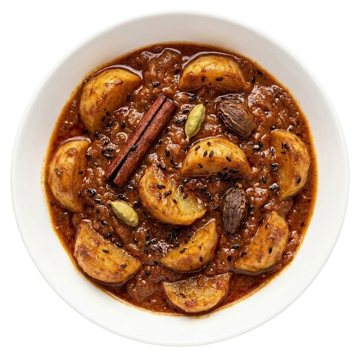
- Same: Gogji also simmers turnips in a spiced sauce built on fried onion paste, Kashmiri chilli powder, turmeric, cinnamon, and green and black cardamom.
- Different: Gogji browns the turnips in a large amount of ghee, adds black cumin seeds and sugar, and omits the garlic paste and tomato used in this dish.

- Same: Both dishes simmer turnips in vegetable oil with tomatoes, garlic, Kashmiri chilli powder, turmeric, cinnamon, and black and green cardamoms.
- Different: Shalgam Gosht adds 750 g of lamb, fresh ginger, bay leaf, ground coriander, and fennel seeds, using fresh onions rather than the fried onion paste found in this dish.

- Same: Kan Guchhi shares a base of vegetable oil, fried onion paste, garlic, turmeric, Kashmiri chilli, cinnamon, and both green and black cardamoms with this dish.
- Different: Kan Guchhi features morel mushrooms simmered in a yoghurt sauce seasoned with saffron, cloves, black cumin, and ginger, omitting the turnips and tomatoes used here.
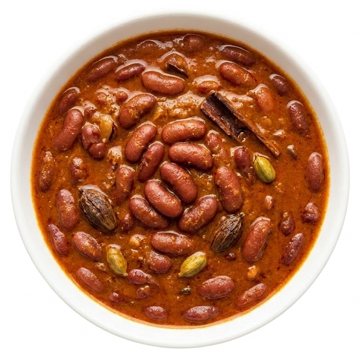
- Same: Rajma shares a Kashmiri spice base of black cardamom, green cardamom, cinnamon, turmeric, and Kashmiri chilli powder.
- Different: Rajma uses red kidney beans, butter, and ground ginger, omitting the turnips, vegetable oil, fried onion, garlic paste, and tomato found in this dish.