
Rajma
A comforting Kashmiri bean stew featuring tender red kidney beans simmered in an aromatic spiced gravy finished with rich butter.
Simmering spices
39 gAdded to the cooked beans with water (step 4)Everything else

Method
- Place 500 g dried red kidney bean in a deep bowl, cover generously with water, and leave to soak overnight.
- Drain the soaked beans and transfer them to a heavy-based pot. Cover with water, bring to a rapid boil, and cook vigorously for 10 minutes.
- Drain and rinse the beans, then return them to the pan covered with fresh water. Bring to a boil, lower the heat, and simmer for around 45 minutes until cooked through, then drain.
- Return the cooked beans to the pan along with 600 ml water, the simmering spices, and salt to taste.
- Bring the liquid to a boil, then lower the heat to low, cover the pan, and simmer for 25 to 30 minutes until the beans are soft and the liquid has reduced to a thick sauce.
- Stir in 42.3 g butter until melted, then serve warm with steamed rice.
Don't have something?


 Dried chickpea
Use equal weight. Soak overnight and boil until tender; texture is firmer and nuttier, but it carries thick, spiced gravies equally well.
 Whole black gram
Use equal weight, soaked overnight and pressure-cooked. Yields a creamier, starchier gravy with an earthier taste rather than distinct, firm beans.


 Dried kashmiri chilli
Grind deseeded dried pods to an equal weight of powder; gives identical vivid red colour and gentle warmth.
 Red chilli powder
Use 25% of the weight mixed with sweet paprika for colour; straight red chilli powder is substantially hotter and will make the dish fiery.
 Chilli powder
Use one-third of the weight; the sauce will be less intensely red and notably sharper in heat.


 Green cardamom seed
Use 35 to 40% of the total pod weight; lightly bruise the seeds before frying in oil to release their essential oils.
 Ground green cardamom
Use 20 to 25% of the pod weight (about 1 generous pinch per pod); stir in toward the end of cooking so the delicate floral notes do not dissipate.
 White cardamom pod
Use 1:1 by pod count or weight; crack gently before using, though it is slightly less intensely floral.


 Ground black cardamom
Use 0.5 g of ground seeds for each whole pod. Stir directly into the curry base; delivers identical smoky flavour without woody husks.
- Green cardamom pod
Use equal pod count or weight. Crack slightly and fry whole; tastes sweet, menthol-fresh, and floral rather than dark and smoky.


 Ceylon cinnamon
True cinnamon: thinner, papery quills, milder and sweeter. Use about 1.5 times the weight, and taste.
 Ground cinnamon (cassia)
Use about a third of the weight (0.5 g ground for a 2.5 cm piece), stirred in with the ground spices rather than fried whole, since the powder burns quickly.
 Cassia buds
Use 60-70% of the weight; stronger and more peppery, so taste before adding more.


 Ground ginger
Use 50% of the weight. Mimics turmeric's warm, earthy, rhizome background, but provides none of the golden-yellow colour.
 Saffron
Steep a tiny pinch (0.1 g per 2 g turmeric) in 2 tbsp warm water; use to match the rich golden hue. Contributes an aristocratic, honeyed floral flavour rather than earthy bitterness.


 Ginger paste
Use 300% to 400% of the weight (e.g. 3–4 g paste for 1 g ground). Fry in oil alongside onions; provides a juicy, pungent kick rather than a dry, baking-spice heat.
 Fresh ginger
Peel and grate finely; use 300% to 400% of the weight. Add to the hot oil early; delivers bright, peppery warmth rather than the mellow, woody heat of dry ginger.
 Ground mace
Use 50% of the weight. Imparts a warm, spicy undertone in rich gravies, but lacks ginger's fiery, sharp zest.


 Unsalted butter
Use 100% of the weight. If the original recipe relies on salted table butter, add a pinch of salt to balance.
 Ghee
Use 80% to 85% of the weight. Ghee is pure butterfat with moisture removed; it yields a deeper, nuttier flavour and handles high heat better.
 Vegetable oil
Use 80% of the weight for frying or tempering. The dish loses sweet dairy richness but remains glossy and light.


 Plain boiled rice
Use 1:1 by weight. Functionally identical as an accompaniment or base.
 Basmati rice
Weigh out 40% of the required cooked weight in raw basmati rice, rinse, and boil in double its weight of water until tender.

Similar dishes
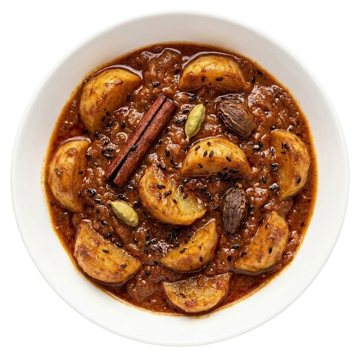
- Same: Both Kashmiri dishes share a whole-spice base of Kashmiri chilli powder, turmeric, cinnamon stick, and green and black cardamom pods.
- Different: Gogji features turnips instead of kidney beans and incorporates ghee, fried onion paste, sugar, and black cumin seeds instead of butter and ground ginger.

- Same: Shalgam ki Subzi shares a whole-spice base of black cardamom, green cardamom, and cinnamon stick, seasoned with turmeric and Kashmiri chilli powder.
- Different: Instead of red kidney beans simmered in butter with ground ginger, it cooks turnips in vegetable oil with tomatoes, garlic paste, and fried onion paste.

- Same: Kan Guchhi shares a core Kashmiri spice base with this dish, using Kashmiri chilli powder, turmeric, ground ginger, cinnamon, and green and black cardamom.
- Different: Instead of red kidney beans simmered with butter, it braises morel mushrooms in vegetable oil with garlic paste, fried onion paste, saffron, cloves, and black cumin seeds.
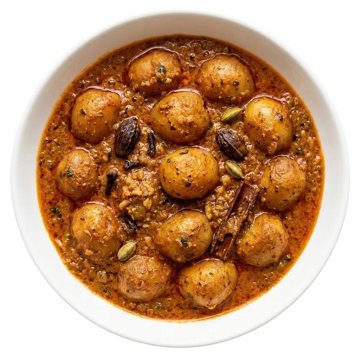
- Same: Dum Aloo shares Kashmiri chilli powder, green and black cardamom, cinnamon, turmeric, and salt with this dish, and both are spiced simmered curries.
- Different: Dum Aloo uses slow-fried potatoes, vegetable oil, yogurt, clove, fennel, coriander, fresh ginger, and chilli water, while this dish uses dried red kidney beans, butter, and ground ginger and has no yogurt souring agent.