
Ranith Gaad
A fragrant Kashmiri fish curry simmered in a spiced, vibrant sauce until rich and tender. It carries the warm pungency of mustard oil, ginger, and aromatic whole spices.
Curry spices
11 gAdded to the simmering water base (step 2)Everything else

Method
- Heat 228 g mustard oil in a deep, heavy pan to 180°C (350°F). Fry 1000 g fish in batches for roughly 1 minute until lightly browned, then lift out using a slotted spoon and drain on paper towels.
- Pour 500 ml water into a broad, heavy pot, then stir in the curry spices and salt to taste. Bring the liquid to a rolling boil.
- Lower the fried fish gently into the bubbling broth, drop the heat to medium, and cook uncovered for about 30 minutes, until the gravy reduces and the oil floats to the surface.
- Dust 1 teaspoon Kashmiri garam masala over the sauce and keep at a gentle simmer for 2 minutes longer before taking off the heat.
Don't have something?


 Peanut oil
Use equal weight. It handles high-heat cooking well, but lacks the signature pungent, nasal heat of mustard oil.
 Vegetable oil
Use equal weight. Neutral in flavour, so your curry will lack the characteristic Bengali or North Indian pungent punch.


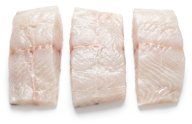
 Firm white fish
Use the same weight, clean and cut into fillet-sized pieces. Cooking time is the same; remove any bones.
 Firm fish fillet
Use the same weight. Check thickness; thick pieces may need 2–3 minutes more simmering.
 Skinless firm white fish fillet
Use the same weight. Skinless flakes more; handle gently and add late.


 Red chilli powder
Use 100% of the weight. Provides direct, sharp heat and red colour in equal measure.
 Kashmiri chilli powder
Use 150% to 200% of the weight if matching colour, but add a pinch of black pepper or hot chilli if you need equivalent fiery heat.
 Cayenne pepper
Use 75% to 100% of the weight. Offers a sharp, clean heat with slightly less earthy depth and less crimson colour.


 Ground ginger
Use 50% of the weight. Mimics turmeric's warm, earthy, rhizome background, but provides none of the golden-yellow colour.
 Saffron
Steep a tiny pinch (0.1 g per 2 g turmeric) in 2 tbsp warm water; use to match the rich golden hue. Contributes an aristocratic, honeyed floral flavour rather than earthy bitterness.


 Ginger paste
Use 300% to 400% of the weight (e.g. 3–4 g paste for 1 g ground). Fry in oil alongside onions; provides a juicy, pungent kick rather than a dry, baking-spice heat.
 Fresh ginger
Peel and grate finely; use 300% to 400% of the weight. Add to the hot oil early; delivers bright, peppery warmth rather than the mellow, woody heat of dry ginger.
 Ground mace
Use 50% of the weight. Imparts a warm, spicy undertone in rich gravies, but lacks ginger's fiery, sharp zest.


 Ground fennel seed
Use the same weight; fennel is the closest everyday match, slightly sweeter and milder.
 Aniseed
Grind the same weight freshly; the aroma is stronger, so add it near the end.
 Ground star anise
Use about 50% of the weight; it is much more powerful and slightly liquorice-heavy.


 Ground cloves
Use 1 g ground for 4 g whole (or 1 small pinch per 2 to 3 whole cloves). Add with spice powders; disperses intense warmth quickly, so use with restraint.
 Allspice berries
Use 100% of the weight whole in tempering. Imparts a warm, clove-like aromatic profile combined with hints of nutmeg and cinnamon.
 Black cardamom pod
Use 1 pod for 3 to 4 cloves in whole tempering. Shares a camphor-like warmth and medicinal depth, though it introduces a distinct smoky undertone.


 Garlic powder
Use double the weight. Stir into hot oil just before adding wet ingredients; mimics the allium savoury background without the sulphurous edge.
 Garlic paste
Use 2 g for every 0.5 g of asafoetida. Sauté in oil until the raw smell clears; adds moisture and sweet allium depth.


 Ground cumin
Use 70% of the weight; add with ground spices or sauce bases rather than hot oil tempering, where it scorches quickly and turns bitter.
 Black cumin seeds
Use equal weight for oil tempering. Delivers an earthy profile with an additional musky, smoky, and slightly bitter edge.
 Fennel seed
Use 60% of the weight for tempering; offers comparable warm aroma, but leans sweet and liquorice-like rather than savoury and earthy.


- Fennel seed
Same weight, lightly crushed; sweeter and milder but the closest match for the anise note.
- Cumin seed
Use two-thirds the weight; earthier and warmer, losing most of the aniseed character — good in breads and root vegetables.
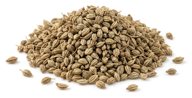 Carom seeds
Use half the weight; much more pungent and thyme-like, so add early in hot oil to soften it.


 Garam masala
Use 75–80% of the weight; add at the same stage. More pungent and less aromatic, so taste before adding more.
 Ground garam masala
Use 75–80% of the weight; stir in off the heat. Finer powder, so it releases aroma quickly.
 Ground cardamom and mace
Use 20–25% of the weight alongside garam masala for aroma; it lacks the full spice profile.


Similar dishes

- Same: Kashmiri Kofte shares whole spices and ground spices with this dish, including cumin seed, clove, asafoetida, Kashmiri garam masala, chilli powder, turmeric, ground ginger, and ground aniseed.
- Different: Kashmiri Kofte uses minced lamb meatballs and a yogurt-based sauce with sugar, while this dish uses firm white fish fillets simmered in a mustard-oil spiced sauce without yogurt.
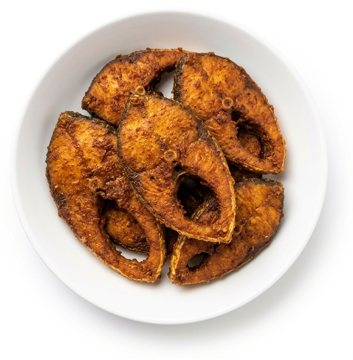
- Same: Podi Chapa shares firm white fish fillet, ground turmeric, chilli powder, and salt with this dish.
- Different: Podi Chapa adds garlic paste, fresh ginger, lime, ground black pepper, and coriander and uses vegetable oil, while it lacks this dish's mustard oil, asafoetida, clove, cumin, caraway, aniseed, and Kashmiri garam masala, and it is marinated and fried rather than simmered in a spiced sauce.

- Same: Meen Godavari and this dish are both firm white fish curries seasoned with turmeric, chilli powder, and salt.
- Different: Meen Godavari uses vegetable oil, fresh coconut, tamarind extract, green chilli, coriander, fenugreek, and black pepper, while this dish uses mustard oil, asafoetida, clove, cumin, caraway, aniseed, ground ginger, and Kashmiri garam masala and has no coconut or tamarind.
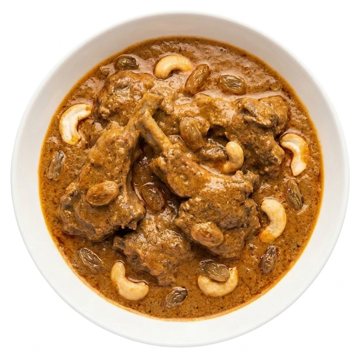
- Same: Darashahi Kaliya shares this dish's Kashmiri spicing, including mustard oil, ground ginger, ground aniseed, asafoetida, clove, turmeric, chilli powder, and Kashmiri garam masala.
- Different: Darashahi Kaliya braises lamb ribs with fat in milk and yogurt with raisins and cashews, while this dish simmers firm white fish without dairy, fruit, or nuts and adds cumin seed and caraway seeds.