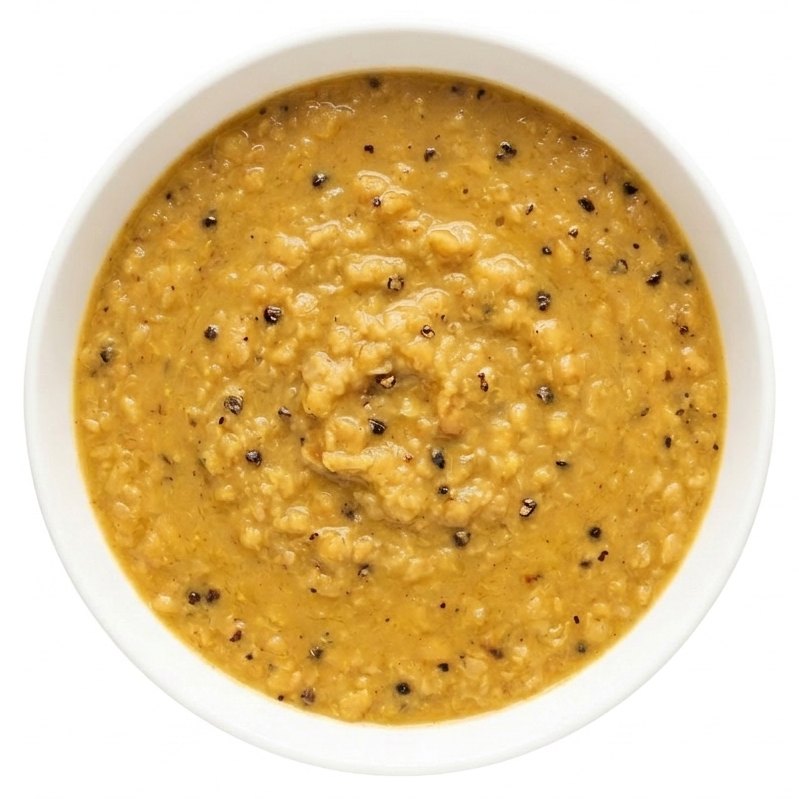
Goan Dalicha Ras
A Goan-style toor dal enriched with a fresh coconut and tamarind paste, then finished with crushed Sichuan pepper. It is creamy and tangy, with a gentle chilli heat and a lingering pepper tingle.
Coconut paste spices
3.7 gBlended into the coconut paste (step 2)Sichuan pepper
0.1 gStirred into the dal near the end (step 5)
Everything else

Method
- Put 200 g toor dal and 994 g water in a large saucepan. Heat on medium until bubbling, then lower the heat and cook at a gentle bubble for 45–50 minutes, until the lentils are tender; stir now and then. Turn off the heat, cover and let stand to cool a little.
- Blend 100 g coconut, 12 g tamarind paste, 149 g water and the coconut paste spices (1.5 g ground turmeric, 2.2 g mild chilli powder) until completely smooth. Keep to one side.
- Blend the cooked dal with a stick blender or mash it with a potato masher until smooth.
- Heat the dal on low, stir in the coconut paste and loosen with a little more water if it is too thick.
- Stir in the Sichuan pepper (0.1 g coarsely crushed Sichuan peppercorn), 0.3 g granulated sugar and salt to taste. Simmer for 7–10 minutes, stirring all the time.
- Turn off the heat and serve warm with plain rice.
Don't have something?


 Red lentils
Use equal weight. Cooks considerably faster and breaks down into a softer, creamier consistency with an earthier taste.
 Chana dal
Use equal weight. Requires longer soaking and cooking; remains firmer with a nuttier bite and less starchy thickening.
 Split mung beans
Use equal weight. Cooks quickly to a lighter, more delicate, and silky texture.


 Stock
Use the same weight in savoury dishes; it adds body, so adjust salt.
 Milk
Use the same weight only in doughs or creamy dishes; it makes the result richer.
 Coconut water
Use the same weight in curries or rice; it adds sweetness and a faint coconut taste.


 Black peppercorn
Use 70% of the weight, crush coarsely. Gives heat and aroma but none of the numbing, citrus tingle.
 Ground black pepper
Use 50–60% of the weight; stir in near the end. Simpler heat, no tingle.
 Star anise
Use 20–25% of the weight, ground. Adds a citrus-anise note but not the numbing effect.


 Jaggery
Use equal weight; grate or shave finely so it dissolves rapidly, giving a warm, caramel-like sweetness and slightly darker sauce.

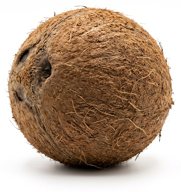
 Fresh coconut
Use equal weight freshly grated or diced. Delivers the identical sweet, milky taste and juicy texture.
 Desiccated coconut
Use 60% of the weight and soak in hot water or milk for 15 minutes before using. The finished dish will be slightly sweeter and less fibrous.
 Dried coconut
Finely grate and use 50% of the weight, soaked in hot water for 20 minutes. Yields a firmer chew and a denser, oilier coconut aroma.


 Ground ginger
Use 50% of the weight. Mimics turmeric's warm, earthy, rhizome background, but provides none of the golden-yellow colour.
 Saffron
Steep a tiny pinch (0.1 g per 2 g turmeric) in 2 tbsp warm water; use to match the rich golden hue. Contributes an aristocratic, honeyed floral flavour rather than earthy bitterness.


 Mild paprika
Use the same weight for colour and low heat; add a small pinch of hot chilli powder if needed.
 Kashmiri chilli powder
Use the same weight; similar colour, slightly more heat. Taste before adding more.
 Red chilli powder
Use half the weight and make up with mild paprika; red chilli powder is usually hotter.


 Tamarind pulp
Use 120–150% of the weight and strain; pulp is less concentrated, so simmer a little longer to thicken.
 Tamarind extract
Use 150–200% of the weight and reduce gently; extract is already diluted.
 Lime juice
Use 60–70% of the weight with a pinch of jaggery; sharper, so add near the end off the heat.
Similar dishes

- Same: Konkani Keerla Ambat shares toor dal, coconut, tamarind, turmeric and a finish of crushed Sichuan pepper with this dish.
- Different: Konkani Keerla Ambat adds bamboo shoot, dried Kashmiri chilli, asafoetida, black mustard seed and curry leaf in an oil tempering, and uses far less toor dal than this dish.

- Same: Kadalaparippu Payasam shares with this dish a base of split legumes simmered with coconut in an Indian style.
- Different: Kadalaparippu Payasam uses chana dal, jaggery, ghee, coconut milk, coconut cream, cardamom, raisins, and cashews, while this dish uses toor dal, tamarind, turmeric, chilli powder, and Sichuan pepper.

- Same: Bengali Cholar Dal shares dal, coconut, turmeric, chilli, sugar, salt and water with this dish.
- Different: Bengali Cholar Dal uses chana dal and a ghee-or-oil tempering with bay leaf, cumin, green chilli, raisin, coriander, cardamom, cinnamon and Kashmiri chilli, while this dish uses toor dal with tamarind paste and crushed Sichuan pepper.

- Same: Parippu Payasam shares with this dish a dal base and coconut, using green moong dal and coconut milk where this dish uses toor dal and fresh coconut.
- Different: Parippu Payasam is a sweet dessert with jaggery, ghee, cardamom, raisins, and cashews, and it lacks this dish's tamarind, turmeric, chilli powder, and Sichuan pepper.