Indian cooking
Indian cooking / Dishes / Parippu Payasam
Parippu Payasam (Green Moong Dal Flavoured with Coconut Milk)

Parippu Payasam

Green Moong Dal Flavoured with Coconut Milk
VegetarianOrigin Andhra PradeshPrep 20 minutesCook 50 minutes

A rich and comforting South Indian dessert of roasted green moong dal cooked in creamy coconut milk and sweetened with jaggery. It is finished with fragrant cardamom, ghee, and a garnish of nuts and dried fruit.

Cardamom finishing spice

1.7 gStirred in at the end of cooking (step 4)
01
1.7 g¾ teaspoon
spice
Grind the seeds to a fine powder.

Everything else

01
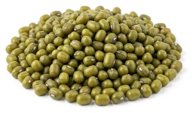
Split green mung beans · Moong Dalrinsed, drained and dried
250 g
legume
03
750 g
sweetener
04
66 g5 tablespoons
oil/fat
06
50 g
nut/seed

Method

  1. Place 250 g green moong dal into an ungreased pan over medium-low heat and toast for 2 to 3 minutes until pale golden and fragrant.
  2. Pour in half of the 761 g coconut milk, bring to a boil, and let it cook for about 30 minutes until the dal turns tender.
  3. Stir in 750 g jaggery and keep boiling for roughly 10 minutes, stirring frequently to prevent sticking, until the mixture visibly thickens.
  4. Add the remaining coconut milk and simmer gently for about 10 minutes. Stir in 66 g ghee followed by the cardamom finishing spice, then remove the pan from the heat.
  5. Scatter 50 g raisins and 50 g cashew nut over the payasam and serve hot.

Don't have something?

Split green moong dal
  • Split mung beans

    Use the same weight; skinned yellow dal cooks similarly but loses the green colour and slight earthiness.

  • Whole mung beans

    Use the same weight; soak 4 hours and cook longer until soft. Firmer and more whole-bean texture.

  • Split mung beans

    Use the same weight; very close, though usually split and skinned, so colour and texture differ slightly.

Coconut milk
  • Single cream

    Use equal weight; simmer gently over low heat to prevent curdling. Imparts a comparable rich texture, though it adds dairy richness without any coconut fragrance.

  • Cashew paste

    Whisk 1 part cashew paste with 2 parts water to match the consistency, then use equal weight. Provides a thick, velvety body without coconut flavour.

  • Whole milk

    Use equal weight, but reduce other cooking liquids by 20% to compensate for the lower viscosity. The curry will be lighter and lack sweetness.

Jaggery
  • Granulated sugar

    Use 80% of the weight. Granulated sugar is sweeter by weight, but gives a cleaner, one-dimensional sweetness that lacks jaggery's caramel, molasses depth.

  • Raisin

    Soak and blend into a paste; use 100% to 120% of the weight. Adds rich, natural, fruity sweetness with complex, dark molasses notes that thicken the gravy.

Ghee
  • Unsalted butter

    Use 120% of the weight; melt gently over low heat to avoid burning the milk solids, which will yield a softer, creamier richness rather than a nutty aroma.

  • Vegetable oil

    Use 85% of the weight; holds high cooking temperatures without smoking, but the final dish will lack traditional dairy depth.

  • Mustard oil

    Use equal weight; heat to smoking point and cool slightly before cooking, bearing in mind it introduces an assertive, pungent edge.

Green cardamom pod
  • Green cardamom seed

    Use 35 to 40% of the total pod weight; lightly bruise the seeds before frying in oil to release their essential oils.

  • Ground green cardamom

    Use 20 to 25% of the pod weight (about 1 generous pinch per pod); stir in toward the end of cooking so the delicate floral notes do not dissipate.

  • White cardamom pod

    Use 1:1 by pod count or weight; crack gently before using, though it is slightly less intensely floral.

Raisin
  • Dried plum

    Use equal weight, pitted and finely chopped. Lends a deeper, slightly more tart sweetness to curries and rice dishes.

  • Cashew nut

    Use equal weight. Fry lightly in ghee until golden; substitutes the burst of sweetness with a rich, buttery crunch.

  • Jaggery

    Use 30% of the weight, finely grated. Dissolve straight into the sauce to match the intended sweetness, though without the fruity chew.

Cashew nut
  • Almond

    Use 100% of the weight. Soak in boiling water and slip off skins before frying or grinding; gives a lighter, slightly less sweet richness to curries.

  • Poppy seed

    Use 60% of the weight for gravies. Soak in warm water and grind into a fine paste to thicken royal kormas without adding heavy oiliness.

  • Shelled peanut

    Use 100% of the weight. Roast, skin, and grind; creates a thicker, earthier texture typical of Maharashtrian and western Indian curries.

Similar dishes

Kadalaparippu Payasam
Chana Dal Dessert
It has a firmer, nuttier texture from the chana dal and coconut, along with a subtle tang from the lime that cuts through the richer fat base.
  • Same: Kadalaparippu Payasam also simmers dal in coconut milk sweetened with jaggery, flavored with green cardamom, and enriched with ghee and cashews.
  • Different: It uses chana dal instead of green moong dal, incorporates fresh coconut pieces and a dash of lime juice, and contains significantly more coconut milk and ghee.
Paruppu Payasam
Sweet Moong Dal & Cashew Pudding with Cardamom & Jaggery
Paruppu Payasam is thinner, much less sweet, less coconut-rich, and more dal-forward than this dish, with a clove note and no raisin.
  • Same: Both are South Indian moong dal payasams sweetened with jaggery and flavored with cardamom and coconut milk, with cashews and a ghee or butter fat.
  • Different: Paruppu Payasam uses 200 g moong dal, 152 g coconut milk, 200 g jaggery, water, clove, vegetable oil, and only 9 g cashews, while this dish uses 250 g split green moong dal, 761 g coconut milk, 750 g jaggery, ghee, raisins, and 50 g cashews.
Chandrakanthalu
Saffron, Coconut & Cashew Biscuits (Cookies)
Chandrakanthalu is crisp on the outside with a clean, floral sweetness, lacking the deep, earthy richness that jaggery and coconut milk provide in this dish.
  • Same: Chandrakanthalu also uses moong dal paired with coconut and fragrant green cardamom.
  • Different: Instead of simmering as a liquid pudding with coconut milk and jaggery, Chandrakanthalu uses fresh coconut and granulated sugar, adds saffron, and is deep-fried into crisp patties.
Uppu Vada
Sesame Seed & Coconut Balls
Uppu Vada is crunchy, salty, and savory, contrasting with the rich, cardamom-spiced sweetness of this dish.
  • Same: Uppu Vada also features lentils and coconut as primary ingredients.
  • Different: Instead of simmering moong dal with coconut milk, jaggery, ghee, and cardamom, Uppu Vada is deep-fried using urad dal, sesame seeds, asafoetida, butter, and vegetable oil.