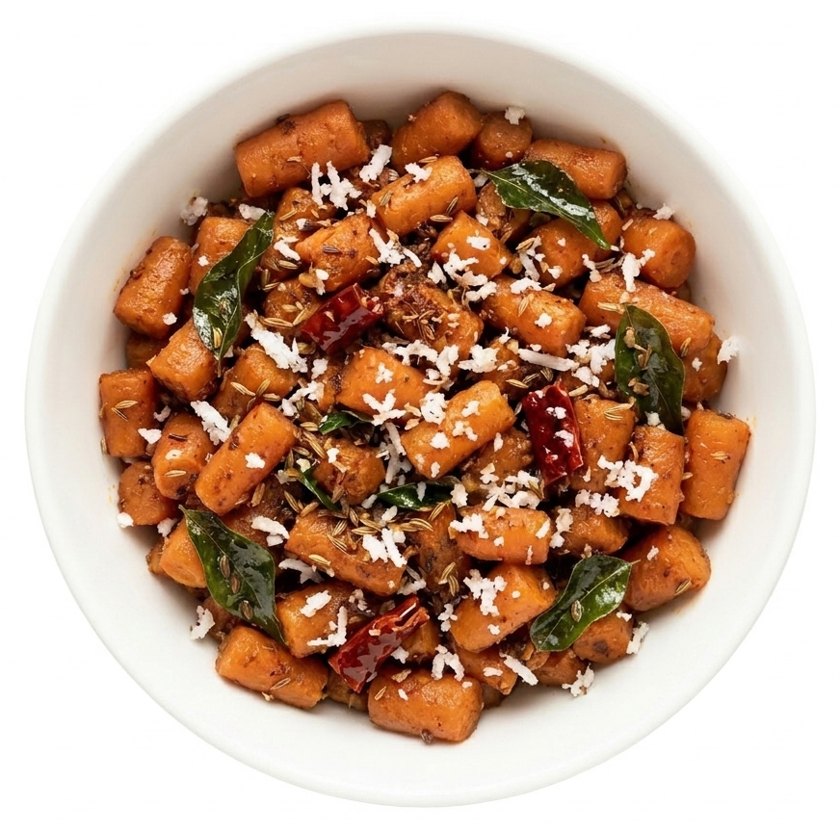
Baghare Gajar
Tender carrots simmered with chilli, then finished with a fragrant tarka of whole spices, curry leaves, and fresh grated coconut.
Boiling spice
2.6 gAdded to the boiling water with the carrots (step 1)Tempering spices
3.1 gFried in ghee (step 2)Everything else

Method
- Bring 250 ml water to a boil in a pan with a pinch of salt. Add 500 g carrots (cut into 1-cm / ½-inch pieces) and the boiling spice, then simmer for 10–12 minutes until the carrots are tender and the water has fully evaporated.
- Melt 26.4 g ghee in a heavy-based frying pan set over medium heat. Tip in the tempering spices along with 1.5 g curry leaf, stir-frying for about 1 minute until the chillies take on a darker shade.
- Pour the hot seasoned ghee straight over the boiled carrots, scatter over 6 g fresh coconut, grated, and serve immediately.
Don't have something?


 Turnip
Use the same weight; peel and cut as for carrot. It is less sweet and slightly peppery, so add a pinch of sugar and expect a softer, more earthy result.
 Potato
Use the same weight; cut into similar pieces and add 5–10 minutes' extra cooking. It gives bulk but no carrot sweetness or colour.
 Courgette
Use the same weight; cut a little larger and add near the end. It releases water, so reduce other liquid slightly and expect a softer texture.


 Red chilli powder
Use 100% of the weight. Provides direct, sharp heat and red colour in equal measure.
 Kashmiri chilli powder
Use 150% to 200% of the weight if matching colour, but add a pinch of black pepper or hot chilli if you need equivalent fiery heat.
 Cayenne pepper
Use 75% to 100% of the weight. Offers a sharp, clean heat with slightly less earthy depth and less crimson colour.


 Unsalted butter
Use 120% of the weight; melt gently over low heat to avoid burning the milk solids, which will yield a softer, creamier richness rather than a nutty aroma.
 Vegetable oil
Use 85% of the weight; holds high cooking temperatures without smoking, but the final dish will lack traditional dairy depth.
 Mustard oil
Use equal weight; heat to smoking point and cool slightly before cooking, bearing in mind it introduces an assertive, pungent edge.


 Dried kashmiri chilli
Use equal weight whole. Fry in hot oil or ghee as tempered spice; gives a richer red colour with slightly milder heat.
- Red chilli powder
Use 50% to 70% of the weight. Stir into the oil with ground spices; distributes heat evenly throughout the dish without whole chilli skins.


 Ground cumin
Use 70% of the weight; add with ground spices or sauce bases rather than hot oil tempering, where it scorches quickly and turns bitter.
 Black cumin seeds
Use equal weight for oil tempering. Delivers an earthy profile with an additional musky, smoky, and slightly bitter edge.
 Fennel seed
Use 60% of the weight for tempering; offers comparable warm aroma, but leans sweet and liquorice-like rather than savoury and earthy.


 Bay leaf
Fry 1 bay leaf for every 5 curry leaves in hot oil; imparts a warm, woodsy background note, but misses the citrus-sulphury punch entirely.
 Lime juice
Add a small squeeze (about 5 ml per sprig of curry leaves) right before serving; provides sharp citrus top notes without the toasty, herbal aroma.


 Desiccated coconut
Use 50% to 60% of the weight, soaked in equal parts warm water for 15 minutes before grinding. Works well for chutneys, though texture is slightly finer and sweeter.
 Coconut milk
Use 1.2 times the weight in curries. Adds creamy richness and authentic flavour, but makes gravies smoother and eliminates the grated, chewy mouthfeel.


Similar dishes

- Same: Gajar Kaanji also features carrots seasoned with chilli powder and salt.
- Different: Instead of being cooked in ghee with cumin, dried red chillies, curry leaves, and coconut, Gajar Kaanji is a raw, fermented beverage made with water and black mustard seeds.
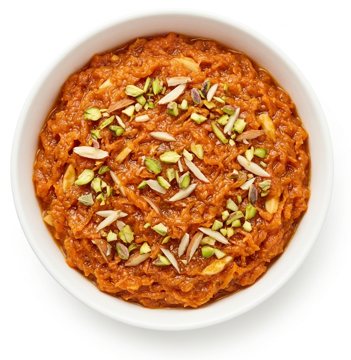
- Same: Gajar Halwa also features carrots cooked in ghee.
- Different: Gajar Halwa is slow-cooked into a pudding with sugar, cream, almonds, cardamom, and rosewater, omitting the cumin seeds, chillies, curry leaves, and coconut used in this dish.
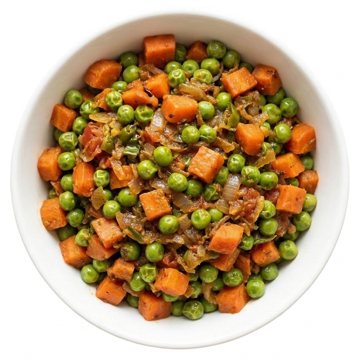
- Same: Both dishes feature carrots seasoned with cumin seeds, chilli powder, and salt.
- Different: Gajar Matar adds green peas, onions, garlic, ginger, and tomatoes cooked into a braised base, while omitting the curry leaves, dried red chillies, fresh coconut, and finishing tarka of this dish.

- Same: Gajar Burfi shares carrots and ghee with this dish.
- Different: Gajar Burfi adds sugar, khoya, cardamom, kewra, and icing sugar, and it lacks this dish’s chilli, cumin, curry leaves, coconut, and salt.