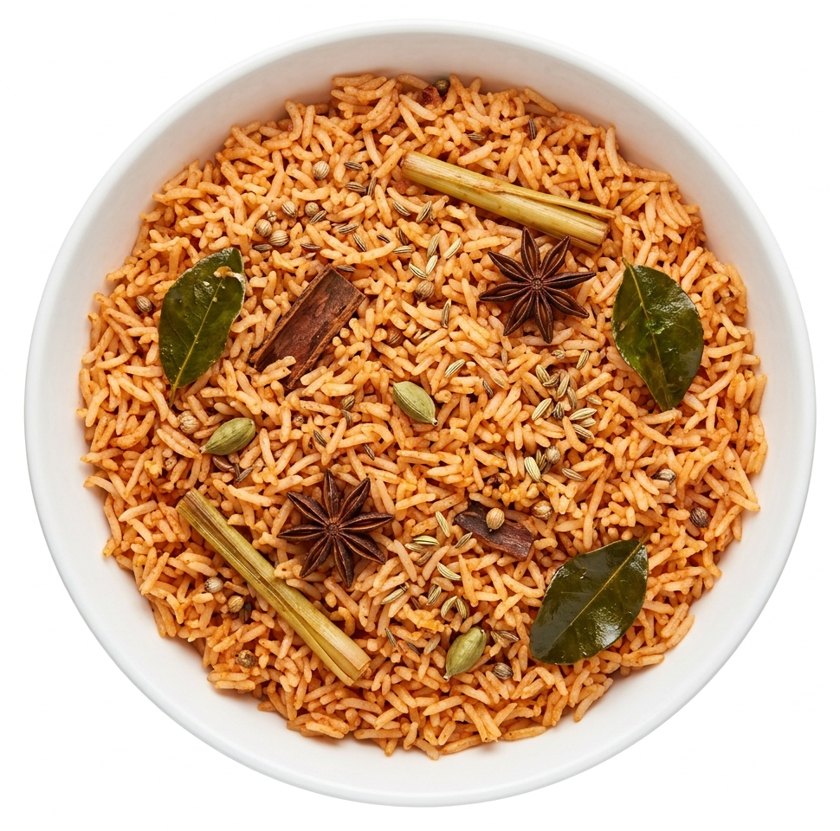
Tomato Pilau
Tomato pilau is a fragrant rice dish cooked with whole spices, lemongrass, lime leaf and a tomato-onion masala. It is savoury and aromatic, with fluffy, separate grains.
Whole spices for the oil
12 gHeated in the oil at the start (step 2)Onion tomato masala
18 gStirred in after the lemongrass and lime leaves (step 3)Everything else

Method
- Rinse 500 g basmati rice in cold water until the rinsing water is no longer cloudy. Soak in warm water for up to 30 minutes, until the grains have swelled. Drain well.
- Heat 13.5 g vegetable oil in a large pan. Add the whole spices for the oil and fry for about 30 seconds, until they crackle and release their aroma.
- Add 30 g lemongrass stalk and 2 g kaffir lime leaf and fry for a few seconds. Stir in the onion tomato masala and 5.2 g tomato purée and cook for 2 minutes, mixing well.
- Pour in 1 litre water and add 8.2 g sea salt. Bring to the boil.
- Add the drained rice, cover and cook for about 8 minutes, until the rice is tender and the liquid has been absorbed.
- Taste and add more salt if needed. Take off the heat and loosen the rice with a fork. Serve warm.
Don't have something?
 Plain boiled rice
Use 2.5 times the weight if substituting pre-cooked rice. Fold in gently at the end of the recipe; grains will be shorter and less fragrant.


 Peanut oil
Use 1:1 by weight. Handles high-heat frying identically and introduces a very subtle, pleasant nuttiness.
 Ghee
Use 1:1 by weight. Yields a much richer, authentic aroma and a glossy, heavier mouthfeel.
 Mustard oil
Use 1:1 by weight. Heat until smoking, then cool slightly before cooking to temper its intensely pungent, sharp mustard kick.


 Ground coriander
Use 75% of the weight; stir in along with wet masala or tomato purée rather than frying in hot oil, as the fine powder burns instantly.
 Cumin seed
Use 50% of the weight for tempering in hot oil. Lacks the floral, sweet citrus flavour of coriander, introducing warm, pungent earthiness instead.
 Fennel seed
Use 50% of the weight in tempering; provides pleasant aromatic sweetness, though noticeably aniseedy rather than citrusy.

 Ground cumin
Use 70% of the weight; add with ground spices or sauce bases rather than hot oil tempering, where it scorches quickly and turns bitter.
 Black cumin seeds
Use equal weight for oil tempering. Delivers an earthy profile with an additional musky, smoky, and slightly bitter edge.
- Fennel seed
Use 60% of the weight for tempering; offers comparable warm aroma, but leans sweet and liquorice-like rather than savoury and earthy.


 Green cardamom seed
Use 35 to 40% of the total pod weight; lightly bruise the seeds before frying in oil to release their essential oils.
 Ground green cardamom
Use 20 to 25% of the pod weight (about 1 generous pinch per pod); stir in toward the end of cooking so the delicate floral notes do not dissipate.
 White cardamom pod
Use 1:1 by pod count or weight; crack gently before using, though it is slightly less intensely floral.


 Ceylon cinnamon
True cinnamon: thinner, papery quills, milder and sweeter. Use about 1.5 times the weight, and taste.
 Ground cinnamon (cassia)
Use about a third of the weight (0.5 g ground for a 2.5 cm piece), stirred in with the ground spices rather than fried whole, since the powder burns quickly.
 Cassia buds
Use 60-70% of the weight; stronger and more peppery, so taste before adding more.


 Aniseed
Use equal weight or 1 g lightly crushed aniseed per whole star anise star. Delivers the same sweet liquorice profile, though slightly less woody.
- Fennel seed
Use equal weight, bruised in a mortar. Lends a gentler, sweeter liquorice note to gravies and biryanis.

- Aniseed
Use 75% of the weight. Fry in hot oil or ghee; has a sharper, more pronounced liquorice flavour, so use a lighter hand.
 Ground fennel seed
Use 60% of the weight. Stir into the sauce with ground masalas; provides identical sweet aniseed flavour without whole seed crunch.
- Star anise
Use one point (single carpel) per 1 g of fennel seeds. Simmer in gravies and remove before serving; gives a deeper, woodier liquorice aroma.


 Kaffir lime leaf
Use 2–3 leaves for 1 lemongrass stalk; bruise and simmer whole, then remove before serving. It gives citrus aroma but not the grassy body.
 Lime zest
Use 1 tsp zest for 1 stalk; add near the end for aroma, as it lacks lemongrass's savoury depth.
 Ginger
Use 10 g ginger plus 1 tsp lime zest for 1 stalk; grate and simmer, but expect a warmer, less citrusy result.


- Lime zest
Use 1 tsp zest for about 3 leaves; add near the end and avoid the white pith. It gives citrus lift, not the same floral perfume.
 Lemon zest
Use 1 tsp zest for about 3 leaves; add near the end. Slightly sharper than lime but works in curries.
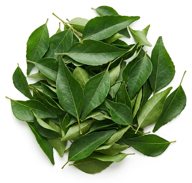 Curry leaves
Use the same number of leaves; fry in oil at the start. Different aroma but works well in Indian tempering.


 Onion paste
Mix 65 g onion paste with 35 g tomato purée for every 100 g masala; cook down until thick and add a pinch of garam masala.
 Fried onion paste
Use 60 g fried onion paste with 40 g tomato purée per 100 g; gives a richer, sweeter base, so reduce added sugar.
 Boiled onion paste
Use 65 g boiled onion paste with 35 g tomato purée per 100 g; milder and wetter, so fry until the oil separates.



 Tomato
Use 200% to 250% of the weight. Finely grate or blend fresh tomatoes, then cook them down until the moisture evaporates and the oil separates.

Similar dishes

- Same: Kashmiri Pulao shares basmati rice, onion, and whole warm spices such as cumin, green cardamom, fennel, and cinnamon with this dish.
- Different: Kashmiri Pulao has a lamb-bone broth and a large amount of ghee, plus black cardamom and bay leaf, while this dish uses vegetable oil, tomato purée, onion tomato masala, lemongrass, kaffir lime leaf, star anise, and coriander seeds.

- Same: Zarda Pulao and this dish are both basmati pilau-style rice dishes cooked with whole warm spices such as green cardamom and cinnamon.
- Different: Zarda Pulao uses ghee, granulated sugar, saffron, ginger, yellow food colouring and kewra water, while this dish uses vegetable oil, tomato purée, onion tomato masala, lemongrass, kaffir lime leaf, coriander seeds, cumin seed, star anise and fennel seed and has no sugar, ghee or saffron.

- Same: Jeera Peas Pulao shares with this dish a base of basmati rice cooked pilau-style with whole warm spices such as cumin, cinnamon, and green cardamom, plus salt.
- Different: Jeera Peas Pulao uses ghee, frozen peas, bay leaf, sugar, and coriander leaf, while this dish uses vegetable oil, tomato purée, onion tomato masala, lemongrass, kaffir lime leaf, coriander seeds, fennel seed, and star anise, and it has no peas or added sugar.

- Same: Bhagara Bhaath and this dish both use 500 g basmati rice, whole green cardamom and cinnamon, onion, salt, and a steam-finish for fluffy grains.
- Different: Bhagara Bhaath uses 100 g ghee, 150 g onion, ginger paste, garlic paste and clove, while this dish uses 13.5 g vegetable oil, onion tomato masala, tomato purée, coriander, cumin, fennel, star anise, lemongrass and kaffir lime leaf.