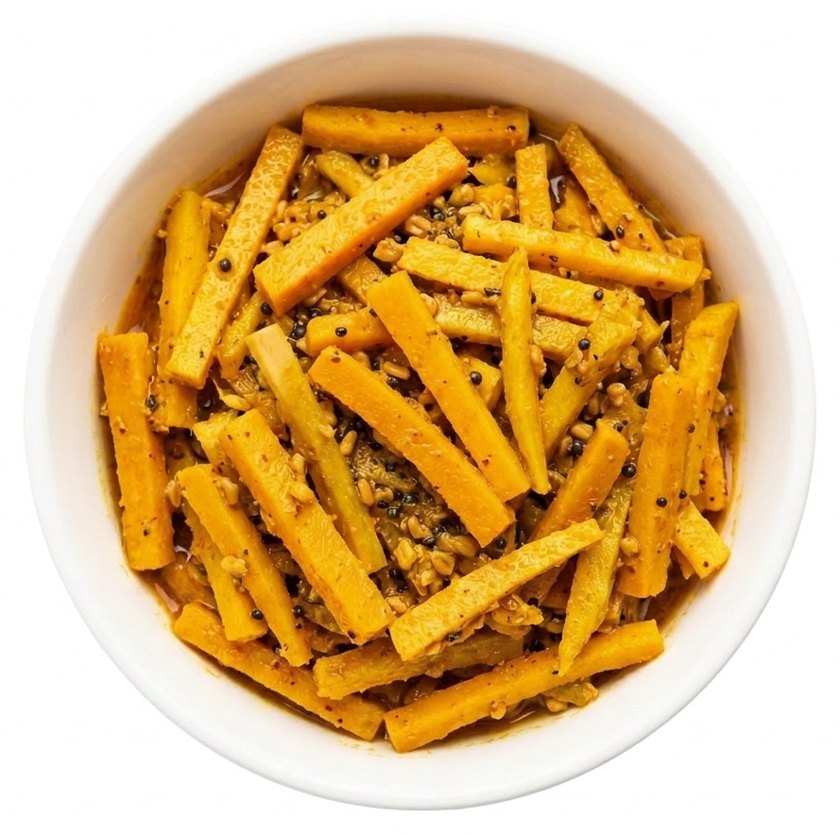
Punjabi Haldi Adrak ka Achar
A bright Punjabi pickle of fresh turmeric and ginger in mustard oil, warmed with asafoetida and Kashmiri chilli and scented with crushed mustard and fenugreek. It tastes pungent, sour and gently hot, with a strong mustard-oil edge.
Crushed seed masala
11 gCrushed in step 1 and stirred into the hot oil in step 3Hot-oil spice mix
12 gStirred into the hot oil in step 3Fresh turmeric matchsticks
180 gStirred in after the hot-oil spice mix (step 4)Everything else

Method
- Crush 7 g black mustard seed and 3.7 g fenugreek seed in a pestle and mortar to a coarse powder.
- Heat 183 g mustard oil in a saucepan over medium heat until it starts to smoke, then remove from the heat.
- Stir 1.4 g asafoetida and 10.4 g kashmiri chilli powder into the hot oil, then stir in the crushed seed masala.
- Stir in the fresh turmeric matchsticks masala (180 g fresh turmeric) and 40 g ginger root, cut into matchsticks, for 1 minute.
- Mix in 11.6 g salt, 50 g lime juice and 0.3 g granulated sugar.
- Set the achar aside to cool and let the spices flavour it.
- Pack into sterilised jars, seal and refrigerate; it keeps for a few months.
Don't have something?


 Mustard seeds
Use equal weight. Pop in hot fat until they crackle and turn greyish; yields an almost identical nutty, pungent finish.
 Yellow mustard seeds
Use equal weight. Fry over medium heat; delivers a milder, sweeter pop and turns bitter quickly if the oil is excessively hot.


- Mustard seed
Use 50% of the weight, crush or grind. Sharper heat and less maple-bitter; fry briefly in oil before adding.
 Caraway seeds
Use the same weight, crush lightly. Similar bitter-seed note but more aniseed; reduce other sweet spices slightly.
 Ajwain seeds
Use 25–30% of the weight, crush. Much stronger thyme-like flavour; do not overdo.


 Peanut oil
Use equal weight. It handles high-heat cooking well, but lacks the signature pungent, nasal heat of mustard oil.
 Vegetable oil
Use equal weight. Neutral in flavour, so your curry will lack the characteristic Bengali or North Indian pungent punch.


 Garlic powder
Use double the weight. Stir into hot oil just before adding wet ingredients; mimics the allium savoury background without the sulphurous edge.
 Garlic paste
Use 2 g for every 0.5 g of asafoetida. Sauté in oil until the raw smell clears; adds moisture and sweet allium depth.


 Dried kashmiri chilli
Grind deseeded dried pods to an equal weight of powder; gives identical vivid red colour and gentle warmth.
 Red chilli powder
Use 25% of the weight mixed with sweet paprika for colour; straight red chilli powder is substantially hotter and will make the dish fiery.
 Chilli powder
Use one-third of the weight; the sauce will be less intensely red and notably sharper in heat.

 Ground turmeric
Use 30% of the weight; ground is more concentrated and earthy, so add early and adjust salt.
 Turmeric powder
Use 30% of the weight; it is the same as ground turmeric.
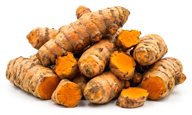
 Fresh turmeric root
Use the same weight; grate or pound it, as it is the same root.


 Ginger paste
Use equal weight. Sauté in hot fat until the raw allium smell disappears; slightly wetter, but provides identical warmth and pungency.
 Ground ginger
Use 20% to 25% of the weight (1 g for every 4 to 5 g fresh). Stir into the gravy; adds peppery heat and warmth, though it misses the crisp, zesty kick of raw root.


 Lemon
Use the same weight; sharper and less floral, so reduce any extra souring slightly.
 Lemon juice
Use about 30 g juice per lime (2 tbsp), strain pips; add at the end for fresh sourness.
 Dried mango powder
Use 1 g amchoor for about 15 g lime juice; add early with spices; gives dry mango sourness, not citrus aroma.


 Jaggery
Use equal weight; grate or shave finely so it dissolves rapidly, giving a warm, caramel-like sweetness and slightly darker sauce.

Similar dishes

- Same: Ginger Pickle and this dish are both ginger pickles that use black mustard seed, Kashmiri chilli and oil with salt.
- Different: Ginger Pickle uses vegetable oil instead of mustard oil, adds curry leaves, tamarind paste and jaggery, and lacks fresh turmeric, asafoetida, fenugreek and lime.

- Same: Adrak ka Sherbet shares fresh ginger and lime with this dish.
- Different: Adrak ka Sherbet lacks turmeric, mustard oil, mustard seed, fenugreek, asafoetida, Kashmiri chilli and salt, and it uses much more ginger and lime plus sugar as a sweet cordial diluted with water rather than an oil-based pickle.

- Same: Rajasthani Lehsun ka Achar shares with this dish a mustard-oil base, asafoetida, Kashmiri chilli powder, black mustard seed, fenugreek seed, salt and lime as the souring agent.
- Different: Rajasthani Lehsun ka Achar uses whole garlic cloves with brown sugar or jaggery, coriander seeds and cumin seeds, and it lacks this dish's fresh turmeric and ginger.

- Same: Adrak ki Chutney shares ginger, mustard seed, asafoetida and salt with this dish.
- Different: Adrak ki Chutney uses sesame oil, tamarind extract, jaggery, cumin, garlic, curry leaf and dried red chilli, while this dish uses mustard oil, fresh turmeric, fenugreek, lime and Kashmiri chilli powder.