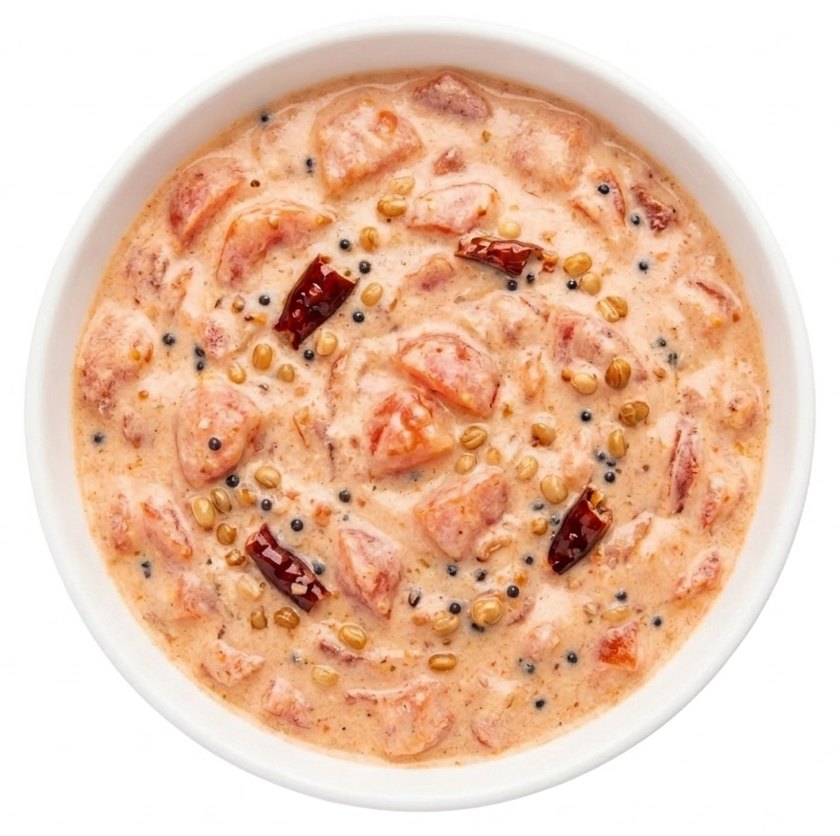
Tamatar Pachadi
A cooling South Indian side dish of soft-cooked tomatoes folded into smooth yoghurt, flavoured with a fragrant tempering of dal and whole spices.
Tempering spices
4.9 gFried in the oil with the dal (step 1)Everything else

Method
- Warm 4.5 g vegetable oil in a large frying pan over high heat, then dial back the flame. Tip in 4.3 g urad dal along with the tempering spices and sizzle for 1 minute, stirring continuously.
- Tumble in 120 g tomato, drop the heat to low, and simmer for 5 minutes until tender. Take the pan off the stove and let the mixture cool completely to room temperature.
- Fold 240 g plain yogurt into the cooled tomato mixture, add salt to taste, and stir thoroughly until well combined.
Don't have something?


 Peanut oil
Use 1:1 by weight. Handles high-heat frying identically and introduces a very subtle, pleasant nuttiness.
 Ghee
Use 1:1 by weight. Yields a much richer, authentic aroma and a glossy, heavier mouthfeel.
 Mustard oil
Use 1:1 by weight. Heat until smoking, then cool slightly before cooking to temper its intensely pungent, sharp mustard kick.


 Black mustard seed
Use the same weight. The seeds are smaller and hotter; fry in hot oil until they pop, about 20–30 seconds, and reduce the heat if they darken too fast. The dish will be a little sharper.
 Yellow mustard seeds
Use the same weight. They are milder and larger; fry a few seconds longer until they pop. The finished dish will have less pungency.
 Ground mustard seed
Use 70% of the weight of whole seed, added with the other ground spices rather than fried whole. You lose the popping texture and the heat comes through more evenly.


 Whole black gram
Use equal weight. Needs longer soaking and cooking; the dark skins impart an earthy flavour and greyish-black hue unless thoroughly rubbed off.
 Chana dal
Use equal weight when tempering (tadka). Provides a comparable nutty, crunchy texture in hot oil, though grains are slightly larger.
 Split mung beans
Use equal weight for batters or dals. Ferments and cooks faster, producing a lighter, less sticky, and less viscous consistency.


 Dried kashmiri chilli
Use equal weight whole. Fry in hot oil or ghee as tempered spice; gives a richer red colour with slightly milder heat.
 Red chilli powder
Use 50% to 70% of the weight. Stir into the oil with ground spices; distributes heat evenly throughout the dish without whole chilli skins.


 Garlic powder
Use double the weight. Stir into hot oil just before adding wet ingredients; mimics the allium savoury background without the sulphurous edge.
 Garlic paste
Use 2 g for every 0.5 g of asafoetida. Sauté in oil until the raw smell clears; adds moisture and sweet allium depth.


 Tomato purée
Use 40% to 50% of the fresh tomato weight mixed with a splash of water. Imparts a deeper red colour, thicker sauce, and slightly sweeter cooked flavour.
 Plain yogurt
Use 60% of the weight, whisked smooth and added on low heat. Provides rich body and sourness, though the gravy becomes paler and creamier.

 Yogurt
Use equal weight, whisked thoroughly until smooth before adding to hot dishes to prevent curdling.
 Coconut milk
Use equal weight with 1 teaspoon lemon juice mixed in. Provides rich creaminess in curries, but adds a noticeable coconut flavour.
 Single cream
Use 80% of the weight plus a squeeze of lemon juice for acidity. Enriches sauces nicely, though it is richer and less tangy.


Similar dishes

- Same: Both dishes season cooked tomatoes with a classic tempering of mustard seeds, urad dal, dried red chillies, and asafoetida.
- Different: Tamatar ka Achar omits yoghurt entirely, using tamarind extract as a souring agent along with chana dal, mustard powder, ground fenugreek, turmeric, and heavy amounts of red chilli powder.

- Same: Both dishes feature cooked tomatoes and share a South Indian tempering of mustard seeds, dried red chillies, and asafoetida.
- Different: Vendaya Rasam is a simmered broth based on tamarind extract, fenugreek seeds, toor dal, and ghee, whereas this dish folds sautéed tomatoes into plain yogurt using vegetable oil and urad dal.

- Same: Tamatar Rasam also centers on tomatoes cooked in vegetable oil with a tempering of mustard seeds, urad dal, dried red chillies, and asafoetida.
- Different: Rather than folding tomatoes into yogurt, Tamatar Rasam is a simmered soup that incorporates onions, garlic, cumin seeds, turmeric, chilli powder, sugar, curry leaves, and fresh coriander.

- Same: Both dishes are based on cooked tomatoes seasoned with salt and dried red chillies.
- Different: Tonk is a simmered relish made with white malt vinegar, sugar, raisins, garlic, ginger, and green chillies, lacking the yoghurt, cooking oil, mustard seeds, urad dal, and asafoetida used here.