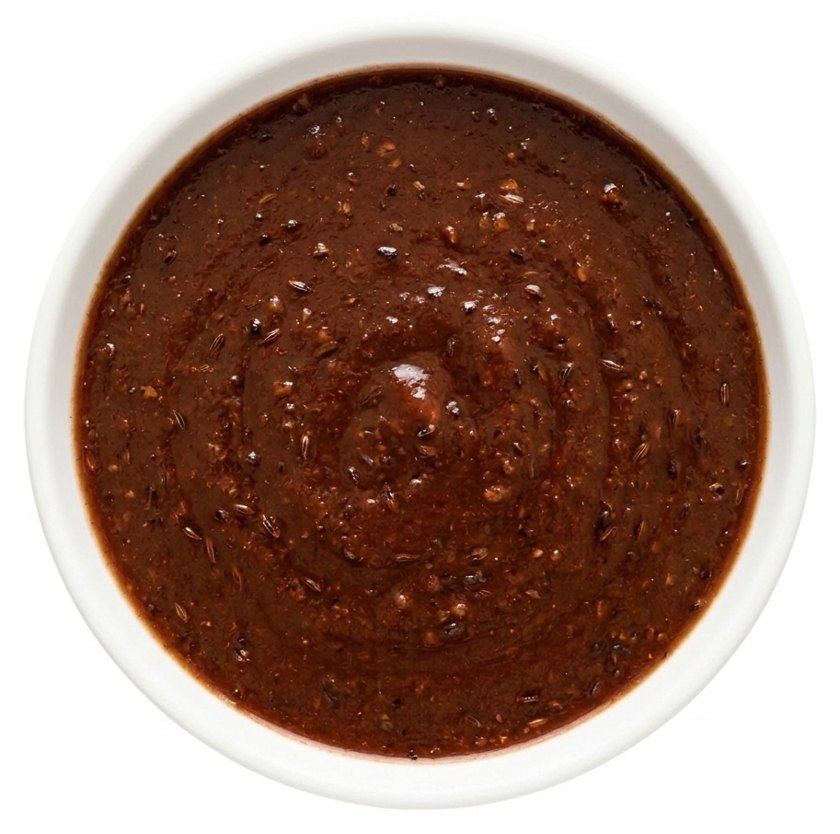
Tamarind Chutney
A tangy, sweet and mildly spicy tamarind chutney made with brown sugar and warm cumin. It has a loose, pourable consistency and is used as a condiment.
Chutney spices
1.6 gBlended with the main ingredients (step 1)Everything else

Method
- Blend 45 g tamarind paste, 90 g light brown sugar, 0.3 g salt and the chutney spices with 50 ml water until smooth and pourable.
- Check the consistency: the chutney should be runny enough to pour; for a thicker result, blend with less water.
- Pour into a bowl and refrigerate; use within a week.
Don't have something?


 Tamarind pulp
Use 120–150% of the weight and strain; pulp is less concentrated, so simmer a little longer to thicken.
 Tamarind extract
Use 150–200% of the weight and reduce gently; extract is already diluted.
 Lime juice
Use 60–70% of the weight with a pinch of jaggery; sharper, so add near the end off the heat.


 Demerara sugar
Use the same weight; it is drier and slightly less molasses-rich, so taste and add a little more if needed.
 Jaggery
Use the same weight; it is stronger and more mineral, so dissolve it first and reduce any other sweetener.
 Granulated sugar
Use the same weight; it is less moist and less dark. Add 5 g cane molasses per 100 g if you have it.


 Ginger paste
Use 300% to 400% of the weight (e.g. 3–4 g paste for 1 g ground). Fry in oil alongside onions; provides a juicy, pungent kick rather than a dry, baking-spice heat.
 Fresh ginger
Peel and grate finely; use 300% to 400% of the weight. Add to the hot oil early; delivers bright, peppery warmth rather than the mellow, woody heat of dry ginger.
 Ground mace
Use 50% of the weight. Imparts a warm, spicy undertone in rich gravies, but lacks ginger's fiery, sharp zest.


 Mild paprika
Use the same weight for colour and low heat; add a small pinch of hot chilli powder if needed.
 Kashmiri chilli powder
Use the same weight; similar colour, slightly more heat. Taste before adding more.
 Red chilli powder
Use half the weight and make up with mild paprika; red chilli powder is usually hotter.


 Ground cumin
Use 70% of the weight; add with ground spices or sauce bases rather than hot oil tempering, where it scorches quickly and turns bitter.
 Black cumin seeds
Use equal weight for oil tempering. Delivers an earthy profile with an additional musky, smoky, and slightly bitter edge.
 Fennel seed
Use 60% of the weight for tempering; offers comparable warm aroma, but leans sweet and liquorice-like rather than savoury and earthy.


Similar dishes

- Same: Imli Ki Chutney shares with this dish a tamarind base, cumin seed, mild chilli powder, and a sweet-sour tangy profile.
- Different: Imli Ki Chutney adds banana, raisins, water, jaggery, and black salt, while this dish uses light brown sugar, ground ginger, and regular salt and has no banana or raisins.

- Same: Til Ki Chutney and this dish are both tamarind chutneys sweetened with sugar and seasoned with salt and chilli.
- Different: Til Ki Chutney adds white sesame seeds, fresh mint and green bird's-eye chilli, uses caster sugar instead of light brown sugar, and lacks this dish's ground ginger and cumin seed.
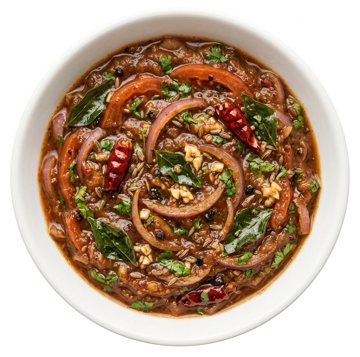
- Same: Awadh Imliwali Pyaz shares tamarind paste, sugar, cumin seed and mild chilli heat with this dish, and both are tangy chutneys.
- Different: Awadh Imliwali Pyaz has red onion, tomato, garlic, curry leaf, black peppercorn, ground coriander, coriander leaves, vegetable oil and dried mild red chilli, and it is finished with a tempering, while this dish has none of those and uses brown sugar and ground ginger.

- Same: Jal Jeera shares tamarind and cumin with this dish.
- Different: Jal Jeera uses tamarind extract, lemon juice, mint, black salt, icing sugar, and chilli powder and is a cooler, while this dish is a pourable condiment made with tamarind paste, brown sugar, ginger, and cumin.