
Suji Halwa
Suji halwa is a rich Indian semolina pudding made with ghee, clotted cream and sugar, finished with cardamom and nuts. It is soft, grainy and sweet, with a warm cardamom aroma.
Cardamom finish
0.5 gStirred in off the heat at the end (step 7)Everything else
Method
- Stir 140 g semolina, 254 g clotted cream and 6 g raisin together in a large bowl. Cover and leave for at least 1 hour.
- Stir 200 g granulated sugar into 875 ml water in a heavy pan over low heat until dissolved. Take off the heat.
- Melt 132 g ghee in a kadhai or deep heavy pan over medium heat.
- Add the soaked semolina mixture and fry for 5 minutes, until it turns pale brown and smells nutty.
- Pour in the sugar water and stir well to break up any lumps.
- Cook for 6–7 minutes, stirring all the time, until the ghee starts to separate.
- Take the pan off the heat and stir in the cardamom masala and 60 g mixed nut.
- Mix well and serve hot.
Don't have something?


 Coarse semolina
Use the same weight. Soak 10 minutes longer and cook 2–3 minutes more; texture will be more granular.
 Fine semolina
Use the same weight. It cooks faster, so reduce cooking time by 2 minutes and stir well to avoid lumps.
 Cream of wheat
Use the same weight. It behaves like fine semolina; cook 1–2 minutes less and add liquid gradually.


 Double cream
Use 100% of the weight. Stir straight into curries off the heat; mimics the rich, buttery mouthfeel of clotted cream or fresh malai.
 Single cream
Use 100% of the weight. Simmer the sauce for a few extra minutes to evaporate excess moisture and thicken the texture.
 Milk solids
Use 70% of the weight, whisked with a splash of whole milk. Imparts deep, cooked-milk richness with a subtle graininess suited to Mughlai gravies.


 Dried plum
Use equal weight, pitted and finely chopped. Lends a deeper, slightly more tart sweetness to curries and rice dishes.
 Cashew nut
Use equal weight. Fry lightly in ghee until golden; substitutes the burst of sweetness with a rich, buttery crunch.
 Jaggery
Use 30% of the weight, finely grated. Dissolve straight into the sauce to match the intended sweetness, though without the fruity chew.


- Jaggery
Use equal weight; grate or shave finely so it dissolves rapidly, giving a warm, caramel-like sweetness and slightly darker sauce.


 Unsalted butter
Use 120% of the weight; melt gently over low heat to avoid burning the milk solids, which will yield a softer, creamier richness rather than a nutty aroma.
 Vegetable oil
Use 85% of the weight; holds high cooking temperatures without smoking, but the final dish will lack traditional dairy depth.
 Mustard oil
Use equal weight; heat to smoking point and cool slightly before cooking, bearing in mind it introduces an assertive, pungent edge.


 Green cardamom seed
Use 35 to 40% of the total pod weight; lightly bruise the seeds before frying in oil to release their essential oils.
 Ground green cardamom
Use 20 to 25% of the pod weight (about 1 generous pinch per pod); stir in toward the end of cooking so the delicate floral notes do not dissipate.
 White cardamom pod
Use 1:1 by pod count or weight; crack gently before using, though it is slightly less intensely floral.


- Cashew nut
Use the same weight; toast lightly or fry briefly. It gives a creamy richness similar to mixed nuts.
 Almond
Use the same weight; blanch and peel for a softer texture, or chop and toast for crunch.
 Peanut
Use the same weight; roast and rub off skins. Flavour is stronger and less sweet, so use slightly less if you like.


Similar dishes

- Same: Maharashtrian Sheera and this dish are both sweet semolina puddings made with sugar, green cardamom, raisins and nuts cooked in fat.
- Different: Maharashtrian Sheera uses butter, saffron and cashews instead of this dish's ghee, clotted cream and mixed nuts, and it has no clotted cream.
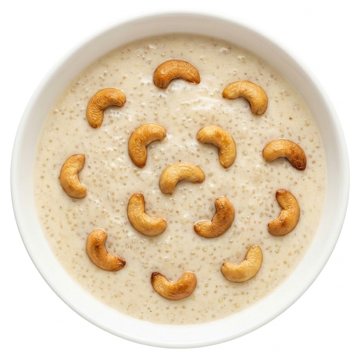
- Same: Rawa Payasam shares semolina, ghee, sugar and green cardamom with this dish.
- Different: It uses milk instead of clotted cream, cashew nuts only instead of mixed nuts and raisins, and no souring agent.

- Same: Kesari Bhaath shares semolina, ghee, sugar, green cardamom and nuts with this dish.
- Different: Kesari Bhaath adds saffron and milk and uses coarse semolina, cashews and 250 g ghee, while it lacks this dish's clotted cream and raisins.

- Same: Suji Paratha shares semolina as its main ingredient with this dish.
- Different: It uses fine semolina, olive oil and salt, while this dish uses clotted cream, sugar, ghee, raisins, cardamom and mixed nuts.