Indian cooking
Indian cooking / Dishes / Paper Dosa
Paper Dosa (Crisp Wafer-thin Pancakes)

Paper Dosa

Crisp Wafer-thin Pancakes
Vegetarian●●●Origin Tamil NaduPrep 20 minutes, plus soaking and standing timeCook 10 minutes

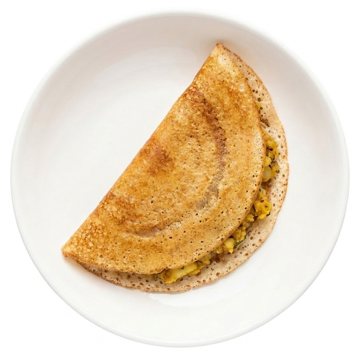
Paper dosas are ultra-thin, golden, and shatteringly crisp savoury South Indian crepes made from a naturally fermented rice and lentil batter.

Seeds for the dal paste

3.7 gBlended with the drained urad dal (step 2)
01
3.7 g1 teaspoon
spice
Leave whole until pureed with the soaked lentils.

Method

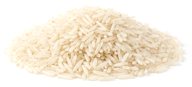
  1. Pulse 150 g basmati rice in a blender or food processor until it forms a thick, slightly coarse paste. Scrape into a bowl, pour over enough water to submerge it, and leave to soak overnight.
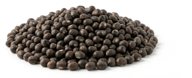
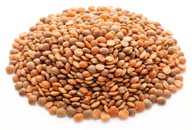
  2. Submerge 150 g urad dal in water in a separate bowl and leave to soak overnight.
  3. Drain the soaked urad dal and place it into a blender. Add the seeds for the dal paste (3.7 g fenugreek seeds) and blend thoroughly to form a smooth, fine puree.
  4. Fold the pureed urad dal into the soaked rice paste until evenly combined, then set the mixture aside overnight to ferment.
  5. Stir salt to taste into the fermented batter.
  6. Set a large non-stick frying pan, skillet, or flat tawa over medium heat. Spoon a ladle of batter into the centre and spread it outward in a continuous spiral using the underside of the ladle to create an even, paper-thin circle.
  7. Cook for roughly 2 minutes until the surface looks dry, then drizzle ghee or vegetable oil over the centre and around the edges. Continue cooking for another 2 minutes until the underside turns deeply golden and crisp.
  8. Roll the dosa into a cylinder and transfer to a plate. Repeat the cooking process with the remaining batter, serving immediately alongside Nariyal Tamatar ki Chutney and piping hot Sambhar.


Don't have something?

Basmati rice
  • Plain boiled rice

    Use 2.5 times the weight if substituting pre-cooked rice. Fold in gently at the end of the recipe; grains will be shorter and less fragrant.

Urad dal
  • Whole black gram

    Use equal weight. Needs longer soaking and cooking; the dark skins impart an earthy flavour and greyish-black hue unless thoroughly rubbed off.

  • Chana dal

    Use equal weight when tempering (tadka). Provides a comparable nutty, crunchy texture in hot oil, though grains are slightly larger.

  • Split mung beans

    Use equal weight for batters or dals. Ferments and cooks faster, producing a lighter, less sticky, and less viscous consistency.

Fenugreek seed
  • Mustard seed

    Use 50% of the weight, crush or grind. Sharper heat and less maple-bitter; fry briefly in oil before adding.

  • Caraway seeds

    Use the same weight, crush lightly. Similar bitter-seed note but more aniseed; reduce other sweet spices slightly.

  • Ajwain seeds

    Use 25–30% of the weight, crush. Much stronger thyme-like flavour; do not overdo.

Ghee or vegetable oil
  • Peanut oil

    Use equal weight; handles high tempering heat well and keeps flavours neutral.

  • Butter

    Use equal weight; cook over gentle heat to prevent browning the milk solids too quickly.

Coconut chutney
  • Green chutney

    Use the same weight; it is sharper and herby, so loosen with a little water and adjust salt.

  • Mint chutney

    Use the same weight; mintier and less creamy, so add a spoon of yogurt if the dish needs body.

  • Chutney

    Use the same weight and taste; generic chutney may be sweeter or more sour, so adjust lime and salt.

Sambhar
  • South Indian lentil soup

    Use the same volume. Rasam is thinner and more peppery; simmer 5 minutes to thicken slightly and adjust salt.

  • Cooked pigeon peas

    Use the same weight, loosened with tamarind extract and 1 tsp sambhar masala. Simmer 10 minutes; it will be thicker and less sour.

  • Lentil

    Use the same weight of cooked lentil, add tamarind and sambhar masala, and simmer 10 minutes. Texture will be plainer.

Similar dishes

Dosa
Savoury Rice Pancakes
Dosa offers a chewier, softer bite in the middle with a milder fenugreek flavour, whereas this dish is completely brittle, dry, and intensely crisp throughout.
  • Same: Dosa shares the same fermented batter base of basmati rice, urad dal, and fenugreek seeds, served alongside coconut tomato chutney and sambhar.
  • Different: Dosa uses a much higher proportion of rice to lentils, uses less fenugreek seeds, relies solely on ghee, and cooks into a crêpe with a tender, soft centre rather than being spread wafer-thin.
Plain Utthapam
Savoury Eggless Pancakes
Plain Utthapam tastes more bready and gently tangy from its thick, soft interior, lacking the toasted, dry crunch of this dish.
  • Same: Plain Utthapam shares the fermented rice and lentil batter cooked on a griddle and is served with the same Sambhar and Nariyal Tamatar ki Chutney.
  • Different: Plain Utthapam is cooked into a thick, porous pancake using vegetable oil rather than spread wafer-thin and toasted crisp with ghee or oil.
Khuzhi Paniyaram
Fried Rice Dumplings from Chettinad
It tastes softer and more aromatic, with bites of sweet coconut and pungent mustard seeds contrasting with the uniformly crisp, savoury profile of this dish.
  • Same: Khuzhi Paniyaram also uses a fermented batter of basmati rice, urad dal, and fenugreek seeds, cooked in oil and served with coconut tomato chutney.
  • Different: Instead of being spread into a wafer-thin crepe, Khuzhi Paniyaram has a higher ratio of rice to dal, incorporates fresh coconut, mustard seeds, and coriander leaf, and is cooked into round dumplings.
Jangir
Syrup-soaked Pretzels
Jangir is sweet, floral, glossy, and served chilled, while this dish is savoury, crisp, and sour from fermentation.
  • Same: Jangir and this dish both use urad dal and basmati rice as their main base.
  • Different: Jangir adds saffron, rosewater, sugar, and milk, is deep-fried in vegetable oil, and is soaked in syrup, while this dish adds fenugreek and salt, ferments the batter, and cooks it thin with ghee or vegetable oil, served with coconut chutney and sambhar.