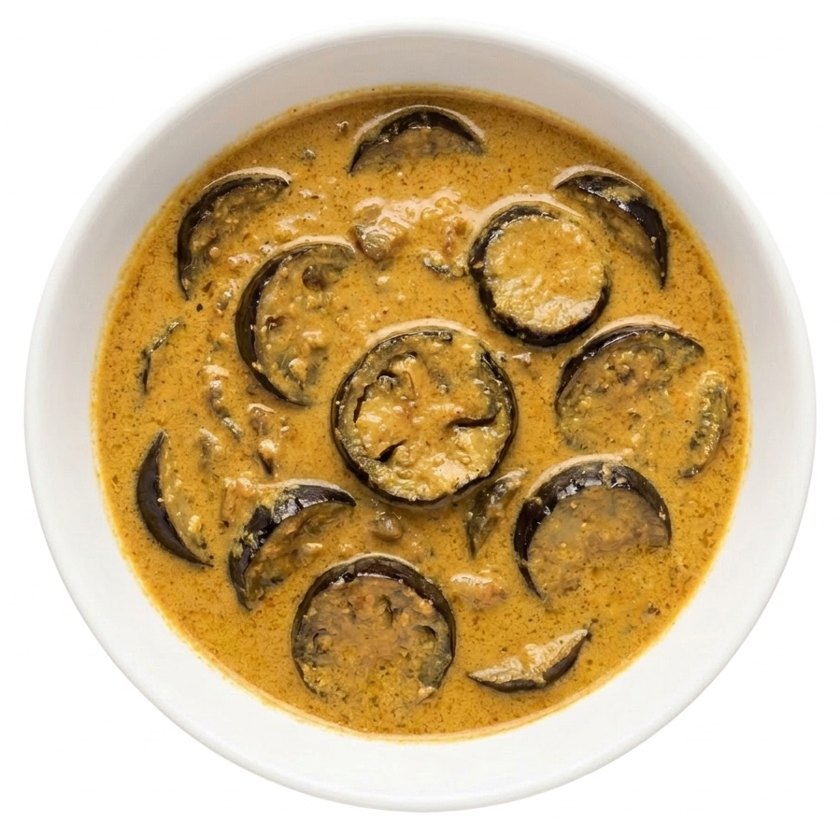
Rasedar Baigan
A fragrant, gently spiced curry of tender aubergine rounds simmered in a rich and mellow coconut sauce.
Spices for the aubergine
4.4 gFried with the aubergine (step 2)Everything else

Method
- Slice 250 g aubergine into rounds.
- Warm 18–22.5 g vegetable oil in a sturdy pan over medium heat. Tip in the sliced aubergine, season with salt to taste, and pour in the spices for the aubergine, then fry steadily for 2 minutes until evenly coated.
- Turn the heat down to low and let the aubergine cook gently for 10 minutes until softened.
- Pull the pan off the burner and blend in 254 g coconut milk. Return to low heat and simmer gently for 3–4 minutes, then taste and add more salt if needed.
Don't have something?


 Baby aubergine
Use the same weight; halve or quarter and cook 2–3 minutes longer. They hold their shape better in the sauce.
 Small aubergine
Use the same weight; slice or cube to the recipe's size. Similar flesh, slightly firmer.
 Round aubergine
Use the same weight; cube and salt for 10 minutes if the recipe does. It absorbs oil a little more.


 Garlic powder
Use double the weight. Stir into hot oil just before adding wet ingredients; mimics the allium savoury background without the sulphurous edge.
 Garlic paste
Use 2 g for every 0.5 g of asafoetida. Sauté in oil until the raw smell clears; adds moisture and sweet allium depth.


 Peanut oil
Use 1:1 by weight. Handles high-heat frying identically and introduces a very subtle, pleasant nuttiness.
 Ghee
Use 1:1 by weight. Yields a much richer, authentic aroma and a glossy, heavier mouthfeel.
 Mustard oil
Use 1:1 by weight. Heat until smoking, then cool slightly before cooking to temper its intensely pungent, sharp mustard kick.


 Ground ginger
Use 50% of the weight. Mimics turmeric's warm, earthy, rhizome background, but provides none of the golden-yellow colour.
 Saffron
Steep a tiny pinch (0.1 g per 2 g turmeric) in 2 tbsp warm water; use to match the rich golden hue. Contributes an aristocratic, honeyed floral flavour rather than earthy bitterness.


 Red chilli powder
Use 100% of the weight. Provides direct, sharp heat and red colour in equal measure.
 Kashmiri chilli powder
Use 150% to 200% of the weight if matching colour, but add a pinch of black pepper or hot chilli if you need equivalent fiery heat.
 Cayenne pepper
Use 75% to 100% of the weight. Offers a sharp, clean heat with slightly less earthy depth and less crimson colour.


 Single cream
Use equal weight; simmer gently over low heat to prevent curdling. Imparts a comparable rich texture, though it adds dairy richness without any coconut fragrance.
 Cashew paste
Whisk 1 part cashew paste with 2 parts water to match the consistency, then use equal weight. Provides a thick, velvety body without coconut flavour.
 Whole milk
Use equal weight, but reduce other cooking liquids by 20% to compensate for the lower viscosity. The curry will be lighter and lack sweetness.

Similar dishes

- Same: Bengali Begun Bhaja shares aubergine, turmeric, chilli powder, salt and oil with this dish, and both are gently spiced.
- Different: Bengali Begun Bhaja uses 400 g aubergine and has no asafoetida or coconut milk; it is shallow-fried in mustard or vegetable oil rather than simmered in coconut sauce.

- Same: Andhra Vankaya Pulusu shares aubergine, coconut, turmeric, chilli and vegetable oil with this dish.
- Different: It uses grated coconut, yoghurt and tamarind paste instead of coconut milk, adds mustard seed, curry leaf, cinnamon, onion, garlic, ground coriander, sugar and fresh coriander, and has no asafoetida.

- Same: Dahi ke Baigan also features aubergine cooked in vegetable oil with turmeric, chilli powder, asafoetida, and salt.
- Different: Dahi ke Baigan swaps the coconut milk for yogurt, pan-fries the aubergine slices, and adds ginger, garlic, green chillies, cumin, mustard seeds, and curry leaves.

- Same: Both are aubergine curries made with coconut, turmeric, chilli powder, salt and vegetable oil.
- Different: Andhra Vankaya Thakkali adds tomato, onion, garlic, curry leaves, mustard seed, urad dal, cumin seed, dried red chilli, coriander seeds and fresh coriander, and uses 80 g coconut instead of 254 g coconut milk, with 137 g oil instead of 18 g and no asafoetida.