Indian cooking
Matthi (Flaky Savoury Biscuits (Crackers))

Matthi

Flaky Savoury Biscuits (Crackers)
Vegetarian●●●Origin PunjabPrep 30–35 minutesCook 40 minutesMakes 30–35

Matthi are flaky, savoury Indian crackers with a rich, crumbly texture and a sharp kick from coarsely crushed peppercorns.

Cracked black pepper

17 gRubbed into the dry ingredients with the fat (step 1)
01
17 g2 tablespoons
spice
Crush coarsely before adding.

Everything else

01
Plain flour · Maidaplus extra for dusting
1000 g
flour
02
6 g1 teaspoon
salt
03
228 g250 ml
oil/fat

Method

  1. Sift 1000 g flour and 5.8 g salt together into a wide bowl, then rub in 228 g vegetable oil or ghee alongside the cracked black pepper until the fat is evenly dispersed.
  2. Pour in just enough water, a little at a time, bringing the ingredients together into a firm, stiff dough.
  3. Divide the dough into 16 to 18 uniform balls, then roll each piece on a lightly floured work surface into a thick round roughly 8 cm (3 inches) across.
  4. Pierce one face of every disc several times using the tines of a fork.
  5. Pour extra vegetable oil or ghee into a kadhai or heavy, deep pan and heat it to 180°C (350°F), testing the temperature by dropping in a cube of bread to see if it turns golden within 30 seconds.
  6. Fry the discs four at a time, turning them regularly for about 5 minutes until crisp and evenly golden brown.
  7. Retrieve the crackers using a slotted spoon and let the excess fat drain on paper towels; cool them entirely before serving or packing into an airtight container.


Don't have something?

Plain flour
  • Whole wheat flour

    Use the same weight, add 10–15% more water and rest the dough for 20 minutes; the result is heavier and nuttier.

  • Rice flour

    Use the same weight for crisp coatings; for doughs use no more than half rice flour with wheat flour, or it will be crumbly.

  • Cornflour

    For thickening use half the weight, mixed with cold water; it is not suitable for bread or chapati dough.

Ghee or vegetable oil
  • Peanut oil

    Use equal weight; handles high tempering heat well and keeps flavours neutral.

  • Butter

    Use equal weight; cook over gentle heat to prevent browning the milk solids too quickly.

Black peppercorn
  • Coarsely ground black pepper

    Use 75% of the weight. Add midway through simmering; spreads heat evenly through the dish instead of delivering isolated bursts.

  • Ground black pepper

    Use 50% of the weight. Stir in near the end of cooking; significantly darkens light gravies and provides an immediate, sharp bite.

Similar dishes

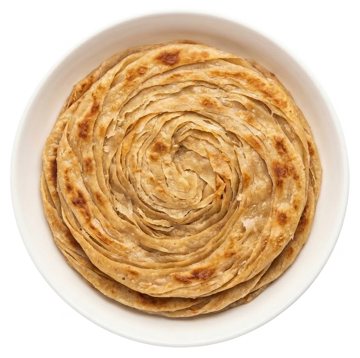
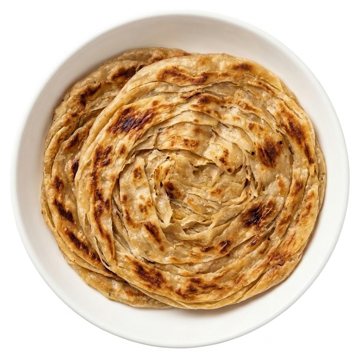
Warqi Paratha
Layered Paratha
Warqi Paratha tastes buttery, mild and delicately crisp, while this dish tastes crumbly and sharply peppery.
  • Same: Warqi Paratha shares with this dish a plain flour, salt and fat dough with no souring agent and a flaky texture.
  • Different: Warqi Paratha uses ghee and extra plain flour for spiral layering and griddle cooking, while this dish uses vegetable oil or ghee plus coarsely crushed black peppercorns and is a biscuit-style cracker.
Tandoori Roti
Bread Baked in a Clay Oven
Tandoori Roti tastes mild and smoky rather than richly savoury and sharply peppery like this dish.
  • Same: Tandoori Roti shares a base seasoned with salt and prepared using ghee or vegetable oil.
  • Different: Tandoori Roti uses significantly less fat, omits black peppercorns, and is baked in a high-heat oven rather than fried.
Roomali Roti
Handkerchief Bread
Roomali Roti is soft, supple and delicately charred, while this dish is rich, crumbly and flaky with a sharp peppery kick.
  • Same: Roomali Roti shares wheat flour and salt as its base with this dish, and both are Indian wheat-based breads.
  • Different: Roomali Roti uses wholemeal flour and plain flour with no oil or ghee and no black peppercorn, while this dish uses plain flour with vegetable oil or ghee and coarsely crushed black peppercorn; Roomali Roti is stretched paper-thin and blistered on a hot inverted pan, whereas this dish is a flaky savoury cracker.
Paratha
Paratha tastes buttery and mildly cardamom-scented, while this dish tastes sharply peppery, salty, and crumbly.
  • Same: Paratha and this dish both use plain flour as the main ingredient and are flaky, savoury wheat-based foods.
  • Different: Paratha uses ghee and green cardamom and has very little salt, while this dish uses much more salt, vegetable oil or ghee, and coarsely crushed black peppercorns; Paratha is a flatbread, while this dish is a biscuit or cracker.