Introduction
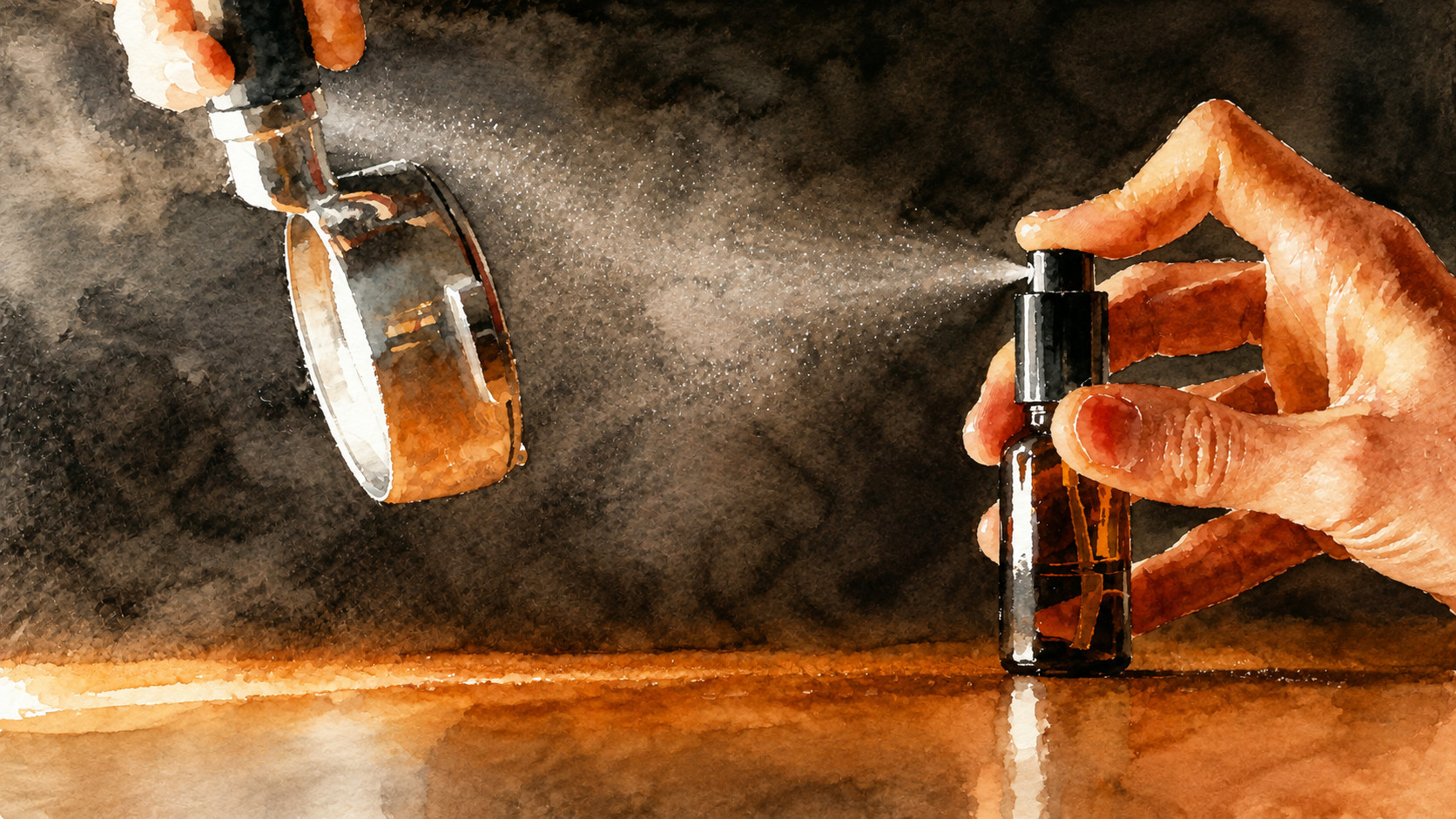
In an effort to better understand espresso extraction dynamics—particularly regarding top-puck water distribution and pre-infusion behavior—this experiment by Stéphane Ribes explores the impact of spraying water directly onto the surface of an already-tamped coffee puck prior to loading the portafilter. Inspired by discussions surrounding top paper filters, spacers, and shower screen distribution, this test evaluates how pre-wetting the top grinds influences puck resistance, flow mechanics, extraction yield, and final shot characteristics.
Main questions asked
Does spraying water on a tamped coffee puck produce visible or measurable changes in espresso extraction behavior?
How does top-puck pre-wetting affect puck resistance, infusion pressure, and liquid flow profile?
Can coarsening the grind setting offset any increase in puck resistance without sacrificing Extraction Yield (EY)?
What sensory or visual differences (such as wetting speed, center flow, and blonding time) occur when the puck surface is pre-wetted?
Methodology & proceeding
Equipment & Setup
Machine & screen: Decent Espresso DE1PRO v1.1 machine paired with an IMS SI200 shower screen (used to achieve drier pucks and consistent extraction dynamics).
Basket & dose: 14.5g coffee dose in a 15g VST basket targeting a 29g yield (1:2 ratio).
Grinder: Mahlkönig EK43.
Testing process
1. Control shots: Shots pulled using normal preparation without top-puck water spraying (grind settings EK 1.3 and EK 1.4).
2. 1g Water spray: 1g of fine water mist sprayed directly onto the tamped puck surface prior to locking in the portafilter at grind setting EK 1.3.
3. 2g Water spray: 2g of water sprayed onto the tamped puck surface, tested across progressive grind coarsening (EK 1.4, 1.5, and 1.6) to keep peak extraction pressure within a reasonable range.
4. Data collection: Pressure/flow profiles were logged, extraction yield (EY) was measured, and visual characteristics were recorded on video.
Results
Significant Increase in Puck Resistance: Spraying just 1g of water on the tamped puck caused a surprising and marked rise in puck resistance. Increasing the spray to 2g intensified this effect even further.
Here's a comparison of what the chart looks like without water spray vs. 1g of water spray.
Grind Compensation & Pressure: To avoid excessively high extraction pressure with 2g of sprayed water, the grind size had to be coarsened significantly (from EK 1.4 to EK 1.6).
Here's a comparison of what the chart looks like at different grind sizes, namely EK1.4, EK1.5 and EK1.6.
Flow & wetting dynamics:
Pre-wetted pucks (especially with 2g of spray) consistently initiated extraction closer to the center of the basket.
The coarser grind setting allowed for faster puck wetting during infusion while maintaining peak extraction pressure comparable to finer, non-sprayed shots.
Visual "blonding" appeared to start noticeably later on pre-wetted shots.
Extraction Yield (EY): All tested configurations maintained virtually stable extraction yields between 19.4% and 19.7%. Notably, EY showed no degradation even when the grind was coarsened to offset the increased puck resistance.
Taste profile: No clear improvements in taste were detected during initial trials, though bean quality may have influenced sensory outcomes.
Here's a selection of videos of 4 of the tested configurations:
Conclusion
In conclusion, we can answer the questions that were brought up as follows:
Does spraying water on a tamped coffee puck produce visible or measurable changes in espresso extraction behavior? Yes. Pre-wetting the top of a tamped puck with 1g to 2g of water creates immediate, measurable changes by significantly increasing puck resistance, modifying flow initiation patterns, and altering pre-infusion behavior.
How does top-puck pre-wetting affect puck resistance, infusion pressure, and liquid flow profile? Pre-wetting only the top layer (~5%) of the coffee bed creates a localized barrier that sharply increases puck resistance and peak infusion pressure. To maintain reasonable pressure levels, the grind setting must be coarsened.
Can coarsening the grind setting offset any increase in puck resistance without sacrificing Extraction Yield (EY)? Yes. Coarsening the grind size (e.g., moving from EK 1.4 to 1.6) successfully brings extraction pressures back to normal levels while maintaining a consistent Extraction Yield between 19.4% and 19.7%.
What sensory or visual differences (such as wetting speed, center flow, and blonding time) occur when the puck surface is pre-wetted? Visually, pre-wetted pucks cause the extraction to start closer to the center of the basket, delay the onset of visual blonding, and enable faster overall puck wetting when paired with a coarser grind setting. Sensory testing showed no clear improvement in taste under initial trial conditions.
#research #Ribes #coffee #spraying #puckprep #documentation