Introduction
This study from November 2019 by Stéphane Ribes evaluates the performance and extraction characteristics of a rippled tamper base compared to a standard flat tamper base in espresso preparation. Using high-precision espresso equipment, the investigation assesses how tamping geometry influences extraction parameters, flow dynamics, and sensory qualities.
Research Questions
Does a rippled tamper base improve espresso extraction yield (EY) compared to a traditional flat base?
How does the rippled base affect puck resistance, wetting speed, and extraction uniformity?
Does the surface profile produced by a rippled tamper impact the visual quality (crema), post-extraction integrity of the coffee puck, or sensory attributes in the final cup?
Methodology
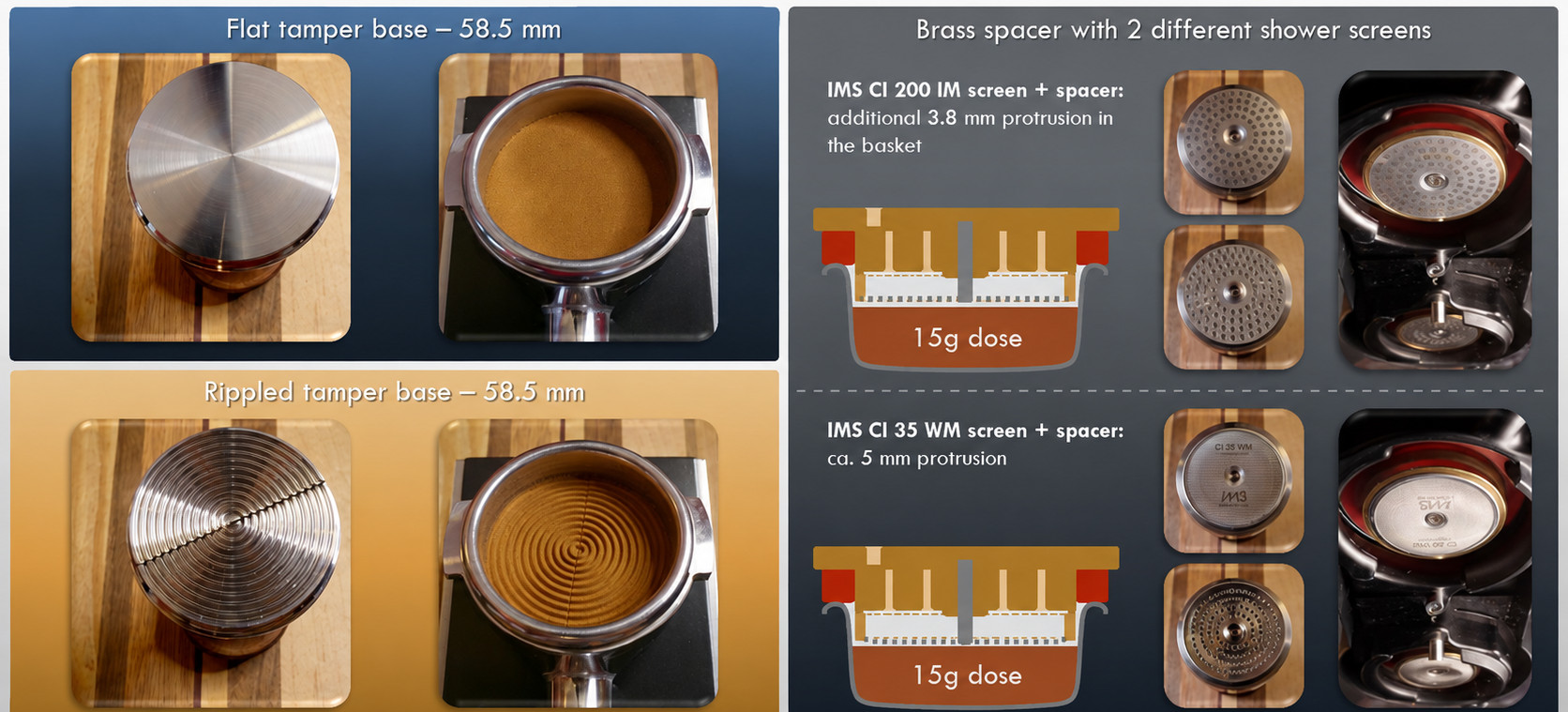
Hardware & equipment: Tests were performed on a Decent Espresso DE1PRO v1.1 machine using a Cafelat 8.0 mm silicone gasket, paired with a Mahlkönig EK43 S grinder (SSP High Uniformity burrs with Silver Knight coating set to EK 1.1). A 58.5 mm "The Force Tamper" was equipped with interchangeable flat and rippled bases.
Shower screens & headspace: Experiments utilized a 3.8 mm brass spacer with two distinct shower screen models: an IMS CI 200 IM screen (3.8 mm protrusion into basket) and an IMS CI 35 WM screen (ca. 5 mm protrusion).
Puck preparation: Shots used single-dosed, frozen beans in a 15g VST basket. Weiss Distribution Technique (WDT) was applied using a Londinium tool and Decent funnel without tapping. The tamper was applied twice consecutively per shot.
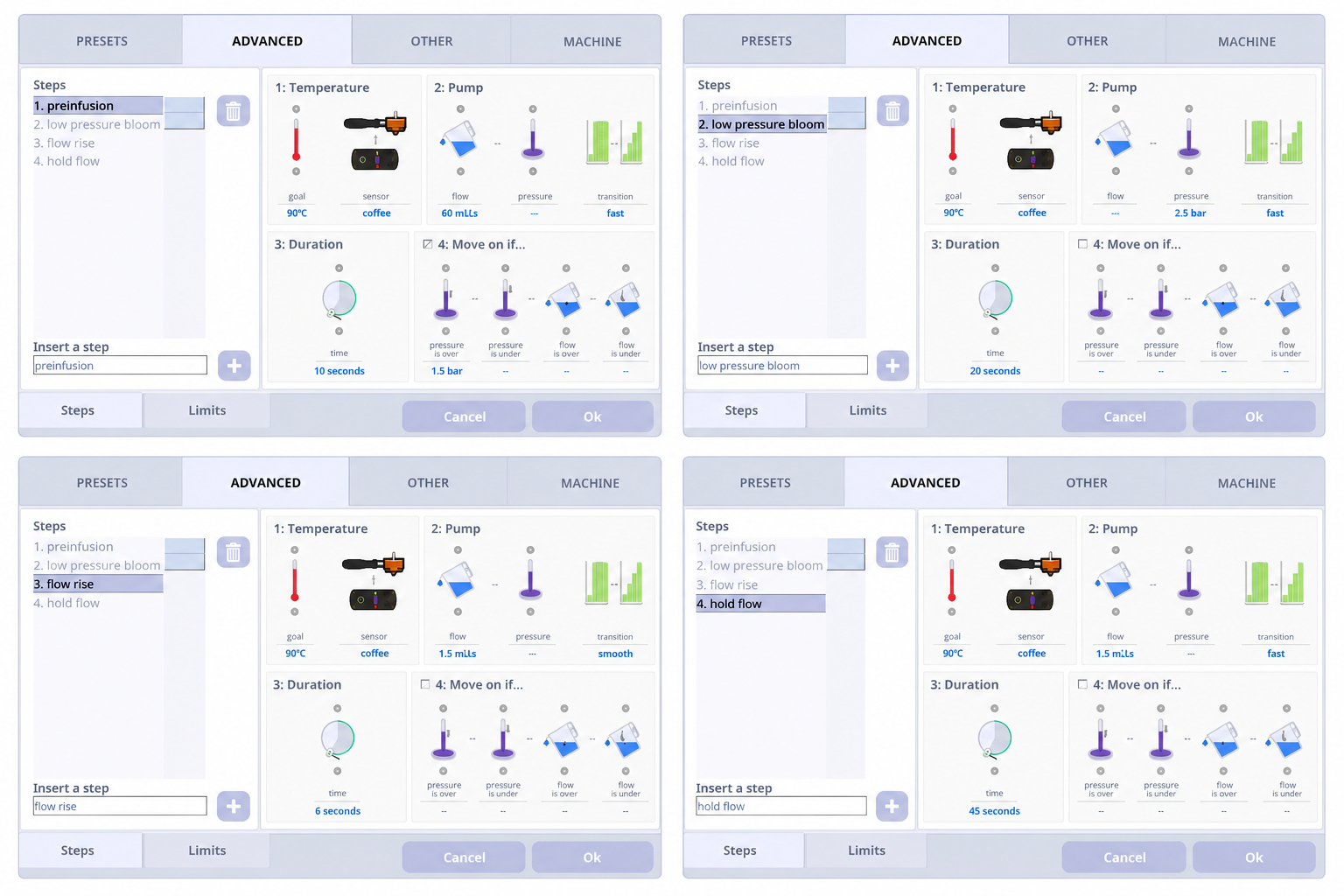
Water & extraction profile: Montille water re-mineralized to 50 ppm CaCO3 alkalinity and 100 ppm CaCO3 total hardness was used. The extraction profile combined elements of a Londinium profile and a blooming shot, maintaining a low-pressure bloom to preserve puck integrity prior to pressure ramping.
Profile used: A mix between a Londinium profile and a blooming shot was used (see settings below).
Measurement: Total Dissolved Solids (TDS) were measured at room temperature using an Atago PAL refractometer zeroed with SCAA water, with each data point representing the mean of 3 to 5 readings.
Proceeding
Consecutive extraction trials were carried out across both screen/spacer setups while keeping the grind size constant.
Puck resistance variations were evaluated directly and compensated for by adjusting dose weights (ranging between 14g, 14.5g, and 15g with output ratios of 1:2).
Flow characteristics (wetting speed, first drop time) and bottomless portafilter extraction uniformity were observed visually.
Extracted shots were measured for TDS and Extraction Yield (EY), followed by sensory evaluation tracking taste score, intensity, body, acidity, sweetness, flavor, bitterness, and astringency.
Results
Flow & resistance: The rippled base consistently resulted in lower puck resistance. It exhibited quicker puck wetting and earlier first drops, even when dose weight was increased to compensate for resistance drops.
Extraction yield: The rippled tamper base produced a slight but consistent increase in Extraction Yield of approximately +0.5% to +1.0%. Across tested variations, flat bases yielded between 18.2% and 18.7% EY, whereas rippled bases yielded between 19.0% and 19.3% EY.
Visual & structural features: No observable improvements were detected in extraction uniformity via bottomless portafilter analysis. Shots using the rippled base produced slightly less crema. Post-extraction inspection revealed no impact on puck dryness or compactness.
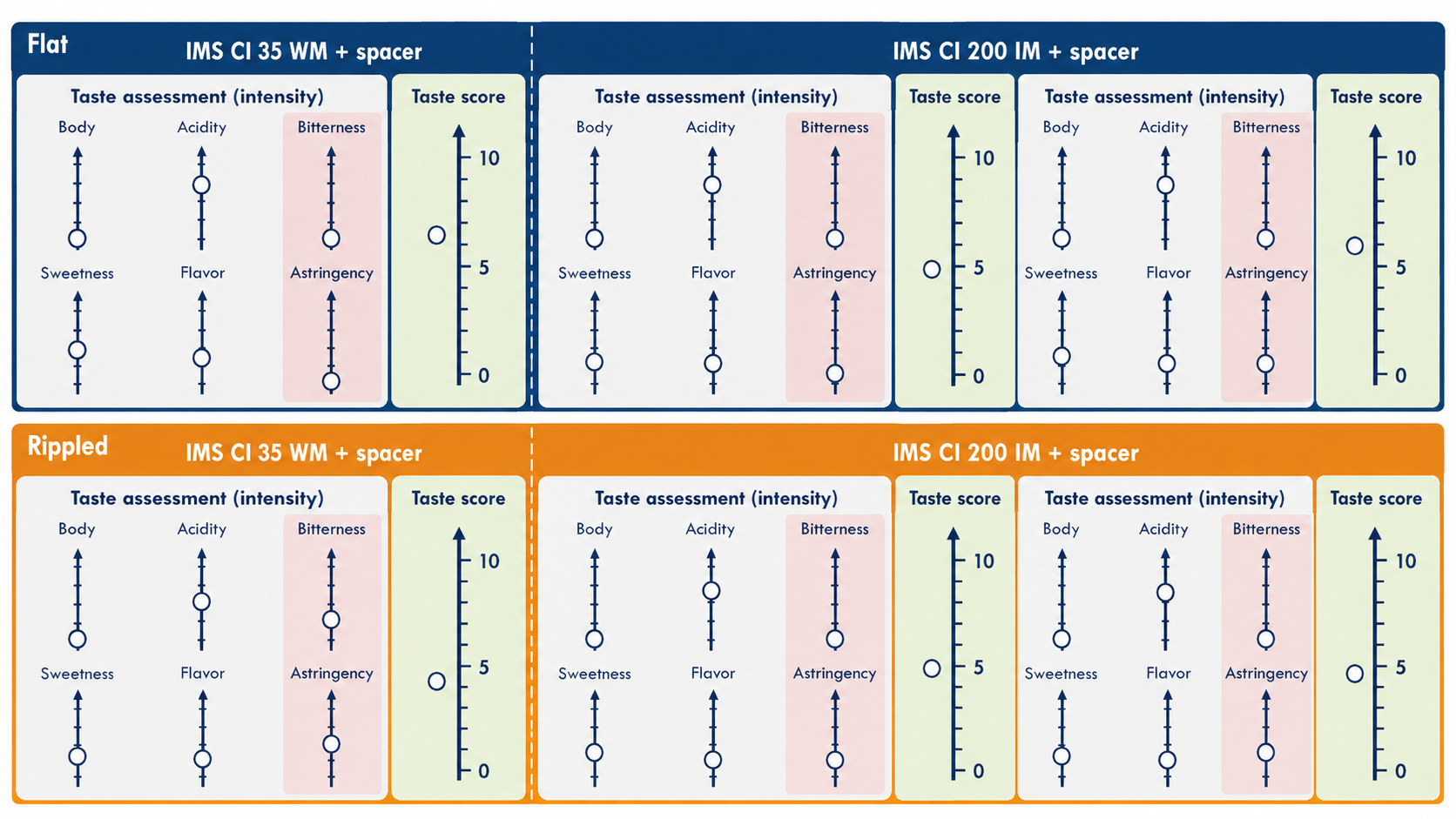
Sensory assessment: Espresso prepared with the rippled base rated lower in taste scores. Sensory profiles indicated higher perceived astringency and reduced acidity compared to shots tamped with a flat base.
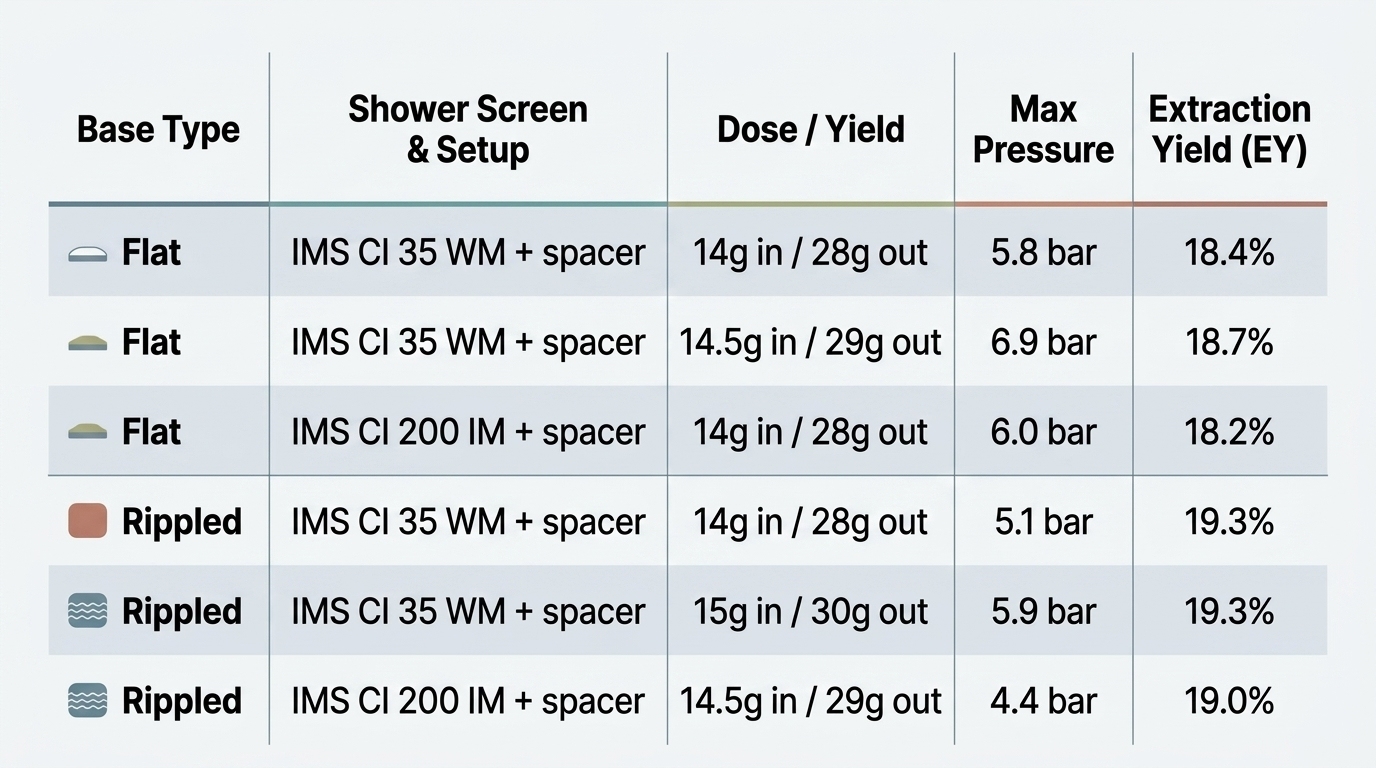
To be more precise, the sensory testing of the coffee made with the flat vs the rippled tamper base revealed the following results:
Taste assessment & profile
Lower acidity: The rippled tamper base consistently produced shots with noticeably lower acidity intensity across all shower screen setups compared to the flat tamper base.
Higher astringency: Shots prepared with the rippled base exhibited higher levels of astringency compared to the flat base.
Body, sweetness, & bitterness: Body, sweetness, flavor, and bitterness intensities remained relatively similar between the two base types across setups.
Overall taste score
Flat tamper base: Received consistently higher overall taste scores (clustering around ~6 to ~7 out of 10).
Rippled tamper base: Received lower overall taste scores (clustering around ~4 to ~5 out of 10).
In summary, despite yielding slightly higher extraction yields, the rippled base resulted in less favorable espresso shots due to increased astringency and muted acidity, leading to lower overall taste scores (see illustration below).
Conclusion
To conclude, here's what was found in this research, answering the questions brought up above:
Extraction yield: A rippled tamper base does marginally increase extraction yield (+0.5 to +1.0 percentage points).
Flow mechanics & uniformity: The rippled base reduces overall puck resistance and accelerates initial wetting, but offers no discernible benefit to extraction uniformity.
Sensory quality & puck condition: Despite increasing extraction yield, the rippled base negatively impacts cup quality by increasing astringency and lowering acidity. Additionally, it yields slightly less crema and provides no measurable improvements to post-extraction puck compactness or dryness.
#research #Ribes #coffee #tamper #documentation
