This article is based on research and a presentation by Stéphane Ribes from May 2019.
1. Introduction
Ideal preinfusion involves the rapid and uniform wetting of ground coffee grinds to establish consistent puck compression, thermal homogeneity, and fluid velocity prior to main extraction. Traditional single-direction water delivery methods often fail to achieve this uniformity. Utilizing the Decent Espresso (DE1) platform, this research by Stéphane Ribes (May 2019) investigates how altering preinfusion flow rates (0.5 mL/s to 8.0mL/s), pressure transition thresholds, and multi-step preinfusion profiles impacts physical puck behavior, extraction dynamics, and the Puck Contact Time (PCT) ratio.
2. Summary
What is preinfusion?
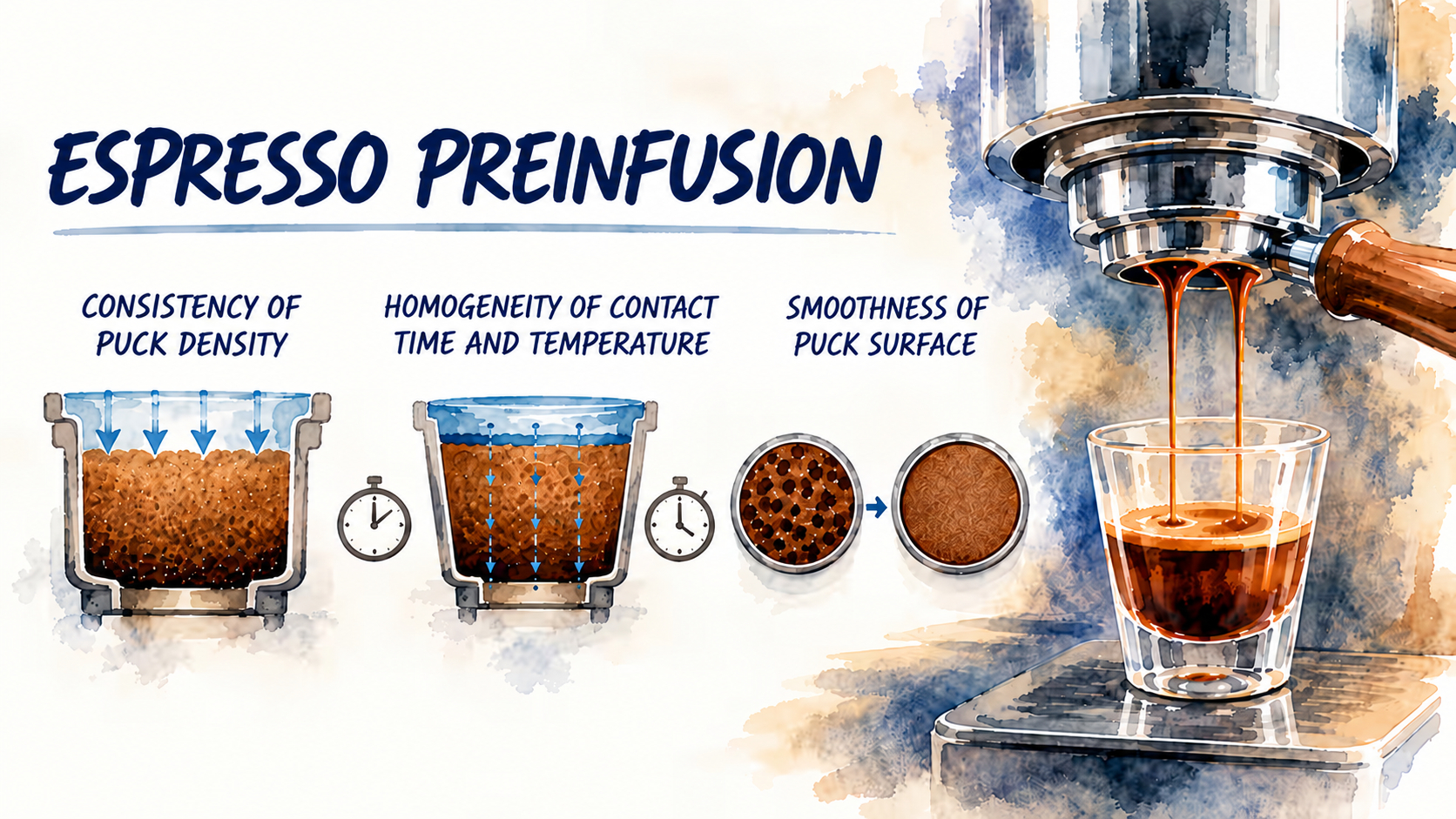
Perfect preinfusion consists in instantaneous and even wetting of the coffee grinds. Its outcome is a totally wet puck, with even temperature and compression.
1. Consistency of the puck density after preinfusion
2. Homogeneity of the Puck Contact Time with brew water and of the puck temperature
3. Smoothness of the puck surface after the espresso shot
What's presented here is a mix of basic observation results and hypotheses based on expected physical phenomena.
With the Decent Espresso machine, espresso preinfusion can easily be adjusted and perfected.
3. Questions asked
How does the preinfusion flow rate influence post-preinfusion puck density uniformity and total extraction flow resistance?
What physical parameters dictate the homogeneity of contact time and temperature between the top and bottom layers of the coffee bed?
What causes post-extraction surface cratering, and how can preinfusion parameters mitigate it?
How can a multi-step, variable-flow preinfusion profile optimize overall extraction consistency?
How is the Puck Contact Time (PCT) ratio defined, calculated, and mathematically balanced?
4. Method
Equipment & bed metrics: Tests were conducted using a Decent Espresso DE1PRO v1.1 machine and an 18g filter basket loaded with a 20g coffee dose (occupying 30cm³ tamped volume and requiring 40mL of water for complete preinfusion).
Evaluated flow rate categories:
Very low flow: 0.5–1.5 mL/s.
Low-medium flow: 1.5–3.0mL/s.
Medium-high flow: 3.0–5.0mL/s.
High flow: 5.0–8.0mL/s.
Puck Contact Time (PCT) modeling: Residual brew water volume was defined as approximately 1mL per 1g of dry coffee dose. Top and bottom contact durations were evaluated across brew ratios from 1:1 (20g yield) to 1:3 (60g yield).
5. Proceeding
1. Density & resistance testing: Tested constant preinfusion flow rates against fixed grind sizes and extraction pressures (9bar) to measure relative puck compression and extraction flow rates.
2. Thermal & concentration profiling: Modeled thermal loss gradients from the top to the bottom grinds during preinfusion and extraction stages, tracking average temperature gaps across 1:1, 1:2, and 1:3 brew ratios.
3. Surface damage observation: Examined post-shot puck surfaces for crater formation under varying preinfusion flow rates (<1.0mL/s to >5.0mL/s) and post-preinfusion pressure ramp speeds.
4. Multi-step profile optimization: Developed a two-step variable flow preinfusion (medium-high initial flow transitioning to low flow upon hitting a 1.0 bar threshold) to balance fast saturation against low puck compression.
5. PCT ratio formula execution: Calculated the ratio of Excess Contact Time of Top grinds (ECTT = Preinfusion Time) to Excess Contact Time of Bottom grinds (ECTB} = Residual Water Pour Time):
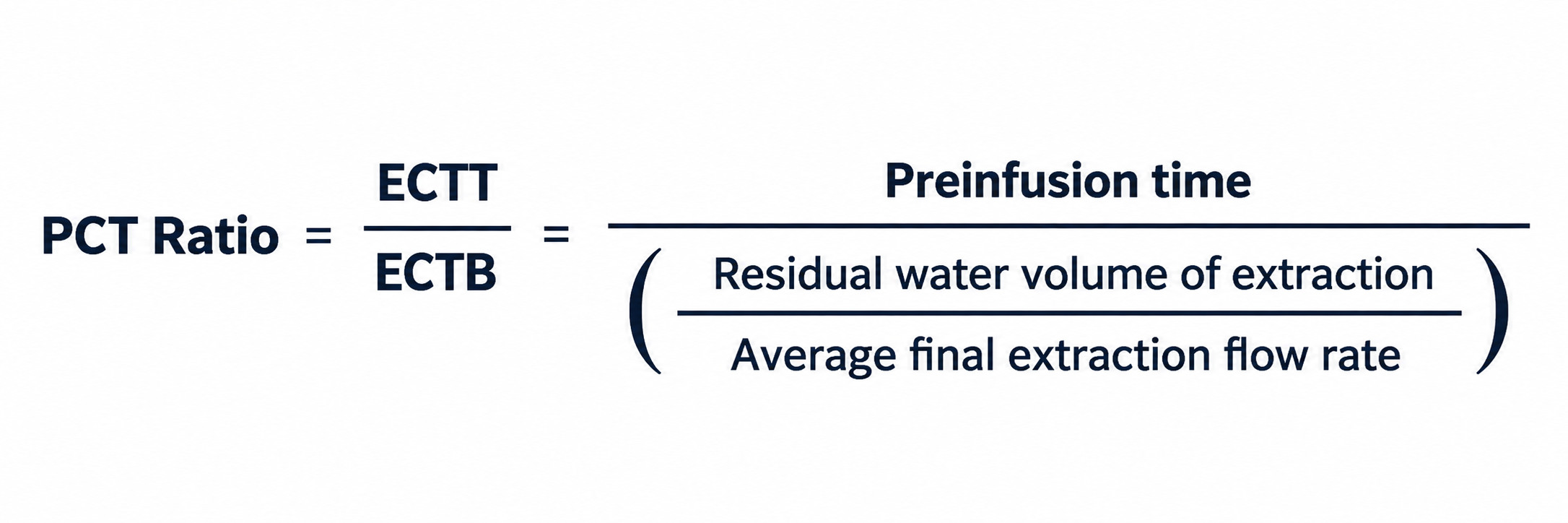
Target equilibrium ratio = 1.0.
6. All the experiments
6.1. Even puck density
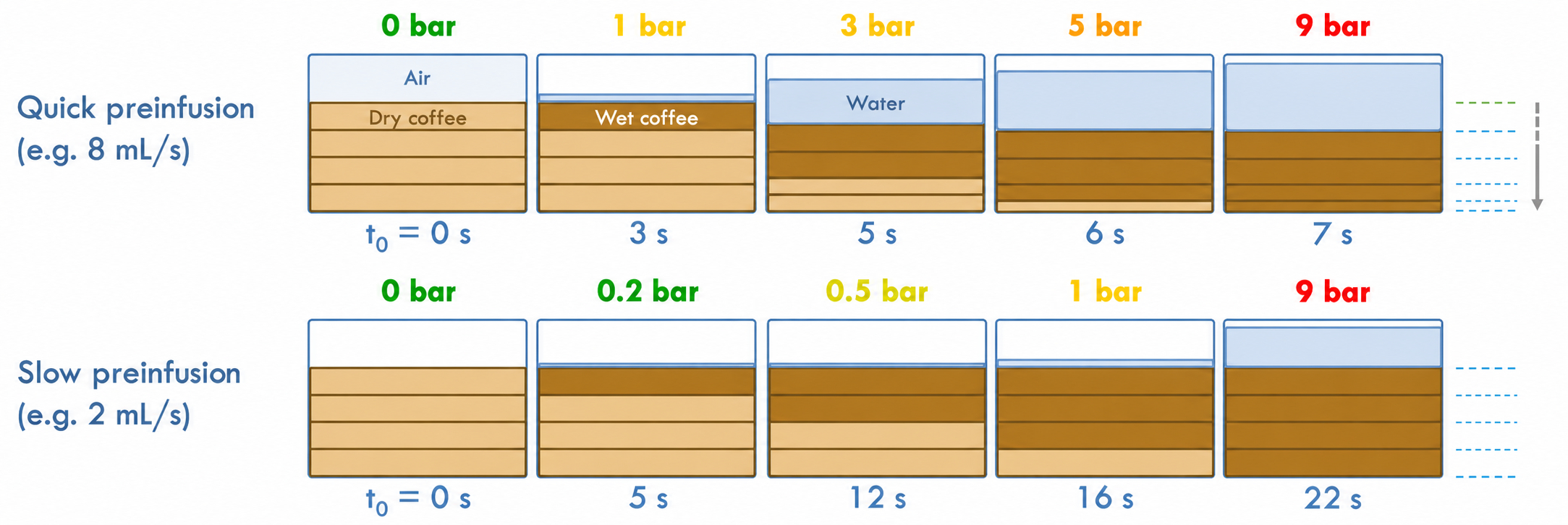
During preinfusion with a quick pressure increase, the bottom layers of the puck are more compressed.
The puck density is more homogenous when a slow preinfusion is performed.
This explains why, with the same grind size, dose and extraction pressure (e.g. 9 bar), higher flow rates during preinfusion induce lower flow rates during extraction (with longer preinfusion a finer grind is needed to get similar flow during extraction).
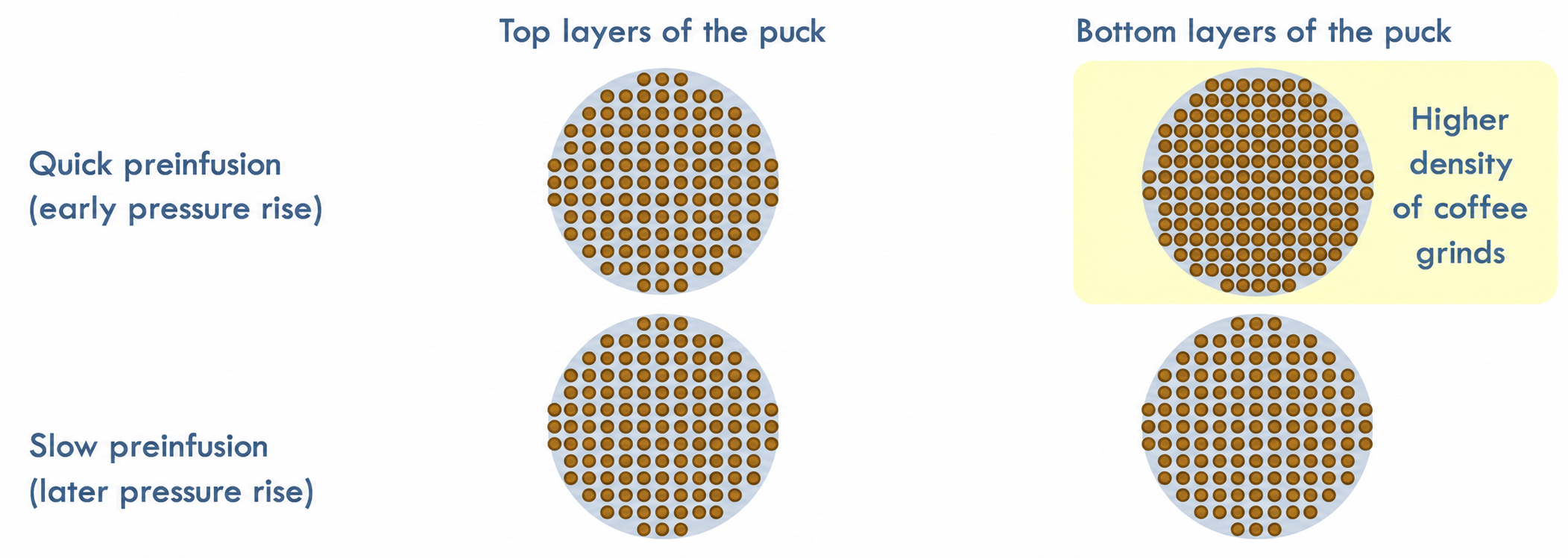
Higher puck density -> less available space around the coffee particle
In the case of a quick preinfusion, the fluid velocity is higher around the coffee grinds at the bottom of the puck. The resulting shorter contact time suggests a lower extraction of the coffee grinds from the bottom of the puck. This could also contribute to increase the likelihood of messy sprays that can sometimes be seen at the exit of the basket, especially when combined with high extraction flow rates.
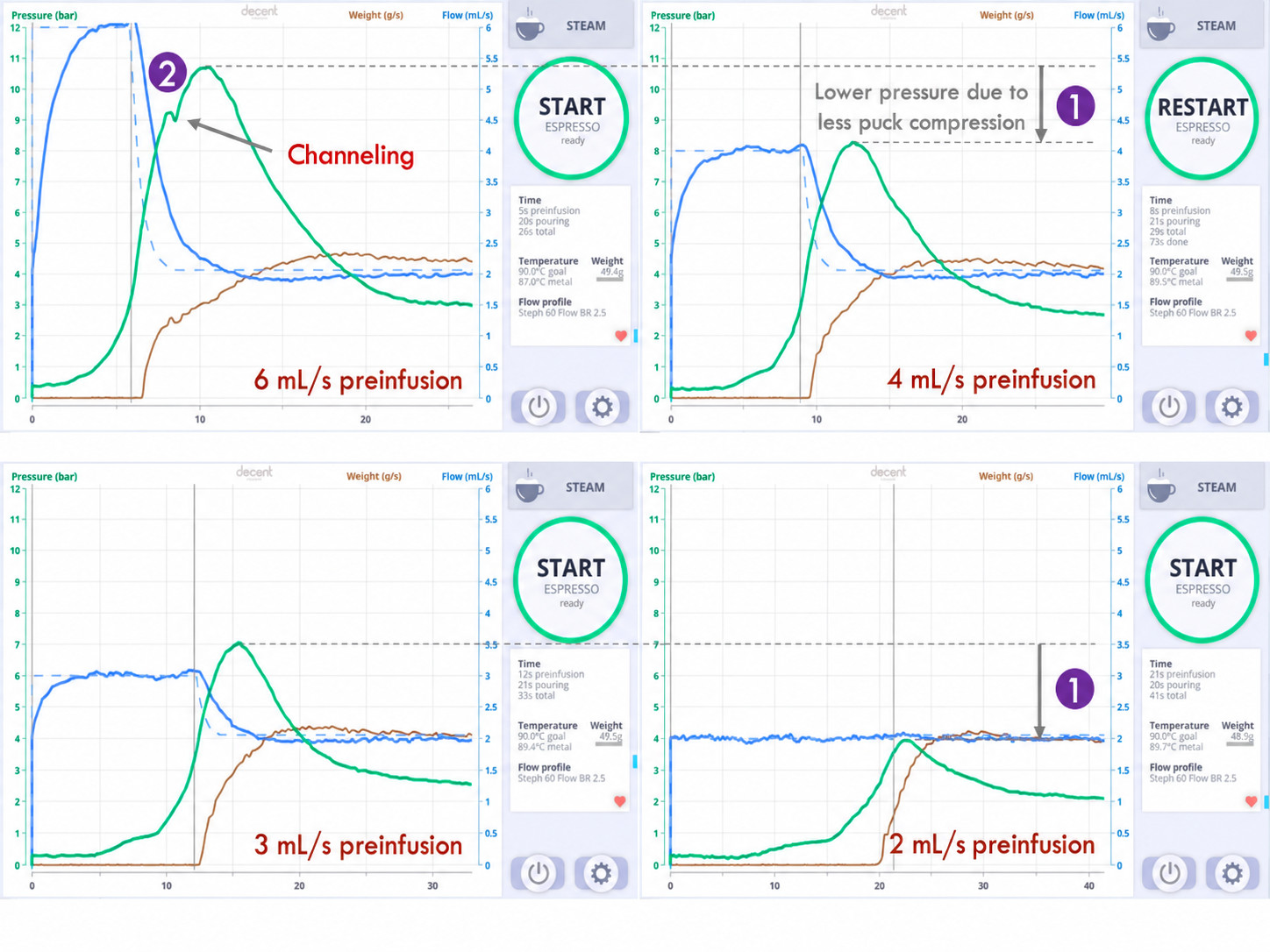
1. With the same grind size and targeted flow rate for the extraction phase, decreasing the preinfusion flow rate reduces puck compression with direct impact on the maximum pressure reached during extraction (flow profile).
2. Channeling can occur when a high preinfusion flow rate is combined with a steep pressure increase.
6.2. Even contact time & temperature
With the Decent Espresso machine, a 20g coffee dose requires ca. 40mL of water to perform full preinfusion (DE1 PRO v1.1 machine – 20g of coffee in an 18g basket).

With a 1ml/s preinfusion, when the coffee grinds at the bottom of the basket get wet, those from the top of the puck have already been soaked in hot water for 40 seconds!
This additional contact time of the top grinds will be partly (or even fully) compensated at the end of the extraction when the last amount of brewed coffee will pour out of the basket. This amount corresponds to the volume of residual fluid in the puck in the last stages of the extraction.
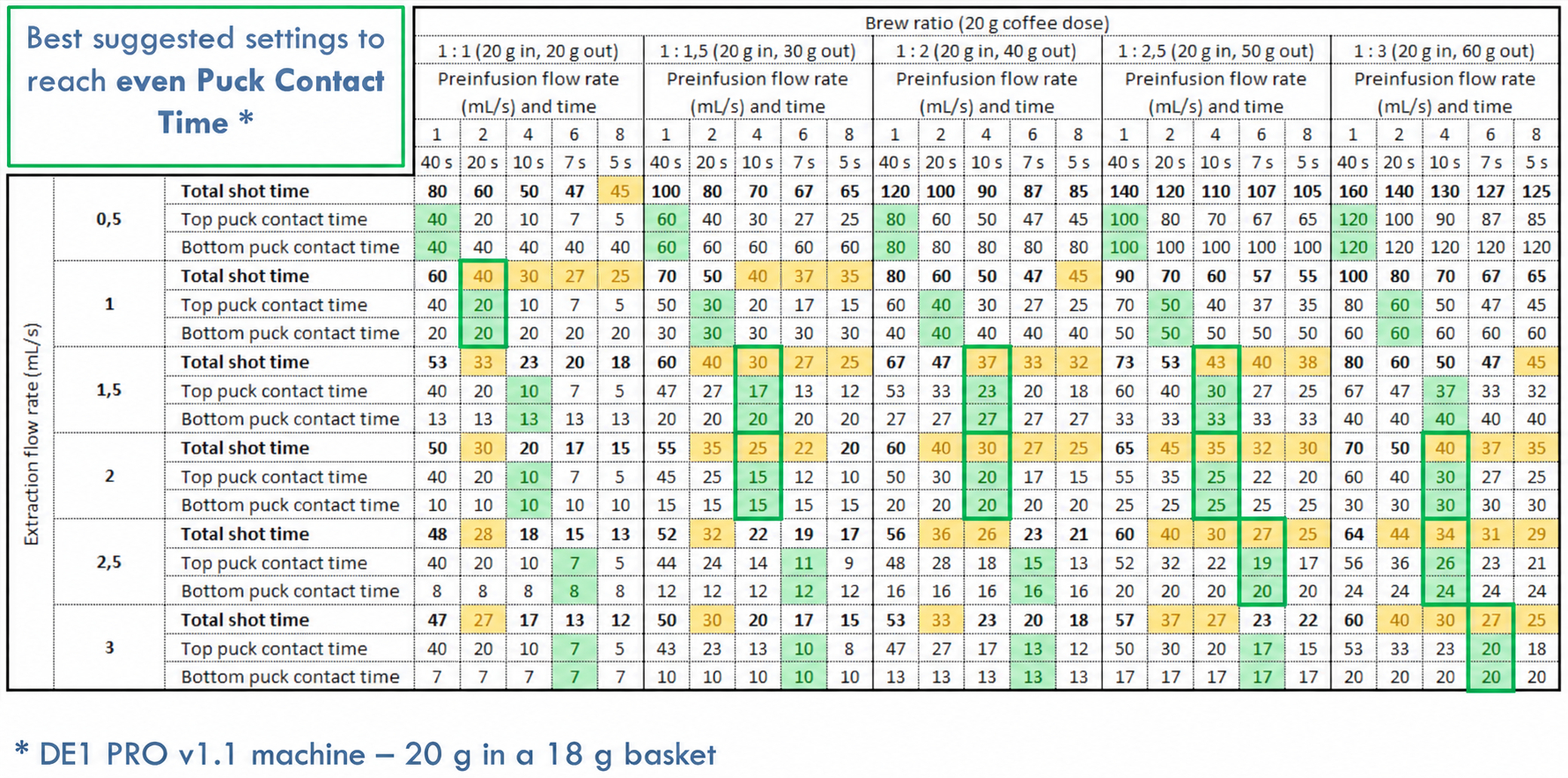
The ideal balance (same contact time for top and bottom grinds) is obtained when the time to pour the residual brew water equals the preinfusion time.
This can be achieved thanks to appropriate selection of flow rates for preinfusion and for the (last step of the) extraction phase.
The volume of a 20g coffee dose (dry grinds), tamped in a 58mm basket, is more or less 30cm³.
Around 20ml of water suffice to saturate this amount of grinds.
Let's consider a typical 1:2 brew ratio to get 40ml of coffee in the cup.
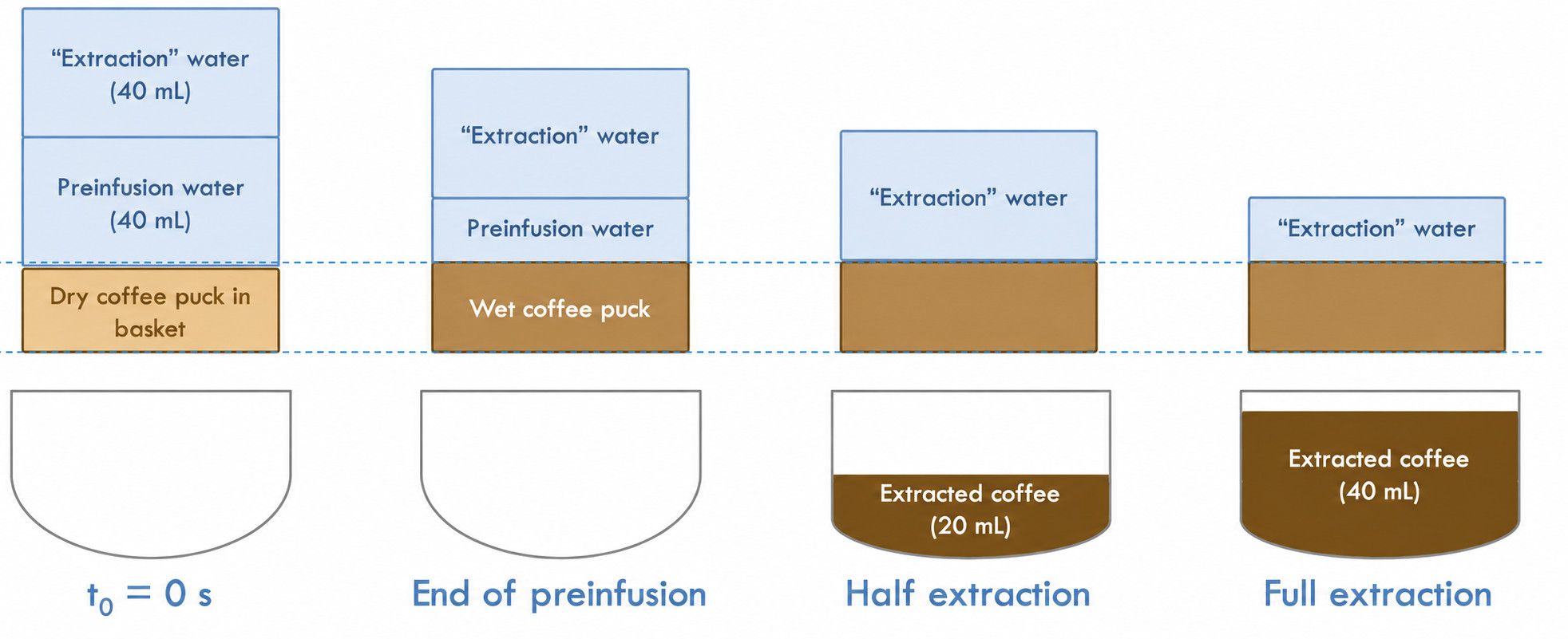
In this example with the chosen brew ratio of 1:2, “Extraction” water only pushes down the preinfusion water through the puck; it is not actually used as brewing water (also valid for lower brew ratios).
Considering a constant flow extraction phase and our 20g coffee dose, the contact time of the coffee grinds with water are:
Top of the coffee puck -> preinfusion time + extraction time – time to pour the last 20ml (1)
Bottom of the coffee puck -> pouring time (once preinfusion is complete)
In this example (DE1 v1.1 & 20g of coffee in an 18g basket), with a constant flow rate during extraction, preinfusion should be roughly twice shorter than the extraction phase to get an even overall contact time for all coffee grinds.
On top of contact time differences along the height of the puck, the brew temperature varies significantly within the coffee puck. Identified influencing parameters are:
Higher brew ratios are positive as they smoothen the phenomenon.
Longer preinfusion and extraction increase the thermal losses and decrease the actual brewing temperature (hence have detrimental effect on temperature evenness).
Also, as coffee gets extracted, the resulting fluid gets more concentrated in extracted compounds which makes it less efficient than pure water to perform further extraction. The consequence, again, is a lower extraction of the coffee grinds from the bottom of the puck.
As for temperature unevenness, this effect becomes less visible when the brew ratio increases.
Unclear impact (if any) of preinfusion and extraction flow rates on this phenomenon.
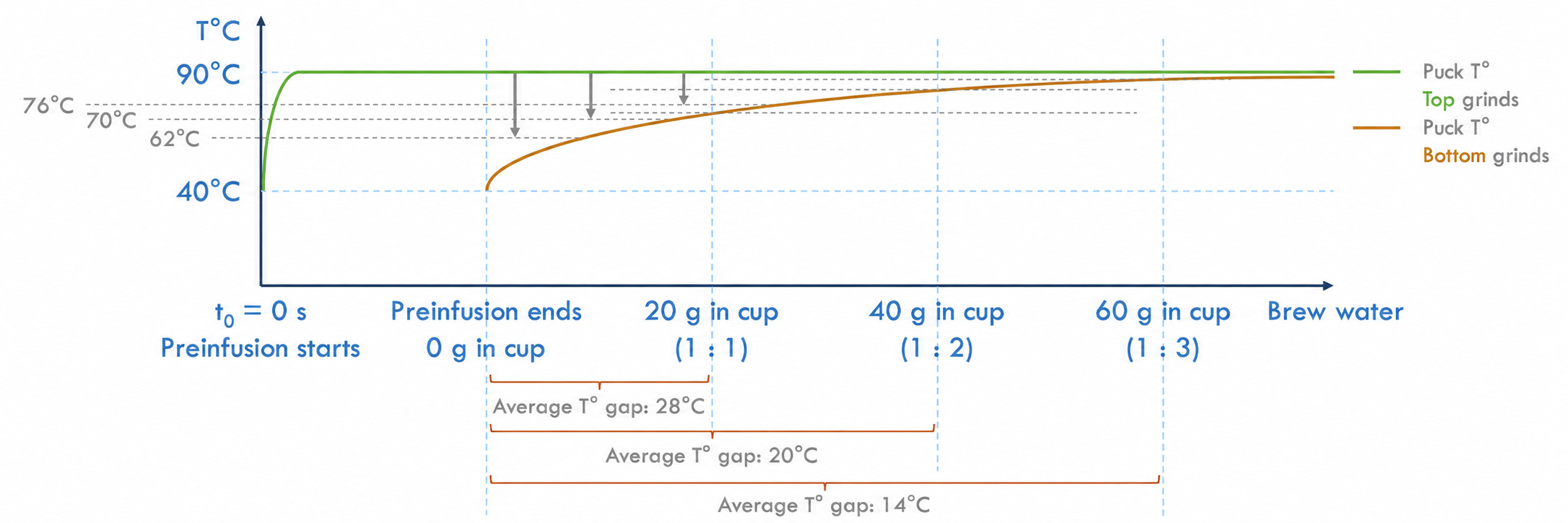
Increasing the brew ratio from 1:1 to 1:3 halves the temperature gap between top and bottom grinds.
However, as extraction efficiency decreases with time, the actual benefits in the cup are presumably lower than those suggested by these average gap values.
6.3. Even puck surface after preinfusion
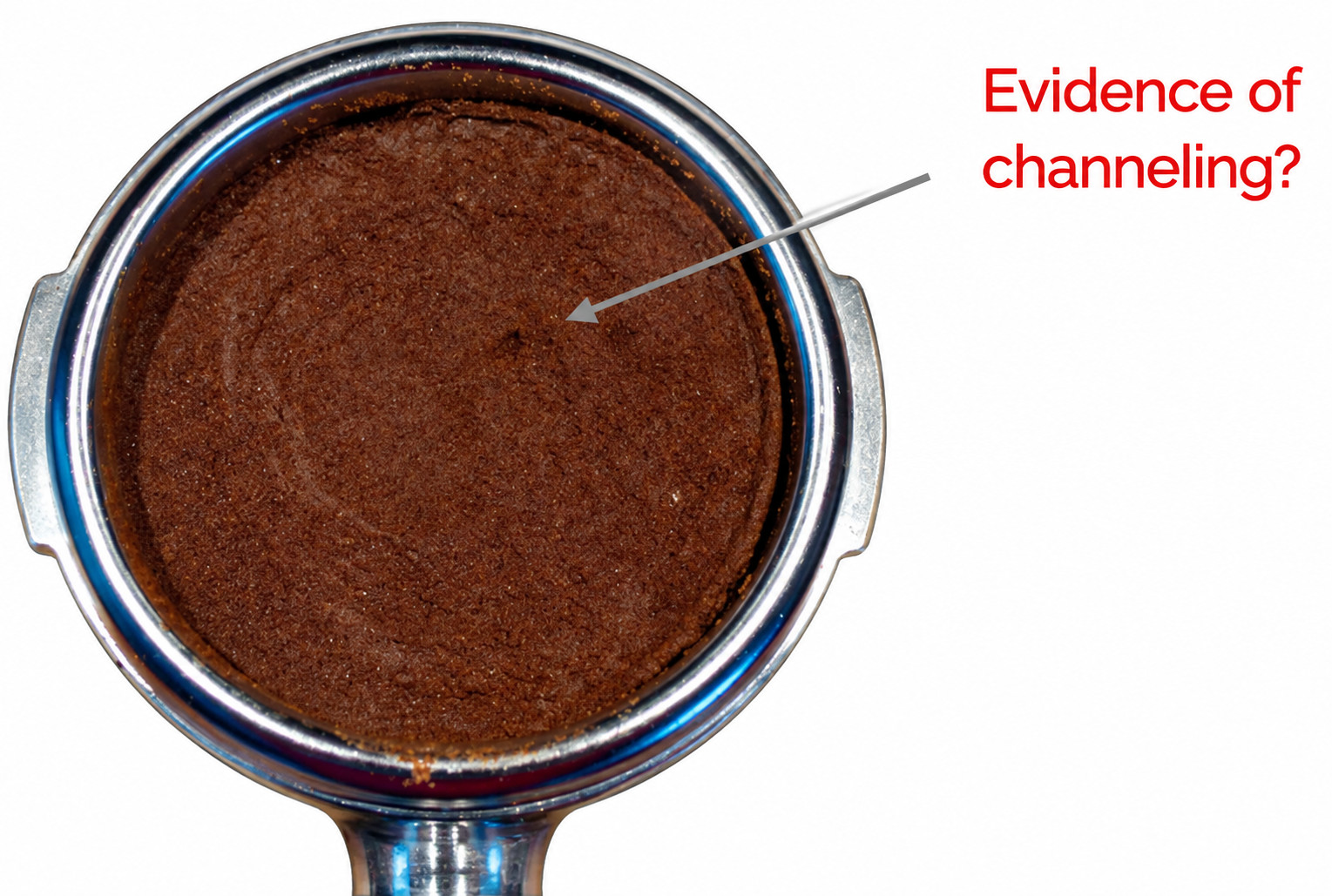
Once extraction is complete, craters can sometimes be observed on the surface of the coffee puck.
The exact root cause of these craters is not fully clear but trying to avoid them seems a reasonable objective, as they reveal that channeling has probably occurred during extraction.
As far as the generation of craters is concerned, the very beginning of the preinfusion phase is probably one of the most critical moments: it can be assumed that water droplets hitting repeatedly the same spot of the top of the puck could create this kind of surface unevenness.
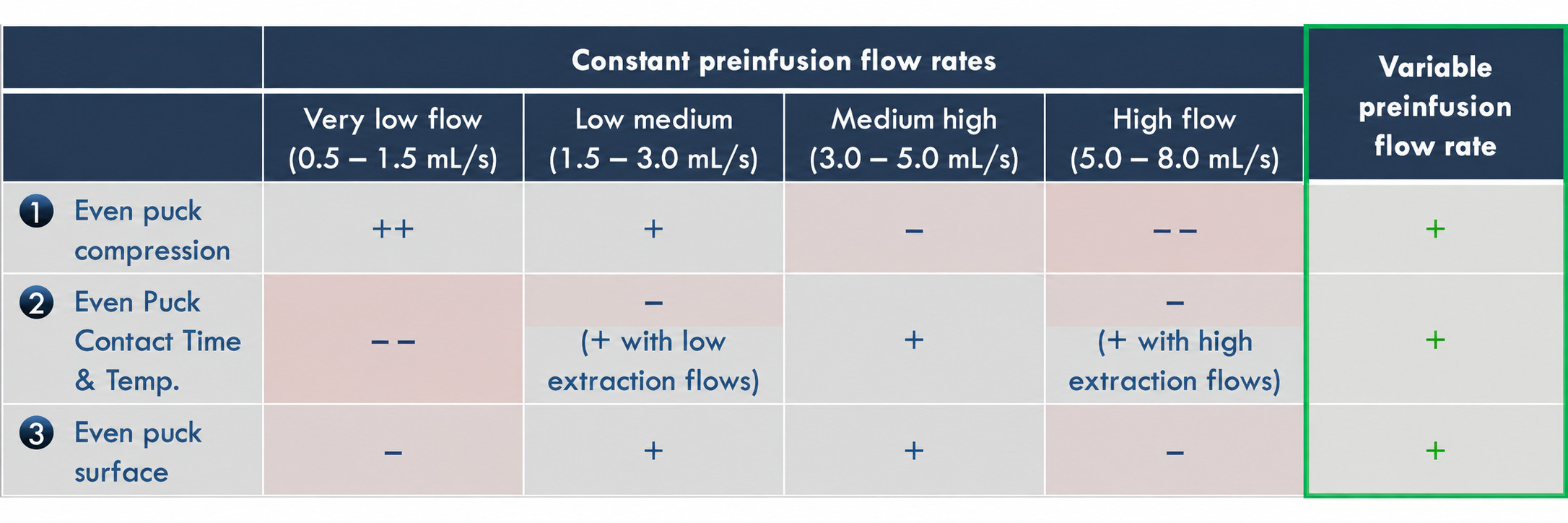
To mitigate the risk of generating craters at the beginning of the preinfusion, one can recommend to avoid too high or too low preinfusion flow rates:
With high flow rates (> 5 mL/s) water will obviously hit the surface with more energy.
With very low flow rates (< 1 mL/s), water distribution above the puck may be suboptimal.
A moderate speed of pressure increase after PI has also proven to reduce the occurrence of craters.
Other actions not linked with the preinfusion flow rate (e.g. puck preparation, headspace, shower screen cleanliness & type) to avoid puck craters & channeling in general, have not been analyzed.
Espresso preinfusion: How to make it more decent
With the Decent Espresso machine, the preinfusion process can easily be modified to benefit from the best of each flow rate family and improve the overall preinfusion performance.
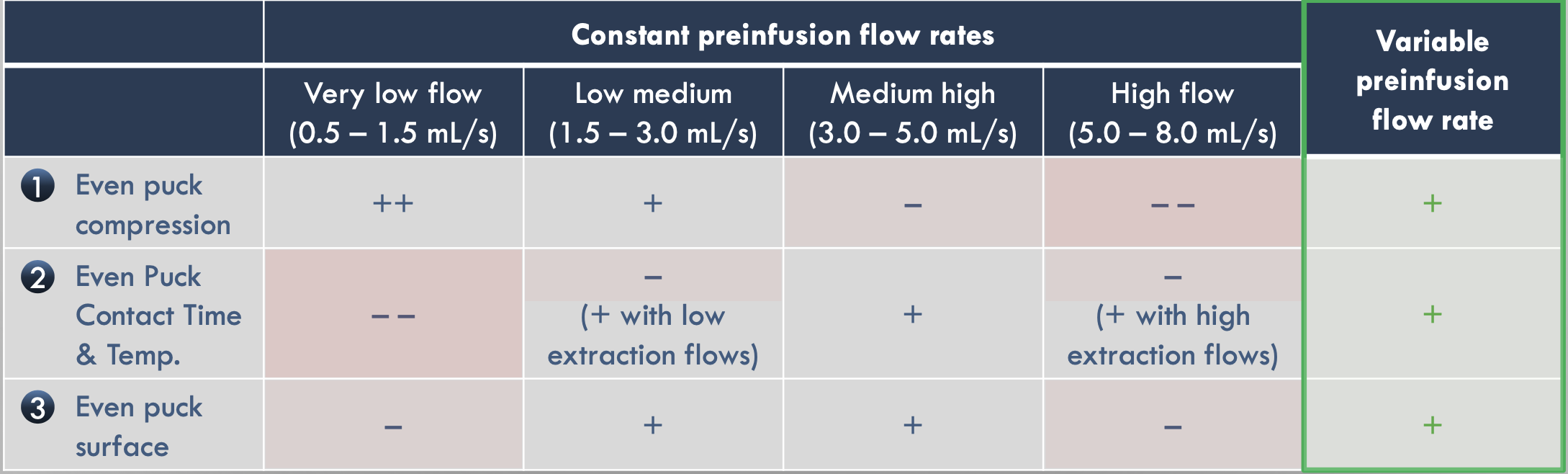
With the Decent Espresso machine, on top of the possibility to select any flow rate value to perform preinfusion, a 2-step approach can further improve the consistency of the process: medium high flow rate first, followed by a lower flow rate phase.
A moderate high flow rate at the very beginning of the preinfusion reduces the overall preinfusion time and hence improves the Puck Contact Time homogeneity (avoids too high PCT ratio).
Low flow rate in the second preinfusion step limits puck compression and a too steep pressure increase once preinfusion is complete.
The switch between the 2 preinfusion steps can easily be triggered by a pressure threshold (typically around 1 bar).
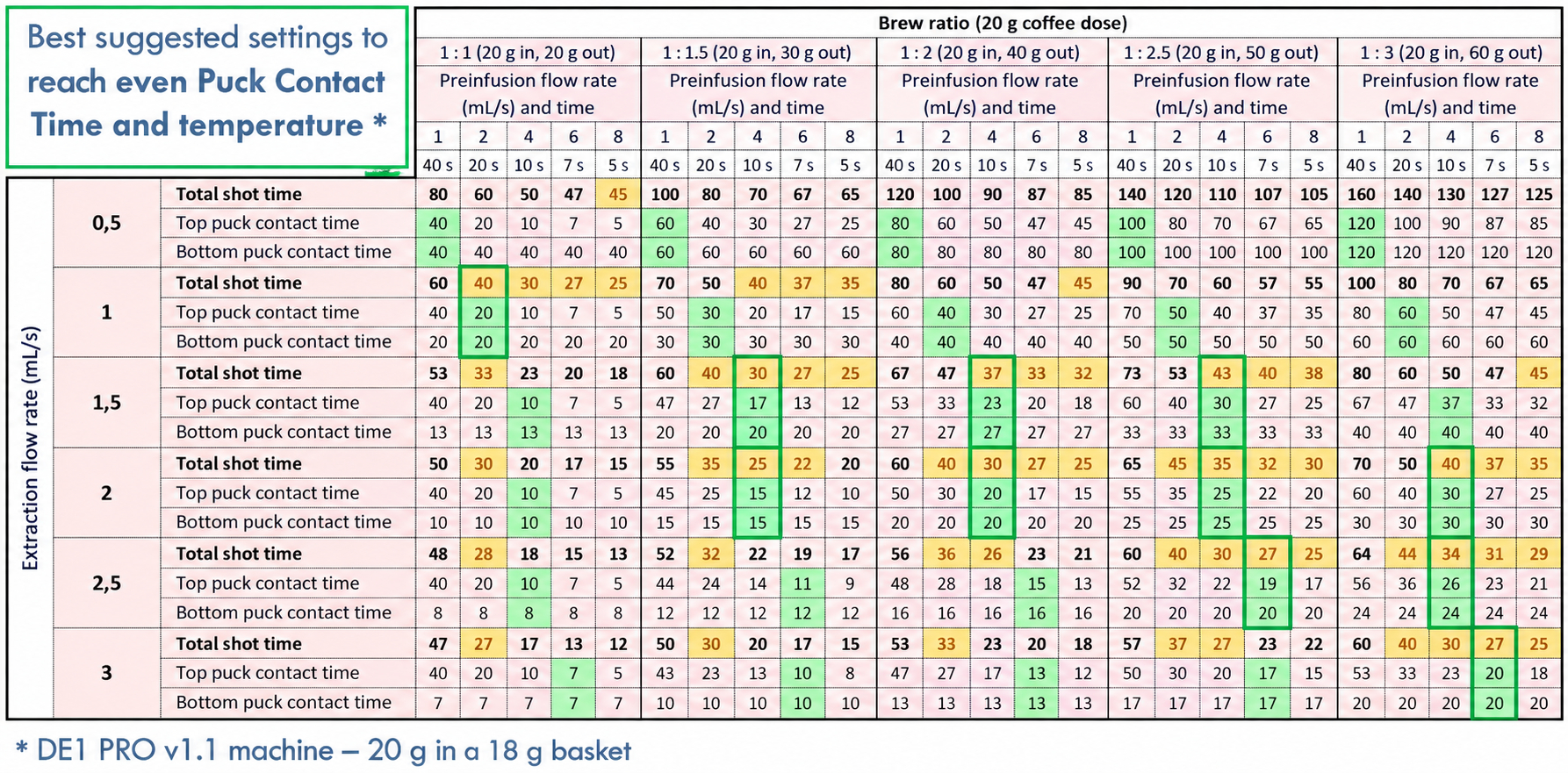
If the most even preinfusion is the target (and hence the most even overall extraction) it is also possible to adjust all preinfusion and extraction parameters (flow rates, thresholds) taking into account the proposed chart (see table "Best suggested settings to reach even Puck Contact Time and temperature").
Impacts of other parameters (e.g. dose, puck preparation, headspace) will be quantified and discussed in a future study.
Advanced Decent preinfusion
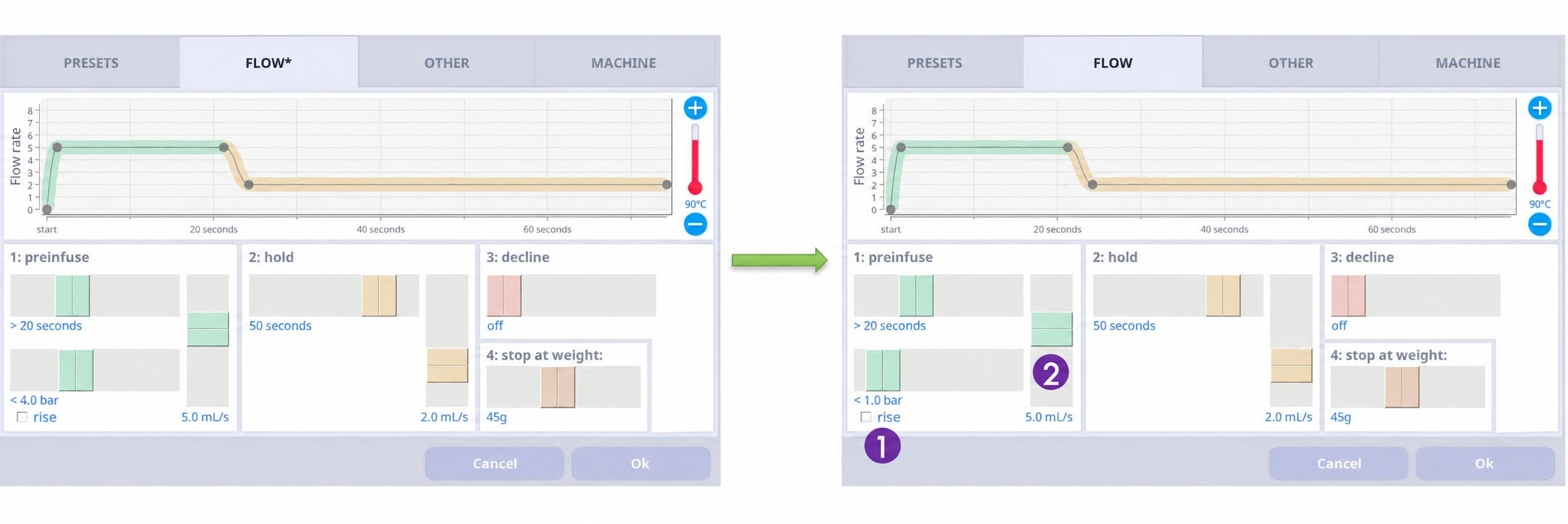
Advanced preinfusion with a standard Flow profile (1/2)
1. Anticipated switch to the “extraction” phase with lower flow rate (exit pressure: 4 bar -> 1 bar)
2. A higher initial preinfusion flow rate can be selected to compensate for longer actual preinfusion and avoid too high PCT ratio
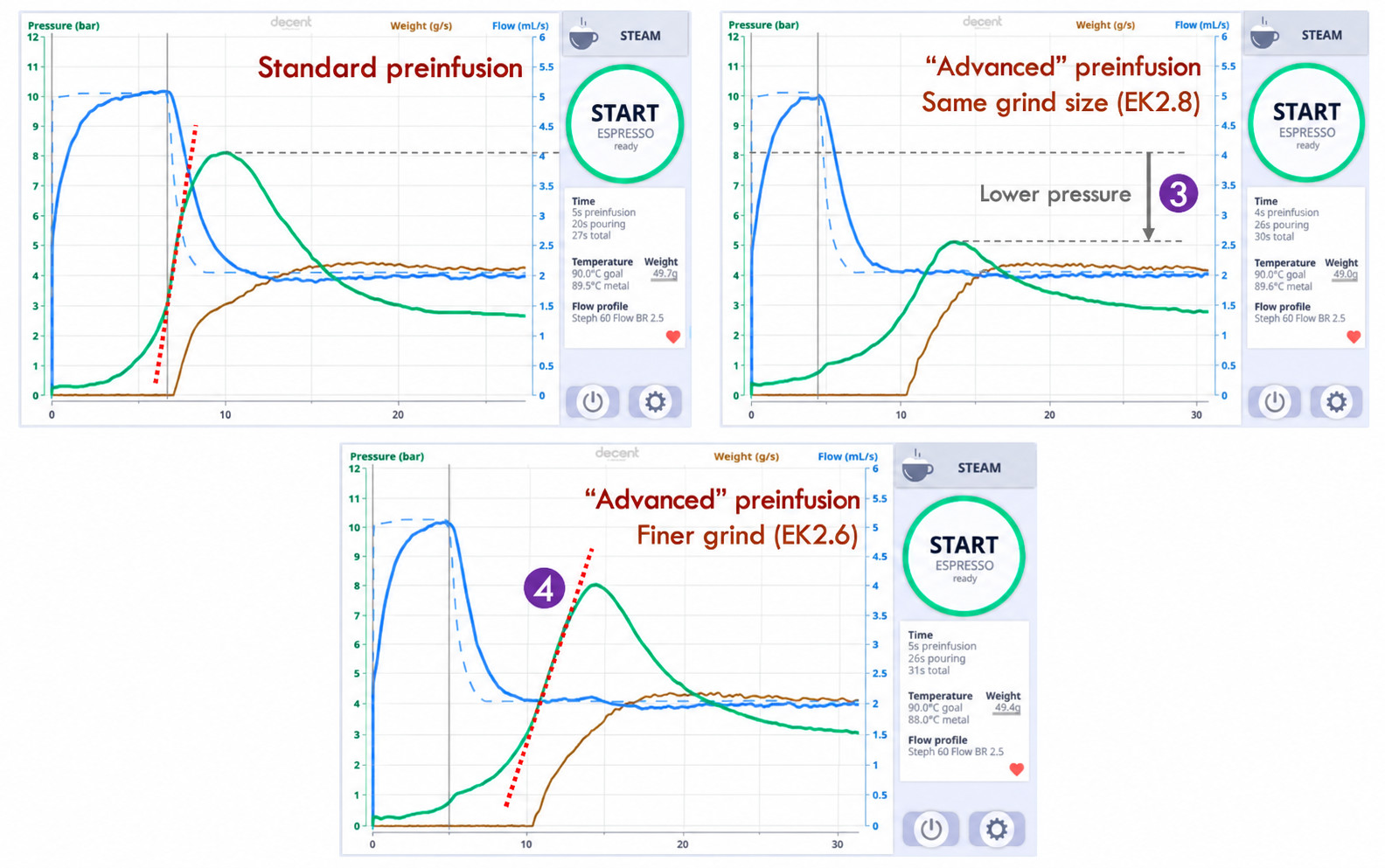
Standard Flow profile (2/2)
3. Finer grind is required to maintain maximum extraction pressure (less puck compression, lower average flow rate before the pressure peak).
4. The smoother pressure rise (1.5 bar vs 3.7 bar / second) is also beneficial to lower the risk of channeling during extraction.
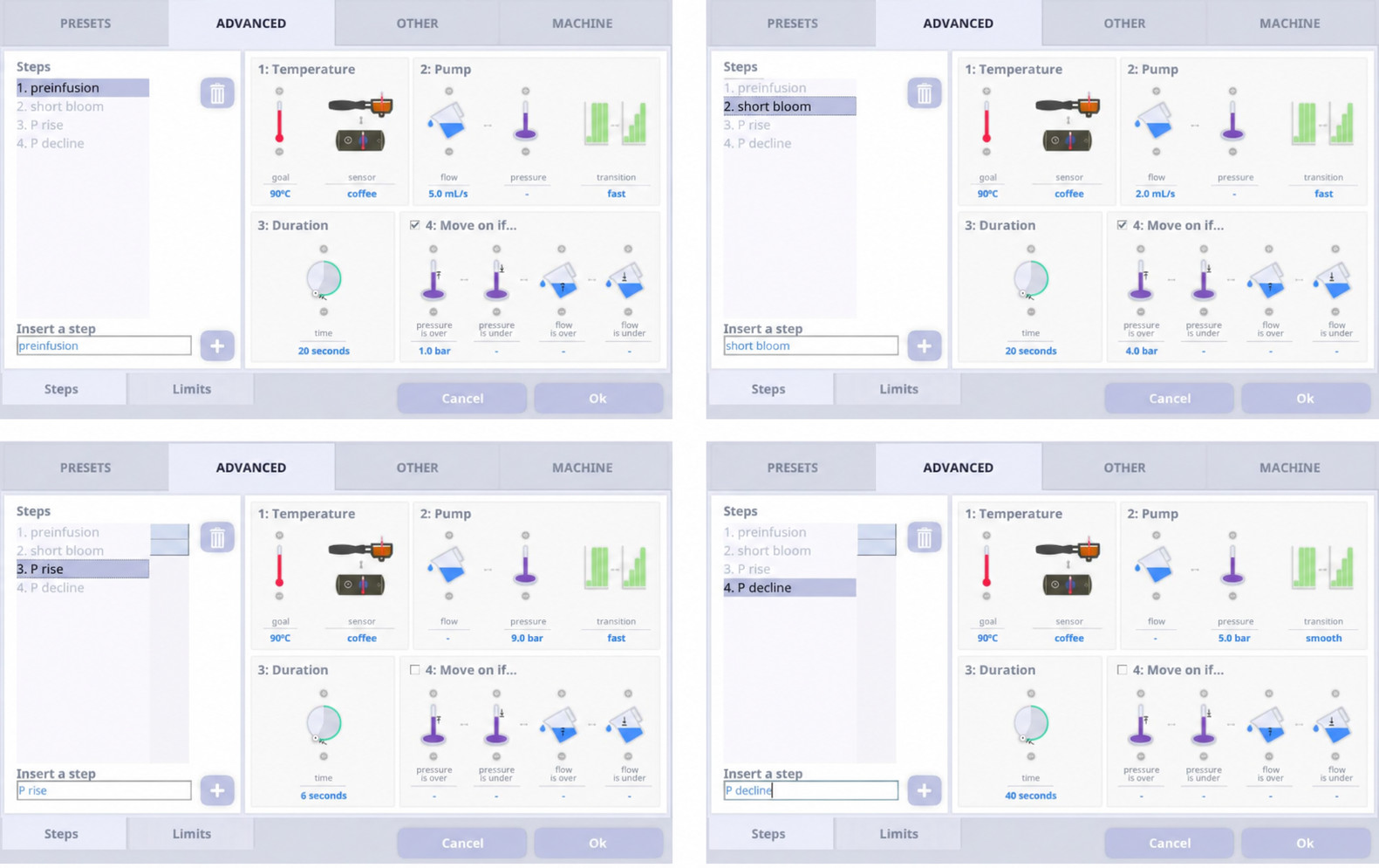
For a Pressure priority shot, an advanced profile is needed.
Exit pressures of steps 1 and 2 can be adjusted to reach optimum preinfusion time.
An additional step between stages 2 and 3 could be imagined (e.g. pressure ramp to ensure smoother transition).
Trials to replace step 2 by a pressure priority phase (e.g. 1 bar) have not been very successful (hard to get smooth transitions between flow and pressure priority modes).
How good is your Puck Contact Time (PCT) ratio?
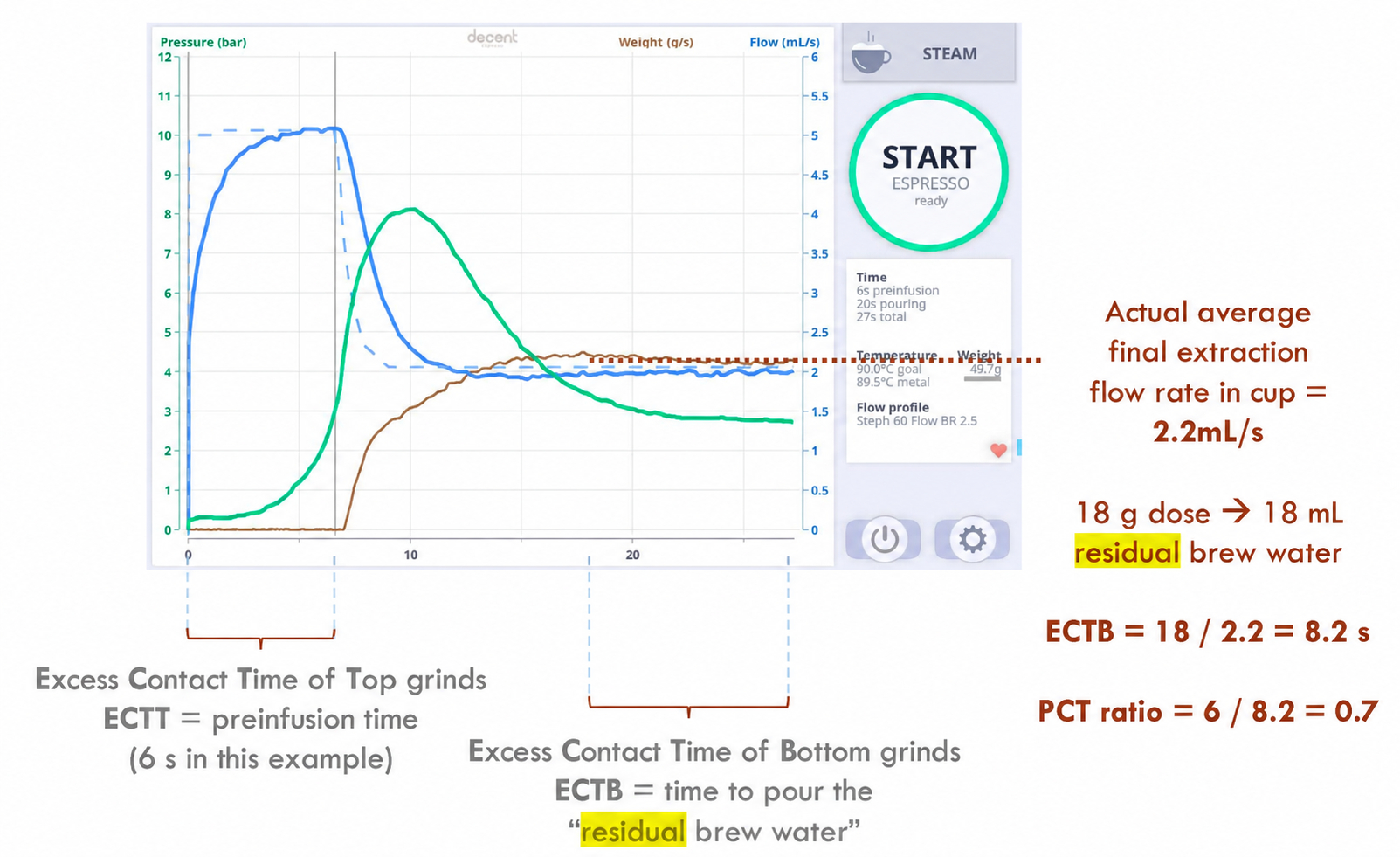
PCT ratio Formula:
PCT ratio = ECTT / ECTB
ECTT (Excess Contact Time of Top grinds): Preinfusion time ECTB (Excess Contact Time of Bottom grinds): Time to pour the “residual brew water”.
Residual brew water volume = more or less 1 mL / g of dry coffee (dose) (2)
Target for PCT ratio = 1
PCT ratio < 1: too short preinfusion
7. Results, summarized
Puck compression & flow mechanics: High preinfusion flow rates (and rapid pressure rises) compress bottom puck layers more heavily, creating higher fluid velocities around bottom grinds and lower subsequent extraction flow. Slower preinfusion provides uniform puck density, lowering peak pressure for identical grinds and requiring a finer grind setting to match flow.
Channeling risks: Combining a high preinfusion flow rate with a steep pressure ramp (3.7 bar/s vs. 1.5 bar/s) significantly increases the incidence of puck channeling.
Thermal & contact time gradients: Slow preinfusion (1mL/s) leaves top grinds soaked for 40 seconds before bottom wetting occurs. Thermal gradients are severe in short shots; expanding the brew ratio from 1:1 to 1:3 reduces the top-to-bottom average temperature gap from 28°C to 14°C.
Surface integrity: Puck craters are induced by initial flow rates that are too high (5mL/s, high kinetic impact) or too low (<1mL/s, suboptimal shower screen distribution), or by aggressive post-preinfusion pressure jumps.
Two-step preinfusion benefits: A variable preinfusion (medium-high initial flow followed by a low flow step triggered at 1 bar) maximizes contact time uniformity while keeping puck compression low and preventing pressure spikes.
8. Conclusion
In conclusion, the questions brought up under the chapter "Questions" can be answered as follows:
How does the preinfusion flow rate influence post-preinfusion puck density uniformity and total extraction flow resistance?
Rapid preinfusion compacts the lower puck layers, decreasing interstitial space, elevating fluid velocity at the base, and increasing overall extraction resistance. Slower preinfusion maintains uniform bed density, requiring a finer grind size to achieve equivalent extraction pressure and flow.
What physical parameters dictate the homogeneity of contact time and temperature between the top and bottom layers of the coffee bed?
Contact time balance is governed by matching the preinfusion duration to the time required to pour the residual brew water volume. Temperature uniformity is primarily driven by brew ratio (higher ratios like 1:3 reduce thermal gaps by half compared to 1:1) and shorter shot durations that limit heat loss.
What causes post-extraction surface cratering, and how can preinfusion parameters mitigate it?
Surface craters stem from high-energy water impact at excessive flow rates (>5mL/s), poor surface distribution at very low flow rates (<1mL/s), or steep pressure ramps post-preinfusion. Moderate initial preinfusion flow rates (1.5–5.0mL/s) and smooth pressure transition ramps mitigate crater formation.
How can a multi-step, variable-flow preinfusion profile optimize overall extraction consistency?
Initiating preinfusion at a medium-high flow rate (3.0–5.0mL/s) saturates the puck quickly to minimize top-to-bottom contact gaps. Transitioning to a lower flow rate upon reaching a 1 bar exit threshold prevents excessive puck compression and avoids steep pressure spikes prior to extraction.
How is the Puck Contact Time (PCT) ratio defined, calculated, and mathematically balanced?
The PCT ratio is defined as ECTT / ECTB. It is calculated by dividing total preinfusion time by the time needed to pour the residual brew water (1mL per gram of dry dose divided by final extraction flow rate). A ratio of 1.0 represents ideal, balanced contact time across all puck layers; values below 1.0 indicate insufficient preinfusion duration.
(1)Probably slightly less if puck erosion was considered (not taken into account here)
(2)Probably slightly less if puck erosion was considered (not taken into account here)
#research #Ribes #coffee #preinfusion #documentation
