Other Important Documentation


Articles referenced below:

  • How to repack your Decent Espresso machine
  • Stolen Machine Policy
  • DE1 drip tray v2 fittings how-to
  • How to power your Decent Portable Rinser with a battery
  • Water Recommendations for the DE1 and Bengle
  • How to Change the Needles on Your Decent Puck Rake
  • How to connect your Drain Kit to your machine
  • How to connect your Catering Kit to the machine
  • How to connect your Plumbing Kit to the machine
  • How many coffees can a Decent Espresso machine make per hour?

  • #documentation #howto


    Important information about your Decent espresso machine and gear

    This page provides essential technical guides and policies for Decent Espresso machines and other Decent gear. Key topics include setup instructions for plumbing, drainage, and catering kits, water quality recommendations, maintenance tutorials (like changing puck rake needles), repacking procedures, and our stolen machine policy.


    1. How to repack your Decent Espresso machine

    Source: How to repack your Decent Espresso machine

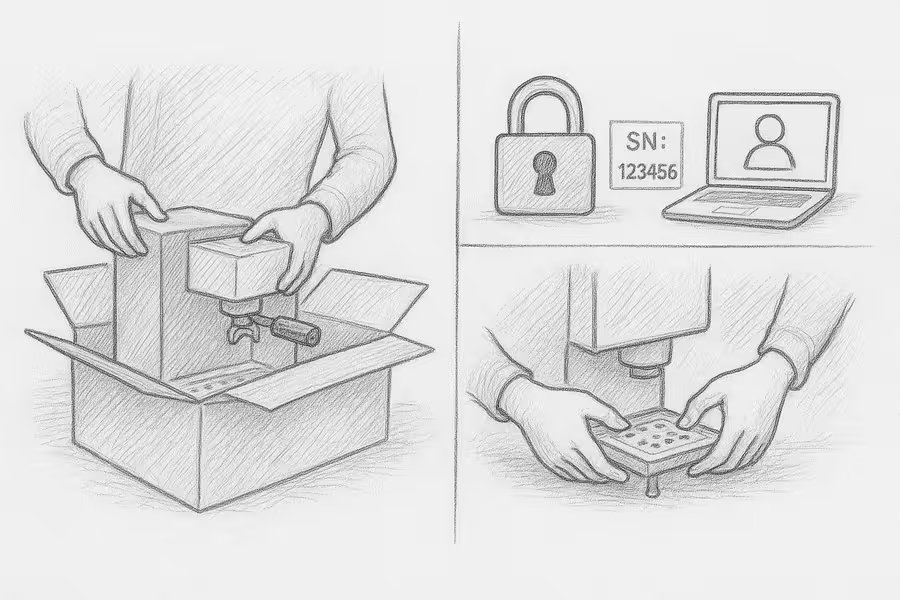
    To safely transport a Decent Espresso machine for moving, travel, or service, it must be repacked in its original padded suitcase. The process involves cleaning and removing the water tank, drip tray, and portafilter, then disconnecting the tablet.

    The machine is placed into the custom foam padding, with accessories like cables and handles organized in designated compartments. By following these specific steps to secure the machine and its components, you ensure the equipment remains protected and organized during transit.


    2. Stolen machine policy

    Source: Stolen machine policy

    Decent Espresso's Stolen Machine Policy is designed to protect buyers, support legitimate owners, and deter the trade of stolen equipment.

    For Prospective Buyers: The company strongly advises requesting a serial number before purchase. Decent's tech support will verify the machine's legitimacy, specifications, and repair history with the registered owner. Reluctance from a seller to provide this number is a major red flag.

    Transfer of Ownership: Legitimate second-hand buyers can transfer ownership by providing a photo of the serial number. Remaining warranties are fully transferable, and expired ones can be repurchased.

    Theft Deterrence and Recovery: Stolen machines are added to a global database. Once connected to the internet, these units are remotely disabled, rendering them unusable. If a stolen machine is flagged:

  • Decent coordinates with the original owner and police.
  • If the original owner does not want the machine back (e.g., after an insurance payout), the new holder can pay a $600 fee to reactivate it.

  • Context on Theft: The policy highlights common theft methods, including "porch piracy," courier "loss" (where machines are later auctioned), and recent AI-generated marketplace scams.


    3. DE1 drip tray v2 fittings how-to

    Source: DE1 drip tray v2 fittings how-to

    This guide explains how to install the fittings for the DE1 Drip Tray V2. Unlike the V1, which featured a molded ceramic drain, the V2 uses a hole in the ceramic base secured with metal parts, washers, and gaskets to create a reliable seal.

    The primary advantage of the V2 design is a more secure drain tube installation that doesn't require a cable tie or a perfectly dry surface to prevent slipping. The page includes a video tutorial and a detailed assembly diagram to help users correctly position the washers and gaskets for a leak-free setup.


    4. How to power your Decent Portable Rinser with a battery

    Source: How to power your Decent Portable Rinser with a battery

    The Decent Portable Rinser can be powered off-grid using standard 18V power tool batteries (like Makita, DeWalt, or Milwaukee). Since the rinser requires a steady 12V DC input, the setup involves three key components:

    1. 18V Tool Battery: A rugged, rechargeable power source most users already own.
    2. Voltage Adapter: A "DC-DC step-down" or "buck" converter. This device clicks onto the battery and converts the 18V output down to the required 12V.
    3. DC Cable: A cable with a 5.5mm x 2.5mm male barrel plug to connect the adapter to the rinser's power jack.

    Critical Safety Note: Never connect the rinser directly to an 18V battery, as the excess voltage will destroy the pump. When shopping for adapters, ensure they are rated for 12V/3A. This setup allows for professional-grade pitcher rinsing at festivals, markets, or outdoor events without needing a wall outlet.


    5. Water recommendations for the DE1 and Bengle

    Source: Water recommendations for the DE1 and Bengle

    Water quality is the most critical factor for the longevity of Decent Espresso machines. Using improper water causes scale buildup and heater failures, which are not covered under warranty.

    Recommended Water Types:

  • Ideal (No Descaling Needed): Reverse Osmosis (RO), distilled, or deionized (e.g., ZeroWater) water under 30ppm TDS. The machine's stainless steel components are designed to handle these "soft" waters without corrosion.
  • Safe (Annual Descaling): Water between 30–120ppm TDS or soft bottled waters (e.g., Volvic, Crystal Geyser). Use a 5% citric acid solution only.
  • Hard Water (>120ppm TDS): Not recommended. Requires frequent descaling (every 4–8 weeks) to prevent permanent damage.

  • Key Guidelines:

  • Remineralization: Avoid adding chlorides (calcium/magnesium chloride), as they cause corrosion. If using Third Wave Water, use it at 3/4 strength or less and descale 1–2 times per year.
  • Filtration: Standard carbon filters do not prevent scale. Use an LSI (Langelier Saturation Index) calculator to determine your water's scaling potential.
  • Maintenance: If the machine is used with scaling water, the resulting repairs require shipping the unit to Hong Kong at the owner's expense.


  • 6. How to change the needles on your Decent Puck Rake

    Source: How to Change the Needles on Your Decent Puck Rake

    To replace needles on a Decent Puck Rake (V1 or V2), follow these steps:

    1. Disassemble: Twist the metal base anticlockwise to separate it from the wooden handle.
    2. Remove: Push old or damaged needles inward (use tweezers if needed).
    3. Install: Insert new V2 needles until the heads sit securely in the base.
    4. Reassemble: Screw the base back onto the handle.

    Note for V1 owners: V2 needles are 4mm longer. You must either replace all needles for a uniform length or trim the new ones with pliers to match your existing set.


    7. How to connect your Drain Kit v1 to your machine

    Source: How to connect your Drain Kit to your machine

    The Decent Drain Kit v1 allows users to bypass manual emptying by routing wastewater from the drip tray to a container or drainage system. It is compatible with all DE1 models (PRO, XL, and PLUS) but is not compatible with the Bengle.

    The kit includes a specialized drip tray with a drainage hole, a cover, a long opaque waste tube, a small straight tube for countersinks, an L-shaped connector for sideways drainage, and a cable tie.

    Installation Methods: There are three primary ways to configure the drain based on your setup:

  • Direct Vertical Drainage: Connect the long black tube directly to the drip tray spout.
  • Countersink Drainage: Use the small straight black tube to drain into a recessed counter opening.
  • Sideways Drainage: Attach the L-shaped connector to the drip tray spout, then connect the long black tube to the other end of the connector.

  • Critical Setup Note: In all configurations, the cable tie must be used to secure the tubing or connector to the drip tray spout to prevent leaks. Additionally, ensure the end of the waste tube is not submerged in water, as this creates backpressure and prevents proper drainage.


    8. How to connect your Catering Kit to the machine

    Source: How to connect your Catering Kit to the machine

    The Decent Catering Kit automates refilling for all DE1 models and the Bengle. Regardless of the option chosen, you must connect the black network cable from the kit to the machine for power and communication.

    Option 1: Without Valve (Direct)

    This is the simplest setup for direct suction from a water source.

    1. Source to Kit: Connect the long white tube directly from your water bottle to the left intake on the catering kit.
    2. Kit to Machine: Connect the short white tube from the right outlet on the kit to the espresso machine.

    Option 2: With Valve

    Use the included simple valve to manage flow and prevent backflow.

    1. Source to Valve: Connect the long white tube from the water bottle to the side of the valve without an attached tube.
    2. Valve to Kit: Plug the short tube already attached to the valve into the left intake on the catering kit.

    Crucial:* Ensure the arrow on the valve points toward the kit (away from the bottle).

    3. Kit to Machine: Connect the short, wider white tube from the right outlet on the kit to the machine.

    Operation

    Once switched on (indicated by an orange light), the kit remains on standby. It only activates when the machine detects a need for water, at which point a green light illuminates. To ensure freshness, the kit tops off the tank rather than keeping it permanently full.


    9. How to connect your Plumbing Kit to the machine

    Source: How to connect your Plumbing Kit to the machine

    The Decent Plumbing Kit allows DE1 series and Bengle machines to connect directly to pressurized water sources, such as Reverse Osmosis (RO) systems. Like the catering kit, it uses a black network cable for machine communication and features indicator lights (orange for power, green for active filling).

    Installation Steps

    1. Source Connection: Connect the long white tube to your filtration system using the provided push-in NPT fittings and secure with blue clips.
    2. Pressure Regulation: Connect this tube to the pressure reducer. Ensure the arrow points away from the water source and toward the plumbing kit.
    3. Kit Assembly: Use the female NPT connector to attach the pressure reducer line to the kit's left-side intake. If leaks occur, insert the included mesh filter gasket.
    4. Machine Connection: Link the kit's right-side outlet to the espresso machine using the short white tube.
    5. Mounting: Use the pre-installed bracket for under-counter placement or the side-mounting bracket for wall or machine attachment.

    Operation

    Once powered on, the kit remains on standby. When the machine's sensors detect a low water level, the solenoid valve opens to top off the reservoir, ensuring the water stays fresh rather than constantly full.


    10. How many coffees can a Decent Espresso machine make per hour?

    Source: How many coffees can a Decent Espresso machine make per hour?

    The DE1XL from Decent Espresso can produce approximately 102 espressos per hour, a conclusion reached by founder John Buckman through a series of "10-minute challenges." The primary takeaway from these tests is that the machine is rarely the bottleneck; instead, speed is determined by the barista's workflow and equipment setup.

    Throughout the challenges, several factors limited performance:

  • Workflow: Inconsistency and manual errors (like forgetting to hit "start") significantly slowed output.
  • Equipment: Using a single slow grinder or only one portafilter created "dead time" where the machine sat idle while the barista prepared the next puck.
  • Optimization: In his most successful test, John used pre-weighed doses, multiple portafilters, and two grinders to achieve a rate of 17 espressos in 10 minutes.

  • For milk drinks, the DE1XL managed 54 lattes per hour when one machine was dedicated to brewing and another to steaming. Even without a flawless performance, the Decent proved capable of outpacing many professional coffee shops. To maximize speed, the study recommends having multiple portafilters ready and starting the next extraction before finishing latte art.


  • Chinese (simplified): 其他Decent文档
  • German: Weitere wichtige Dokumentation von Decent
  • French: Autres documents importants de Decent
  • Spanish: Otra documentación importante de Decent

    john created 2025/10/09, mirjam updated 2026/03/24